About us
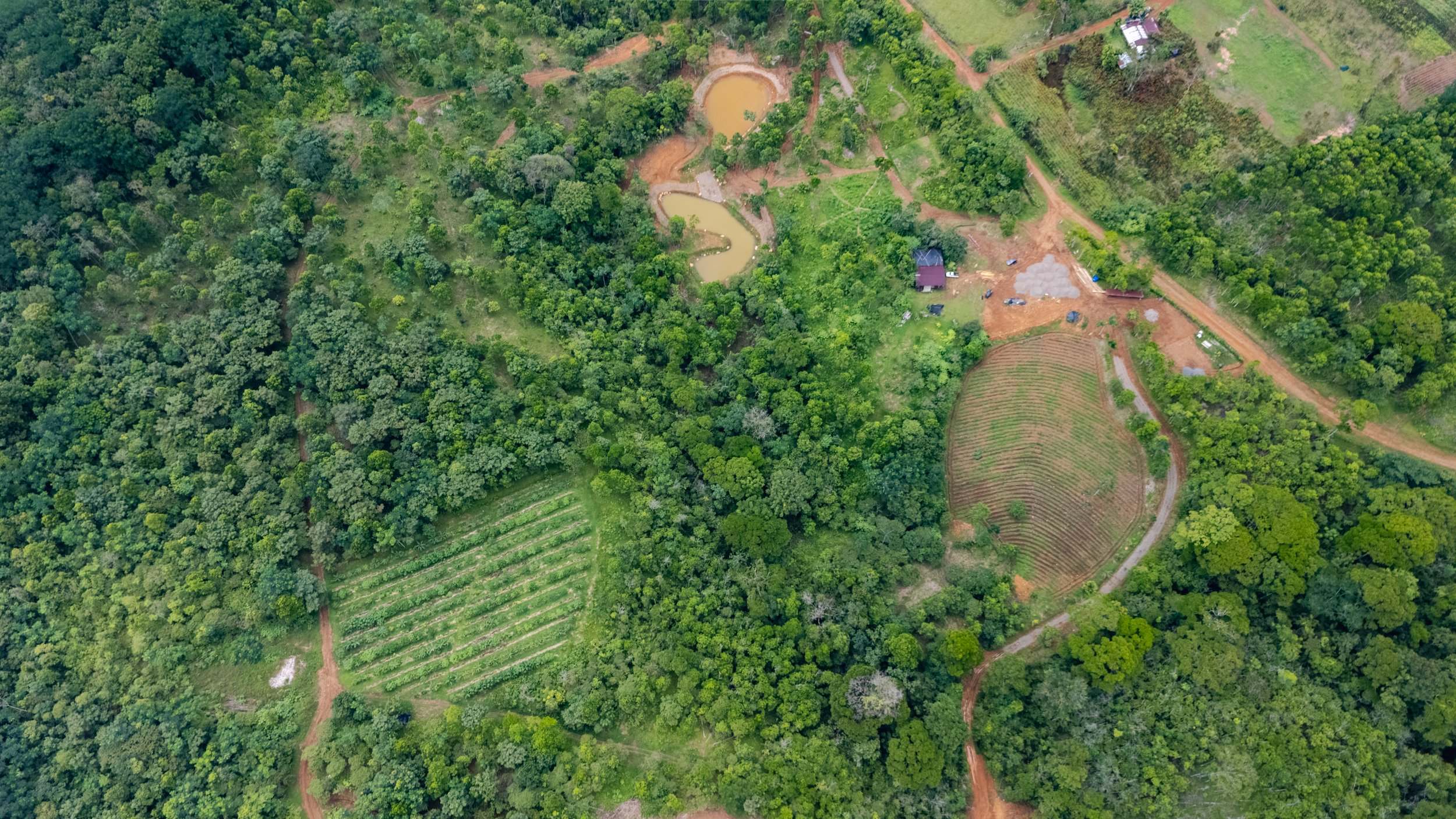
Bodha Gardens is a working farm in Maquencal de Guatuso: two hectares of organic vanilla, just under two and a half of syntropic systems, bamboo groves, forest trails, and a nursery you can order from, with delivery.
What's here
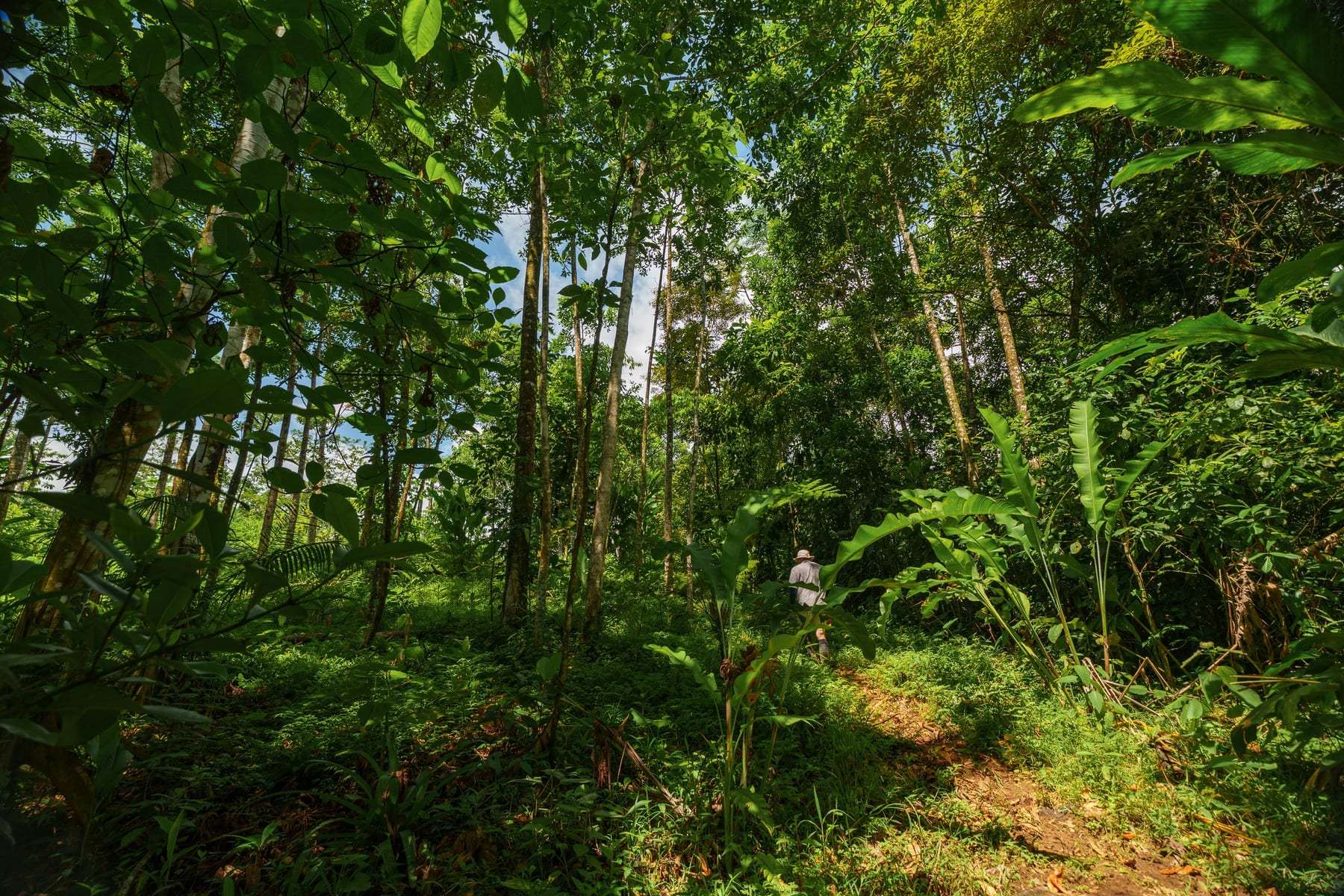
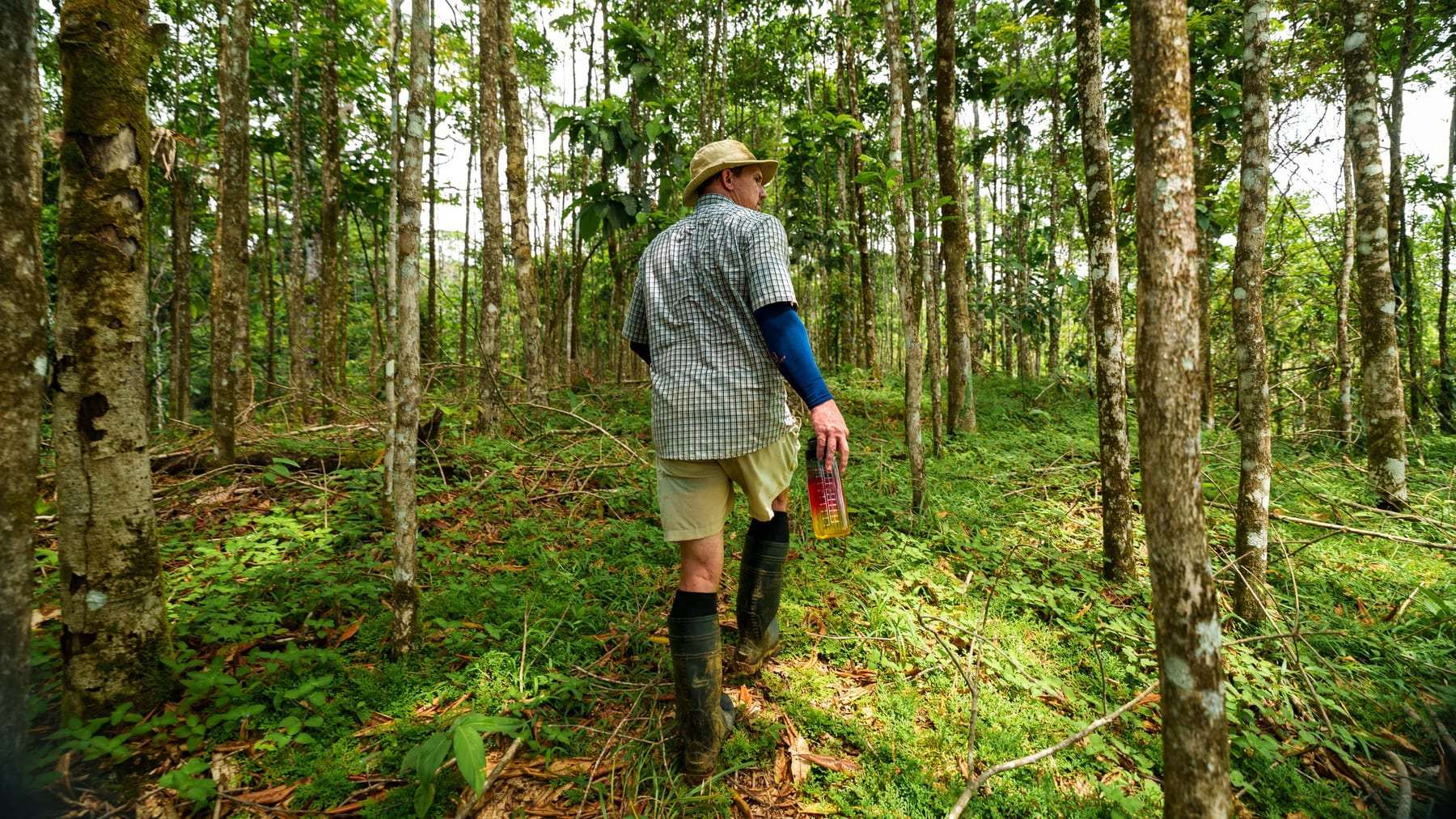
Syntropic systems. Just under two and a half hectares planted since September 2024, each species selected to fill a specific role: to provide shade, biomass, food, or timber. Five lots of different ages, which provides an open-air classroom in the early stages of the succession: from a freshly planted system through to the oldest, which are in intermediary. Species include pili nut, ylang ylang, avocado, tea, citronella, dabai, cacao, melaleuca, patchouli, chipilín, pigeon pea, champadak, ice cream bean, and dozens more.
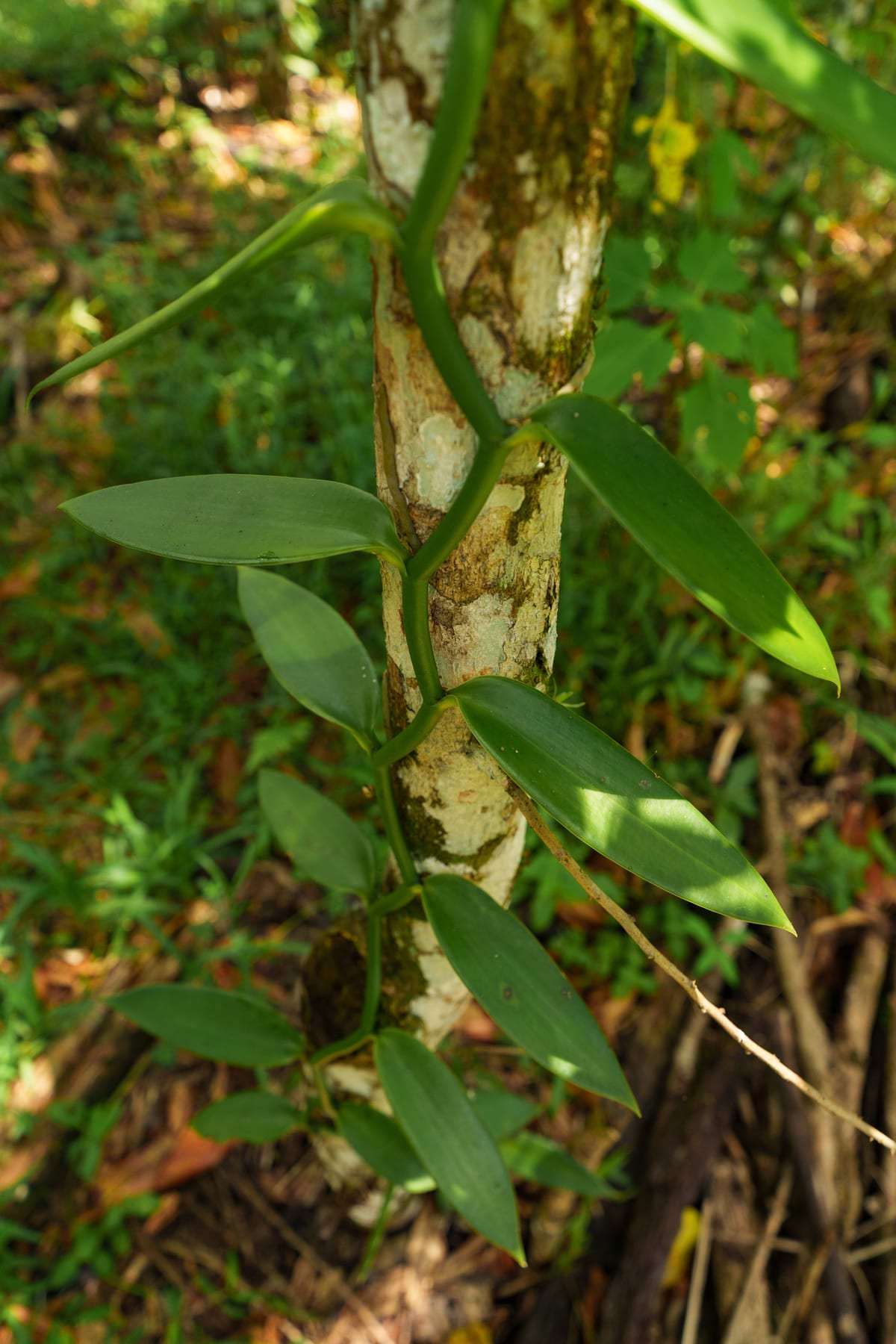
Vanilla. Two hectares of certified organic vanilla, several Vanilla species in mixed agroforestry systems.
Bamboo. Groves of timber, edible and ornamental species, leading to a forty-meter meeting space shaped like a lotus flower, ringed by temple and black bamboo.
The nursery. Over a hundred species, every one grown here: medicinals, plants of ethnobotanic importance, species the forest around here is missing, and native ornamentals.
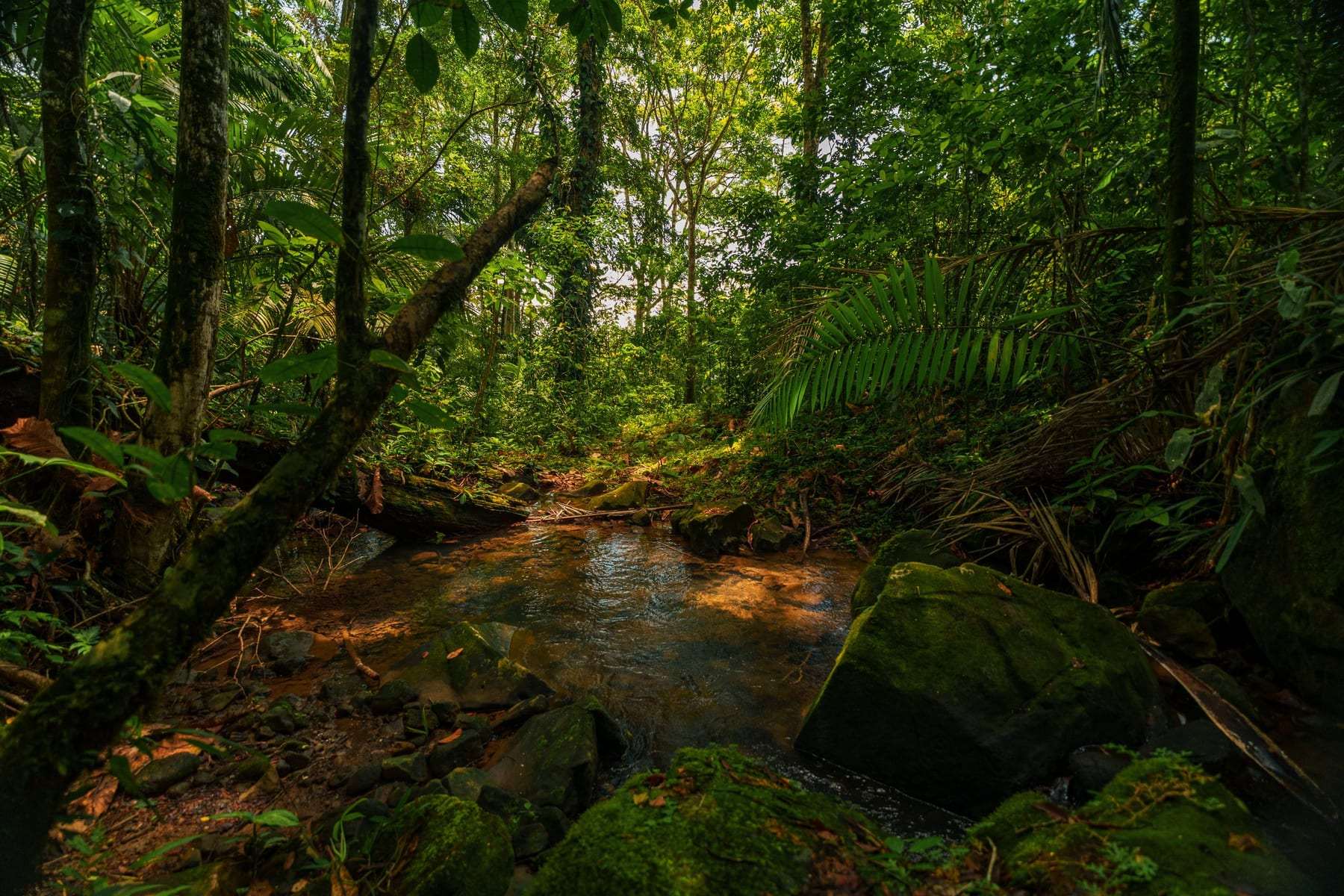
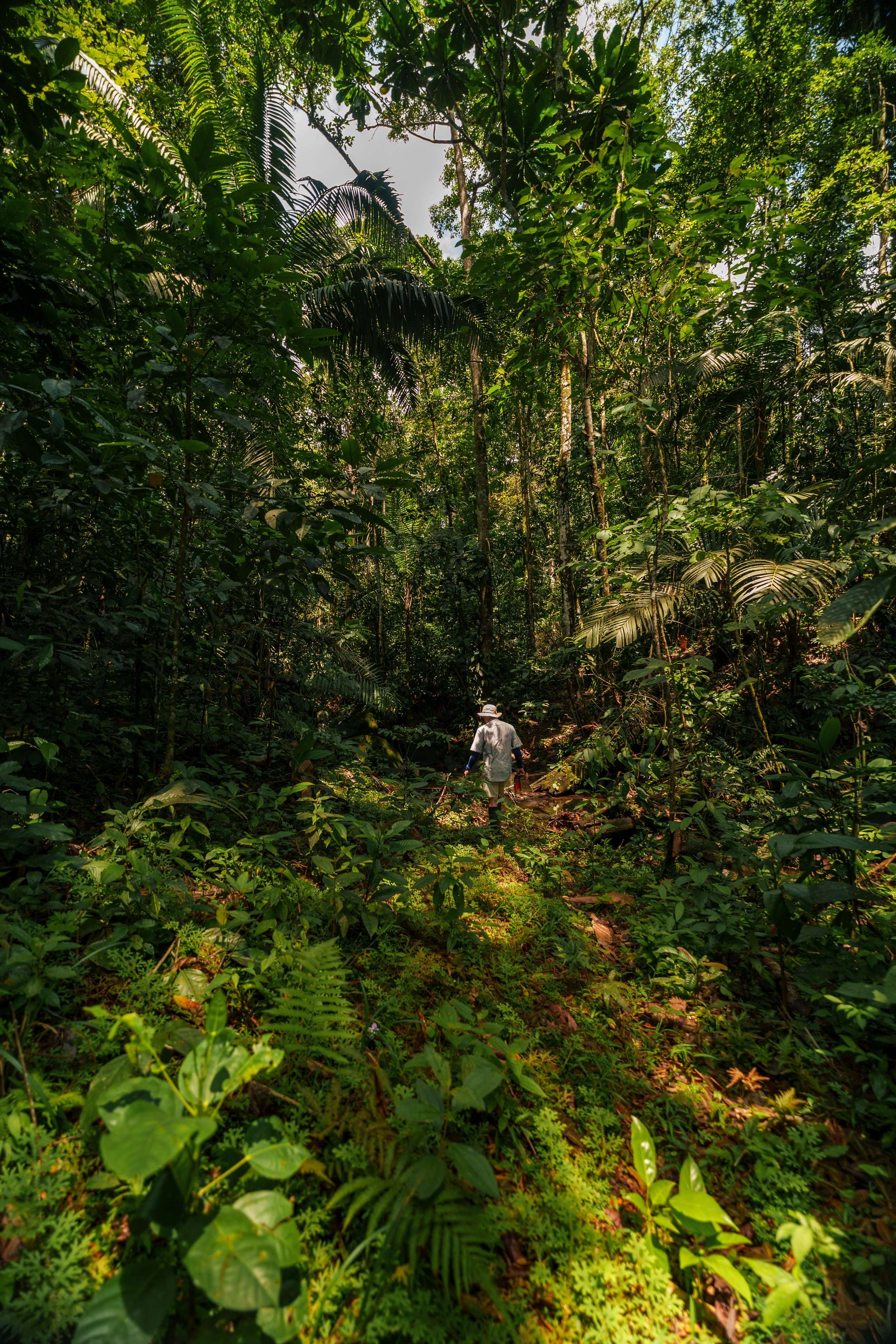
Trails. Forest paths for walking slowly, with good birdwatching.
Why there is a nursery
The nursery exists because we needed to propagate plants, but mainly because it is my passion. Plants have always been an important part of my life, and later what I decided to study. What drew me to them hasn't changed: their ethnobotanical uses, what they do inside an ecosystem, and the calm and beauty they bring to a landscape. I still consider myself a student of how plants work in systems that feed us and restore the land.
The nursery is not a business alongside the farm; it is the farm's propagation arm. Many plants come straight out of the lots — cuttings of nacedero and botón de oro, seed from crotalaria, divisions and rhizomes. The ones that need it start under shade and cover: hibiscus goes into flats, because in open ground it germinates unevenly. All of them go out young, which is when they take best.
Our catalog represents our curiosity and passion for plants. Every plant in it came from a friend, a walk down a path, a trade, a gift, or another nursery. They are part of the collection because someone here wanted to grow them. When it comes time, our own mother plants provide the seeds, cuttings or divisions. What we sell helps keep the project growing, and keeps us able to share what we treasure.
How we grow
No agrochemicals, anywhere on the farm. It is certified organic by Certificadora de Productos Orgánicos Eco-Lógica S.A., Costa Rica's first organic certifier.
But not applying agrochemicals is only half of it. The other half is where the fertility comes from. Every system has rows given over to producing biomass — Mombasa grass, mostly — which are cut and laid along the planted lines; the soil is never left bare. And we prune. Pruning is what pushes growth through the whole system, lets light into the places that need it, and returns organic matter to the ground. The fertility isn't bought. It is made here, and there is more of it every year.
An agriculture of information and processes, not of inputs.
Behind that sit more than thirteen years of certified organic cultivation, first at Cinco Ramas and now here as well: living soil, biodiversity and water conservation ahead of short-term yield.
What's coming
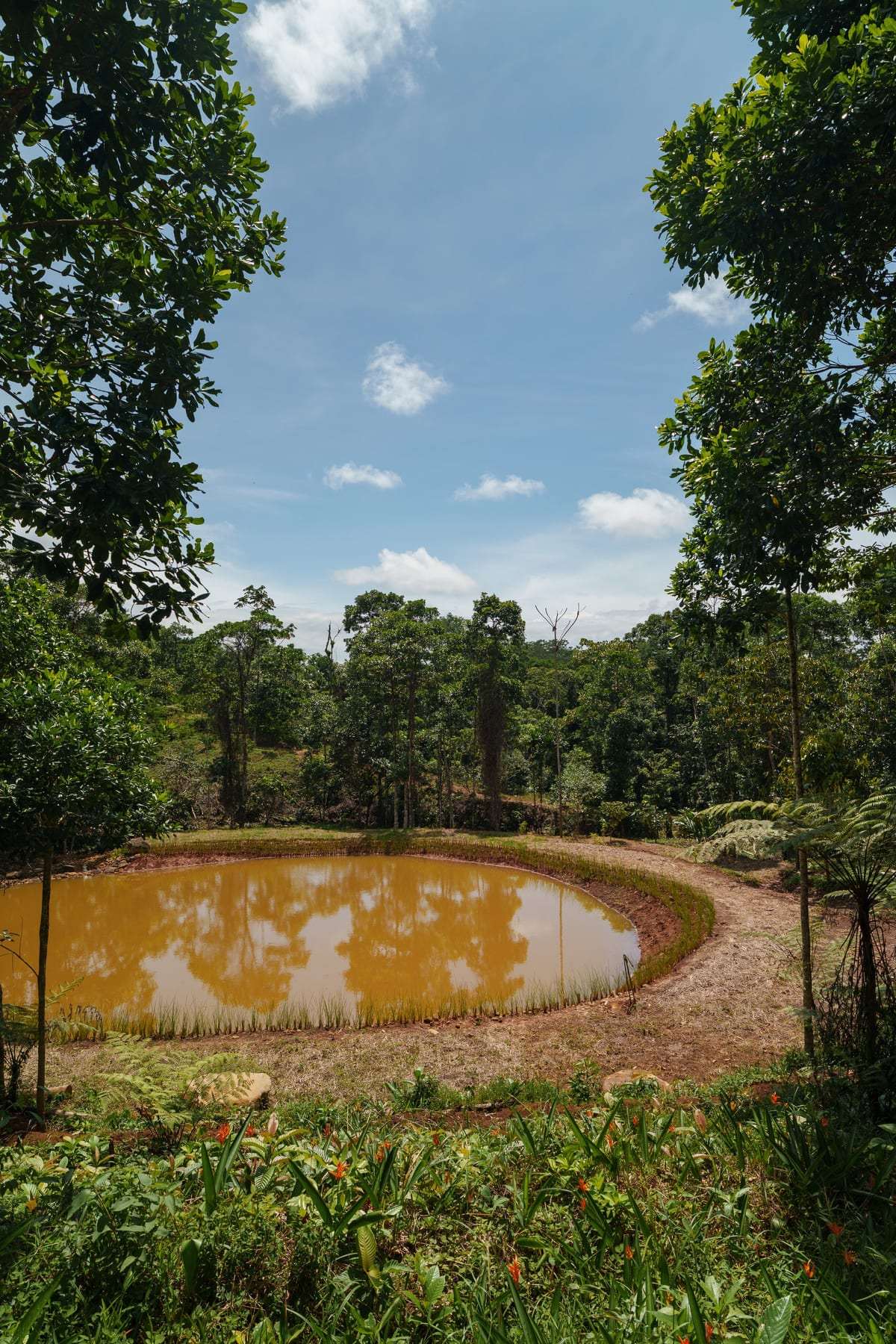
Botanical collections. Our young collections are growing: Zingiberaceae (the ginger family), Piperaceae, Arecaceae (palms), Araceae (aroids), an aromatic and medicinal collection, plants of cultural and ethnobotanical importance, and ponds with aquatic species.
Syntropic Lot 6. Five thousand square meters for production and education, with installation scheduled for July 2027. It will be the farm's sixth syntropic system, and it goes in during our third course on syntropic agroforestry.
More vanilla, in syntropic systems. Lot 4 was designed with vanilla in mind, and Lot 3 has 2,500 m² with vanilla in its B rows. Both go in during 2027 — on a condition the calendar doesn't set: once the inga have raised enough canopy to carry them.
Scheduled tours and picnic areas. Set departure times, so a visit won't depend on booking ahead, and places to sit a while afterwards.
Visiting
We love having people here. Visits are by appointment, which has its upside: someone from the farm walks it with you, and the route bends to whatever you're most curious about.
What there is to see today is the vanilla, the syntropic systems — walked slowly, which is how they're worth seeing — and the bamboo groves.
We also take groups: students, delegations, work teams, and visits put together with local hotels and guides.
Write to Rob or Geri on WhatsApp and we'll set it up. It's a pleasure to show people around.
Where we come from
Bodha Gardens is where everything else was leading. Fifteen years of growing timber and spices in this part of the country taught us how we wanted to work and, in time, how we wanted to live. This is that, on one piece of land.
It began in 2010 with Silviterra: sustainable tropical hardwood, from planting through the mill, produced without chemicals. In 2011 came Cinco Ramas, a 27-hectare certified organic spice farm with more than fifty crops — vanilla, black pepper, ginger, native medicinals — and some five hectares of protected wetland.
What runs through all of it is a kind of stubbornness: doing things the way they ought to be done, even when that way is the slower and more complicated one. It shows in the soil by now, in trees that already throw shade, and in the people who have worked and learned here.
Bodha means awakening, or awareness of oneself — "I am not the body, nor is the body mine; I am awareness." That is what we hope this land wakes in the people who walk it. Not only somewhere to visit, but somewhere something grows.
The farm