Courses
Syntropic agroforestry on the farm, hands in the soil. You install a new system and work in ones that have been growing for years — which is where the management is learned.
What they are like
They run on the farm, but they don't start there. The design is done beforehand, and the logistics with it: which species, how many, where each one goes and at what spacing. You arrive in the field with that settled. Nothing is guessed on site.
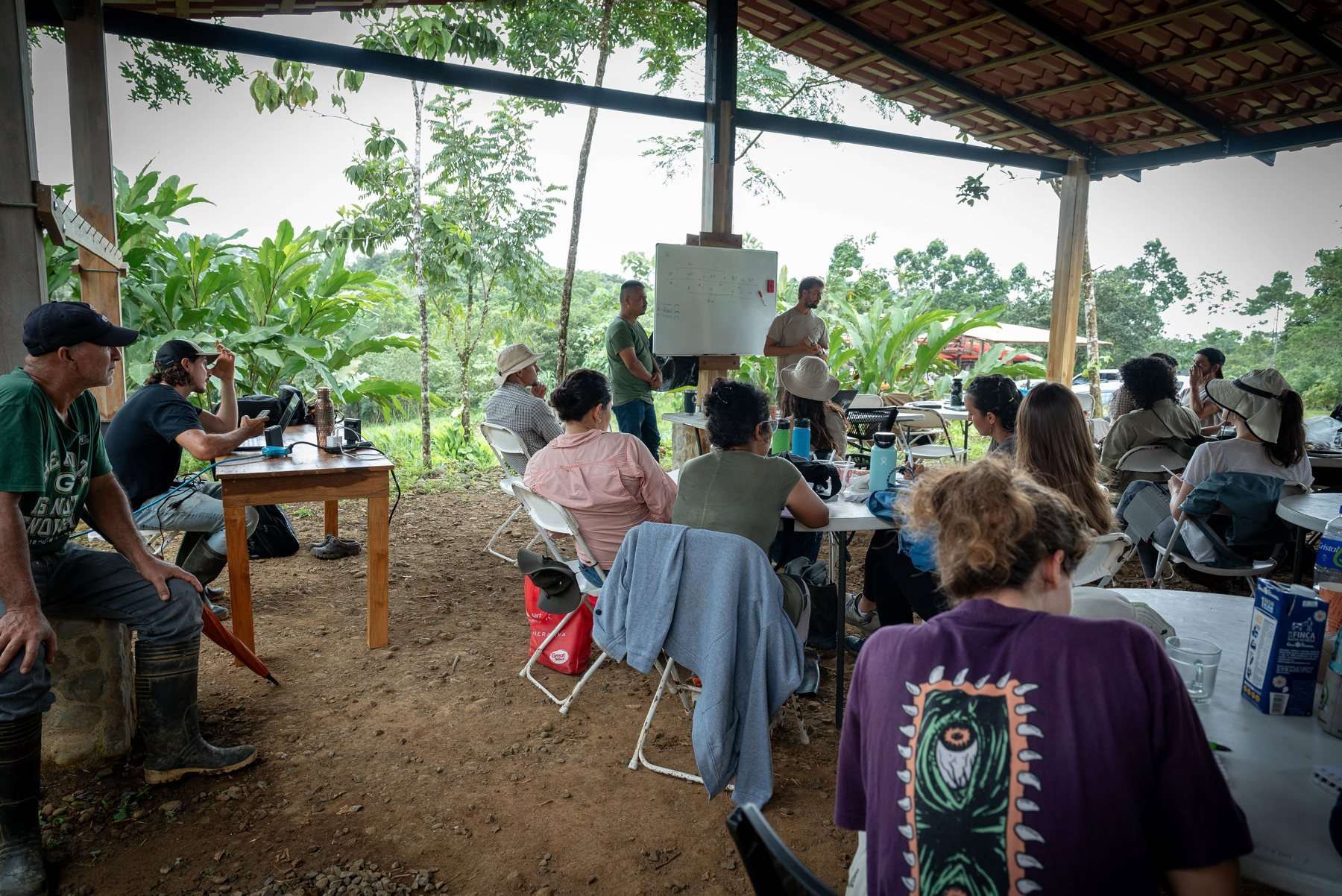
Days start early — seven in the morning in the field, before breakfast — and alternate between field and classroom until late afternoon. Meals are included.
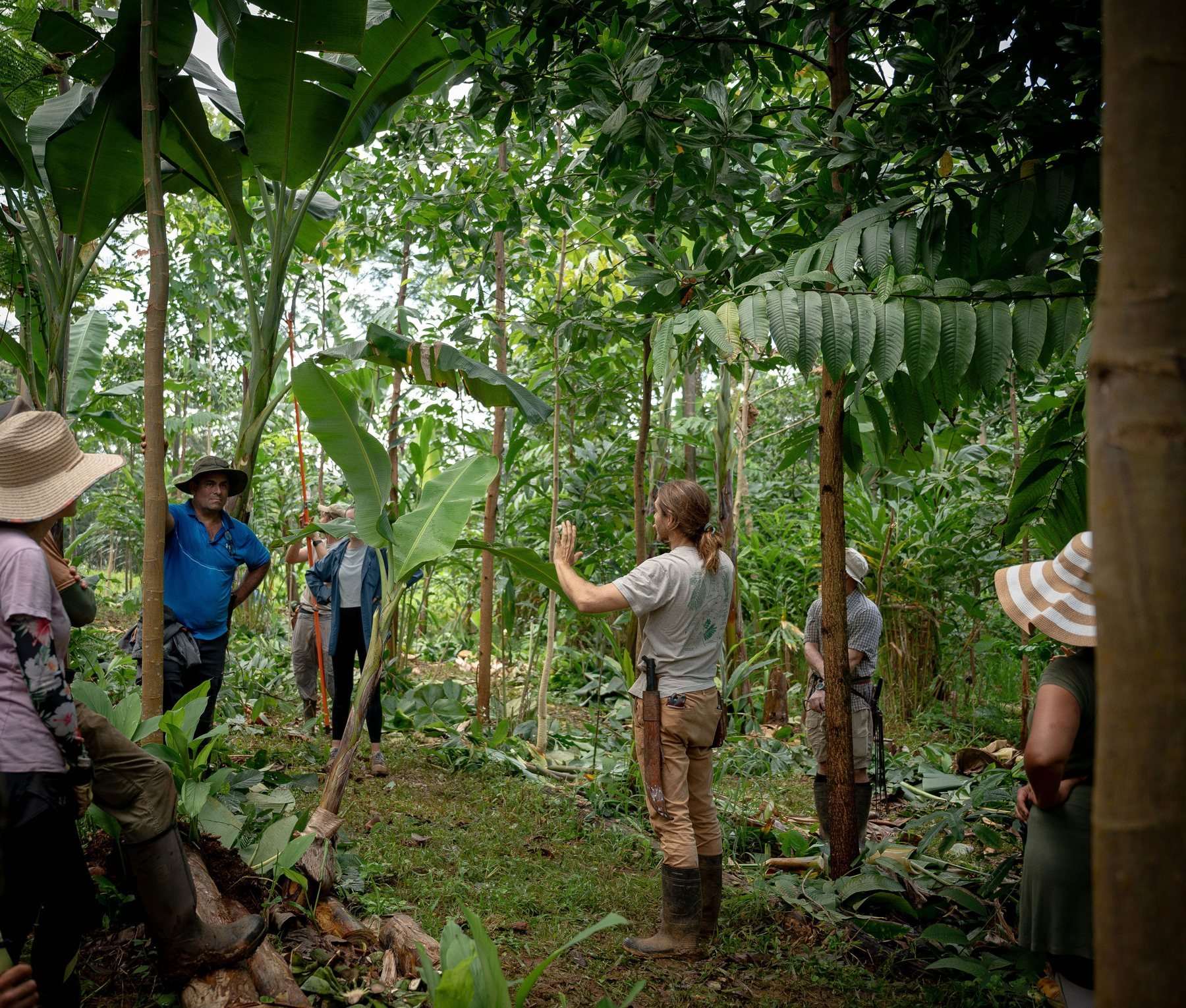
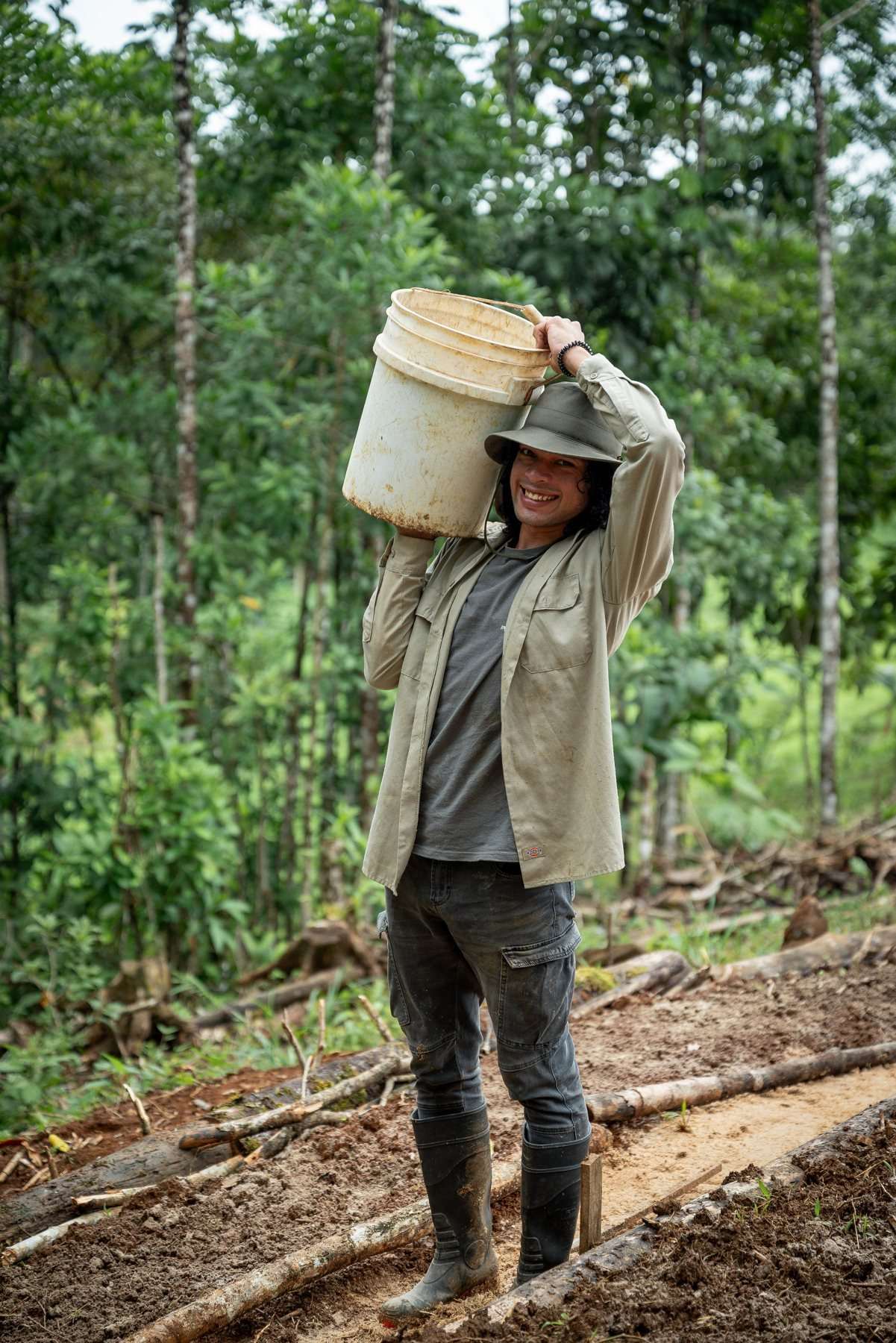
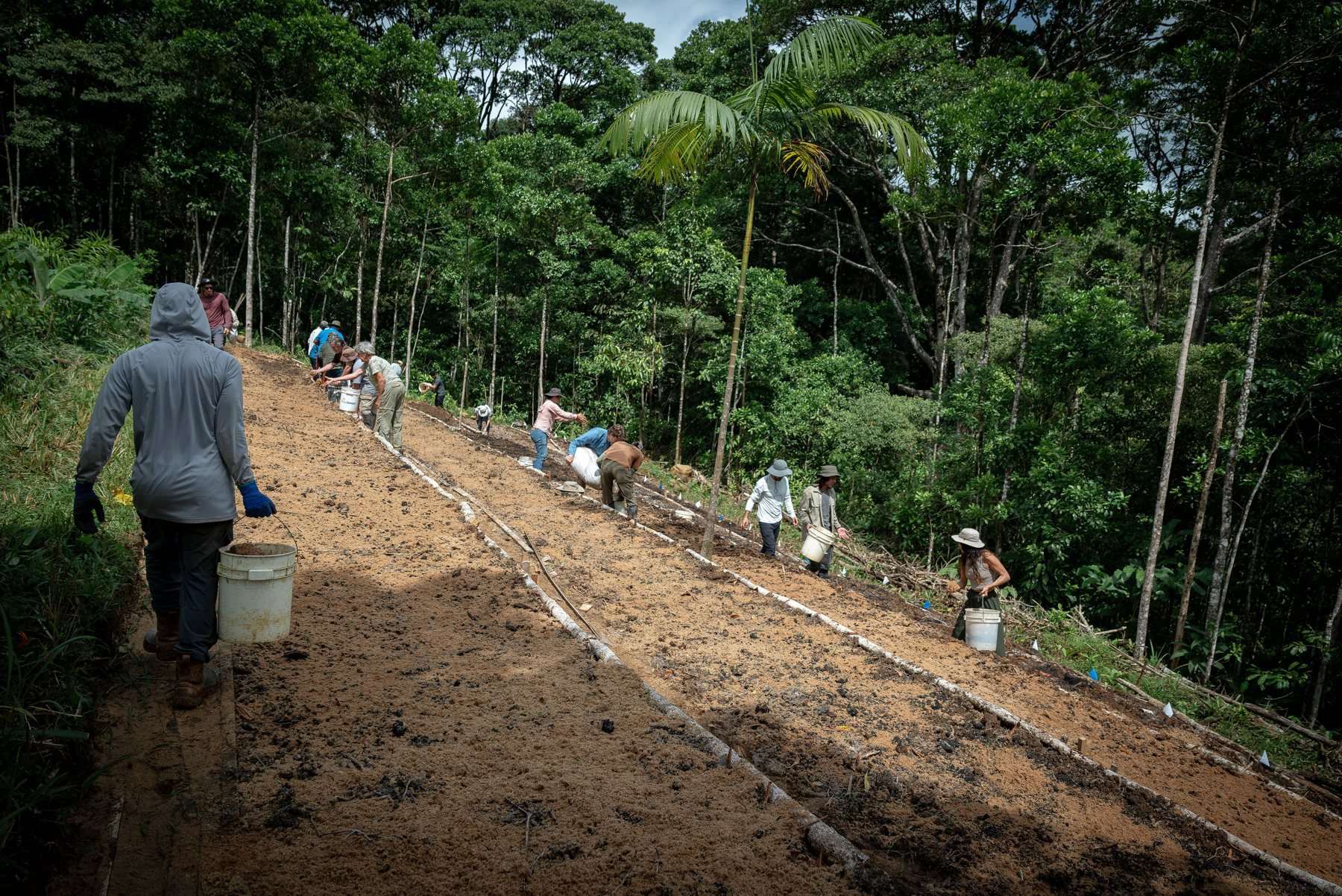
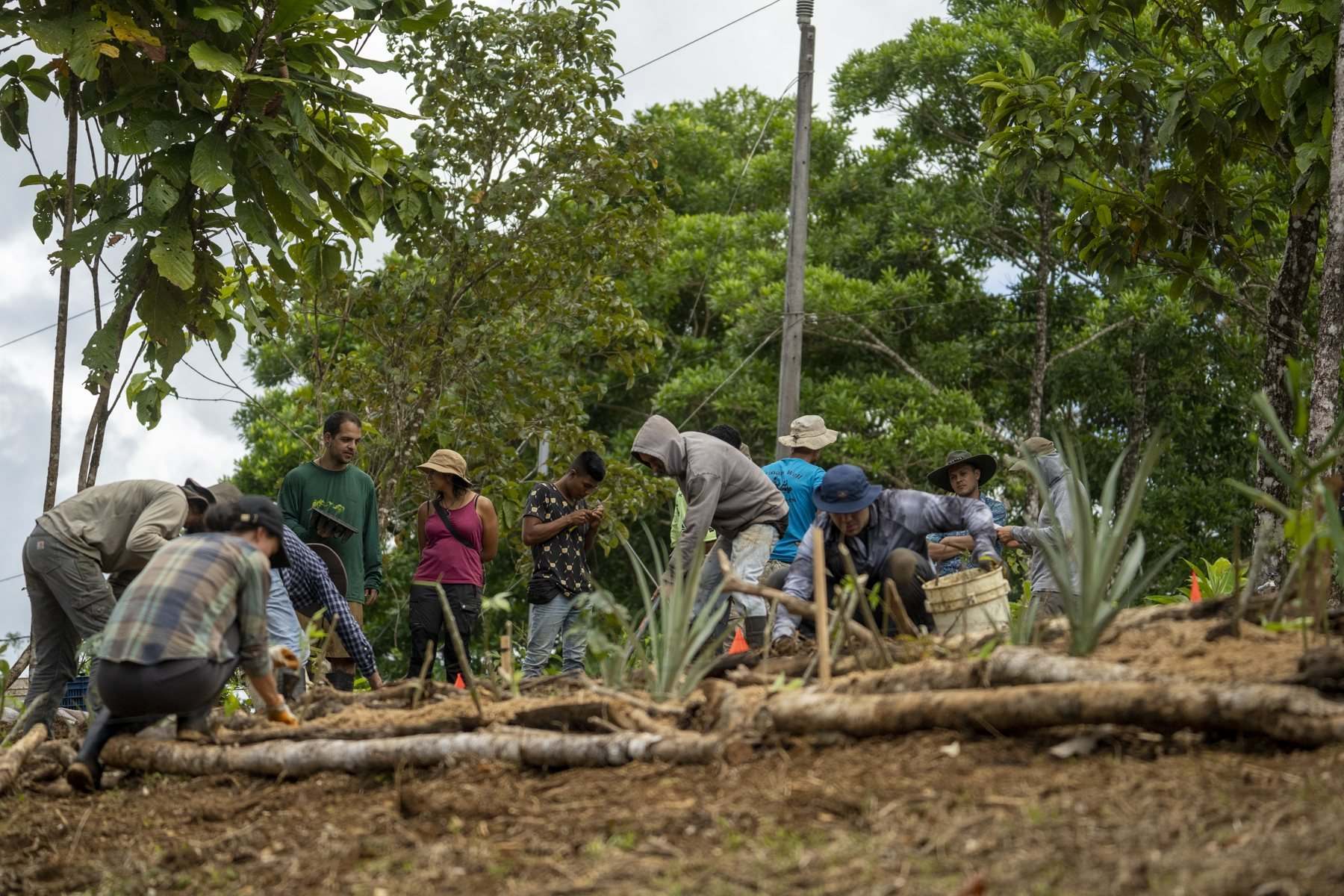
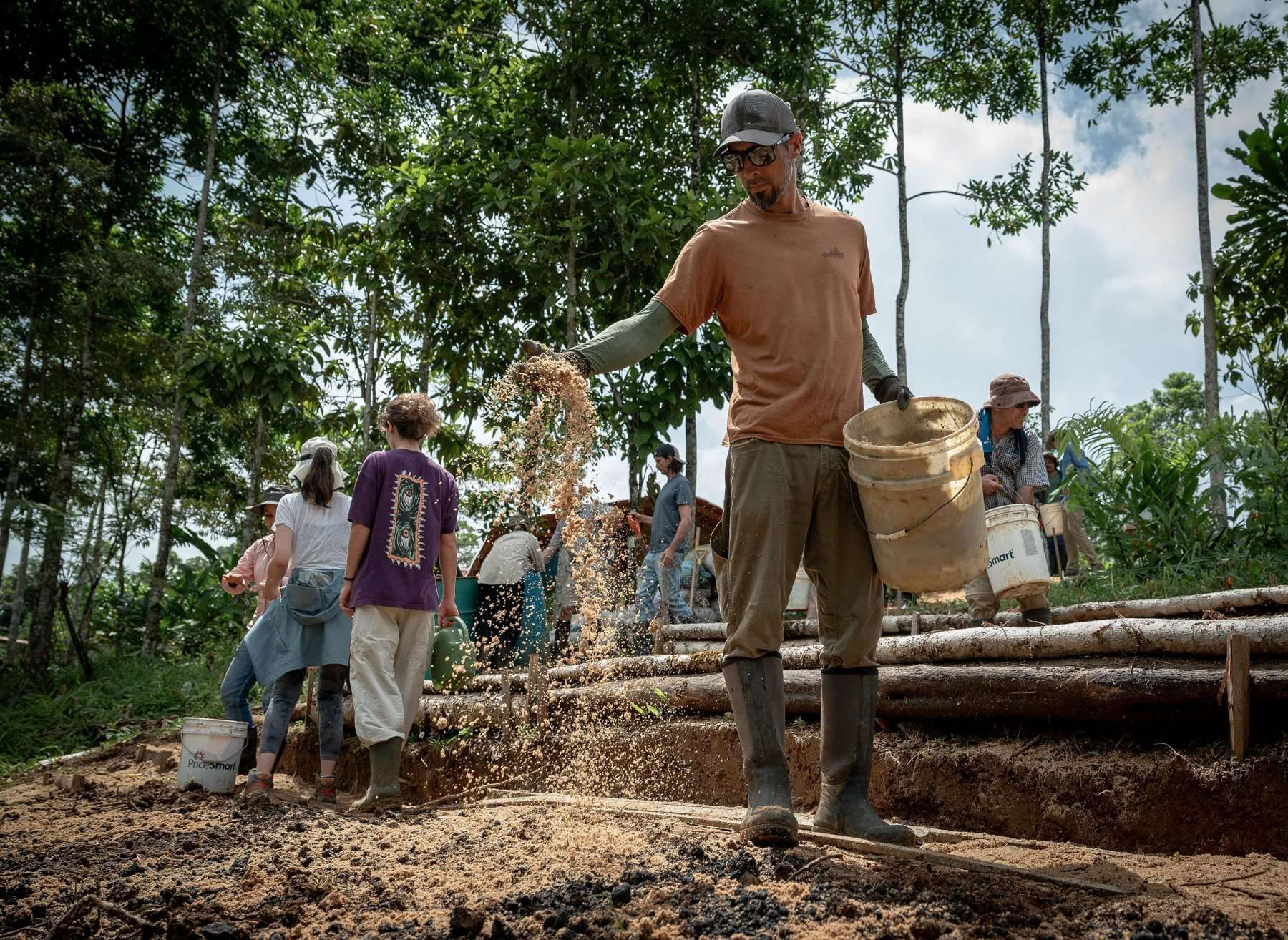
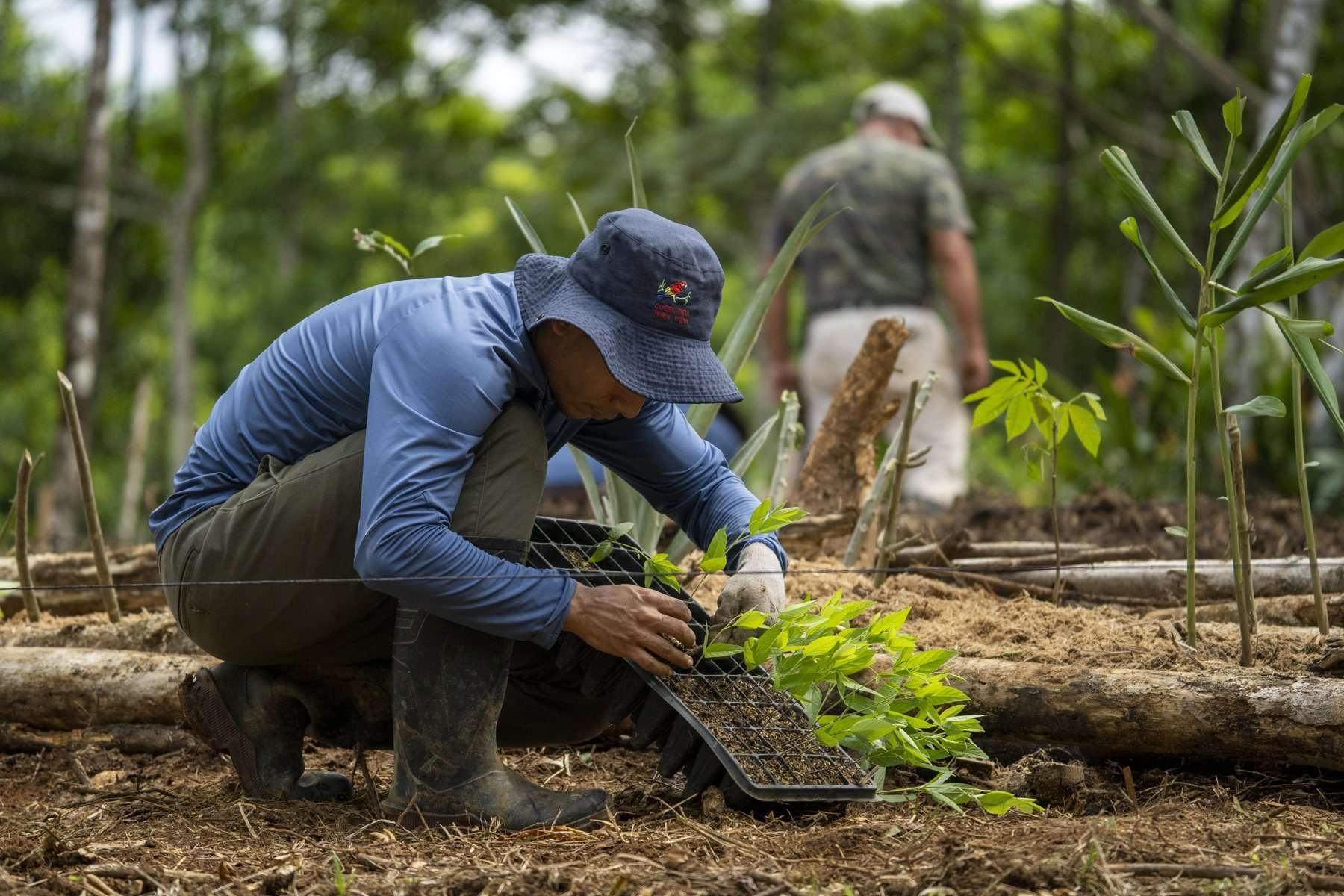
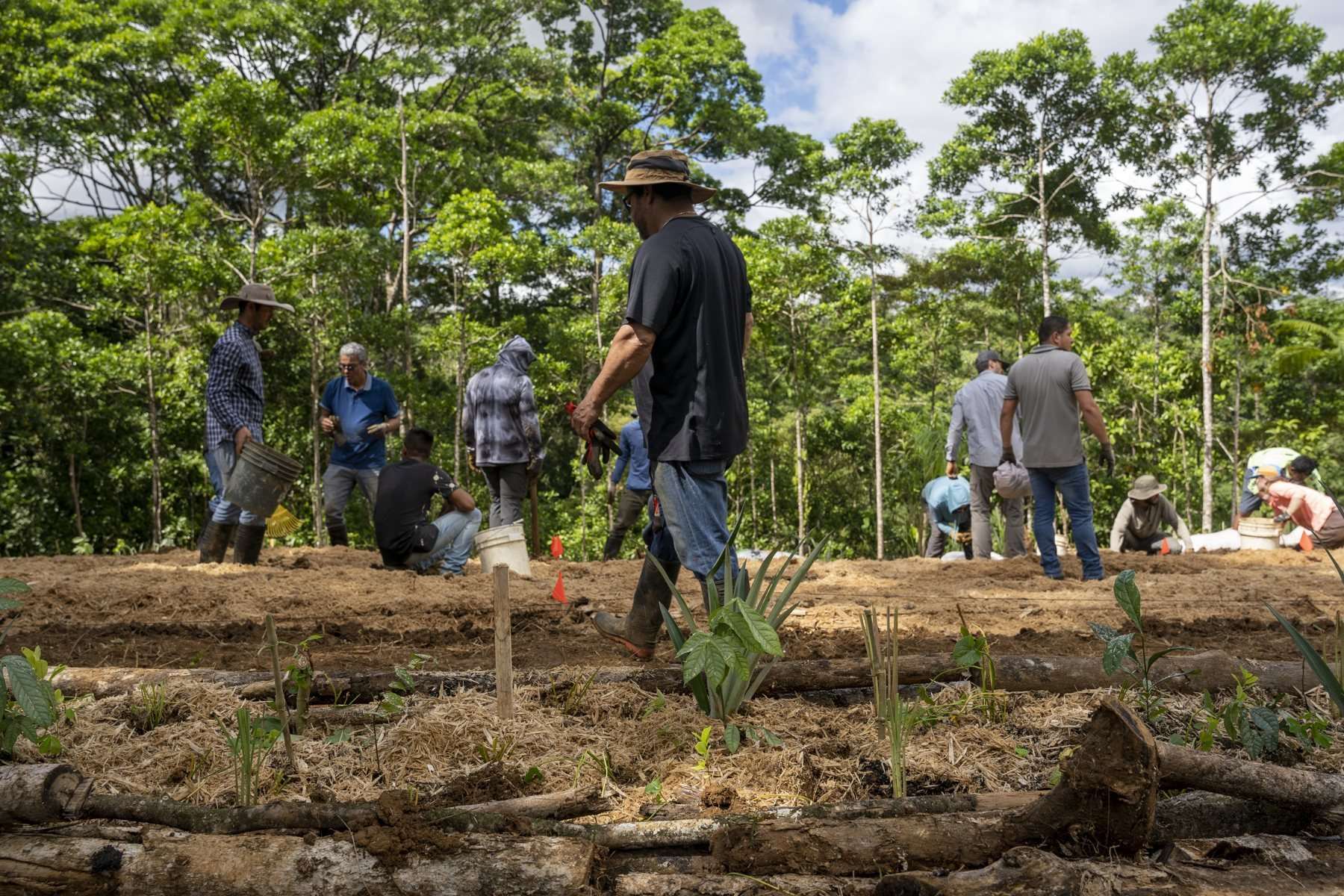
Each course works on a new design. The group sees the ground before anything is planted, then installs it with their own hands: preparing the site, applying the amendments and the compost, opening the holes, planting.
And it doesn't stop there. You also get into the lots earlier courses installed, which have age on them. Because we install a new syntropic lot every year, there is more age to walk each year — and with it, more to learn.
Courses are taught in Spanish, with simultaneous English translation.
What it covers
The course starts from the ground up — you don't need to arrive knowing anything — and classroom and field alternate throughout, because each idea lands when you're standing in front of it.
It opens by looking: a tour of the farm and a walk given over to what is happening on that ground before anyone touches it. Out of that come the five principles of syntropic farming — density, biodiversity, stratification, process-led agriculture and ecological succession — and what it means in practice that this is an agriculture of processes rather than of inputs. Then tropical soils and amendments; strata, which is not about height or age but about how much light a species needs — tea sits low, citrus medium, avocado high, coconut emergent; life cycle, from placenta through to climax; and how a consortium is put together, with its queen species and its service plants, which yield no product but hold the system up and make up most of what gets planted.
The rest is work. The plot's design is reviewed, the site prepared, the plot planted; you get into the older lots, which is where you learn to steer a system rather than only to install one; and you work with the tools, in the field and on the design side.
Management is the part that pays, and it isn't only weeding rows and laying down Mombasa grass. It's pruning to push growth and let light into the places that need it, and leaving things unpruned where you want shade. It's deciding, once trees are large, which ones to thin and which to top. That can only be learned in front of a system with years on it.
The schedule bends to the group and the weather. In the field things take the time they take, and that is part of learning the work too.
What we've run
The first two courses worked on the same 500 m² plot: half each.
23–25 January 2026. A three-day hands-on introduction to syntropic agroforestry, run together with Porvenir Design. The group installed the first half of the plot — a canasta básica staple-food system, on a slope that had to be cut into four terraces — and walked the farm's established lots.
31 July – 2 August 2026. The second group planted the other half — but first we went back over the first: what had worked, what hadn't, and what needed changing from what was planned in January. They also walked the cacao, vanilla, citrus and medicinal systems.
That plot now carries six months between one half and the other, planted by two different groups. It is study material for the courses that follow.
Who teaches
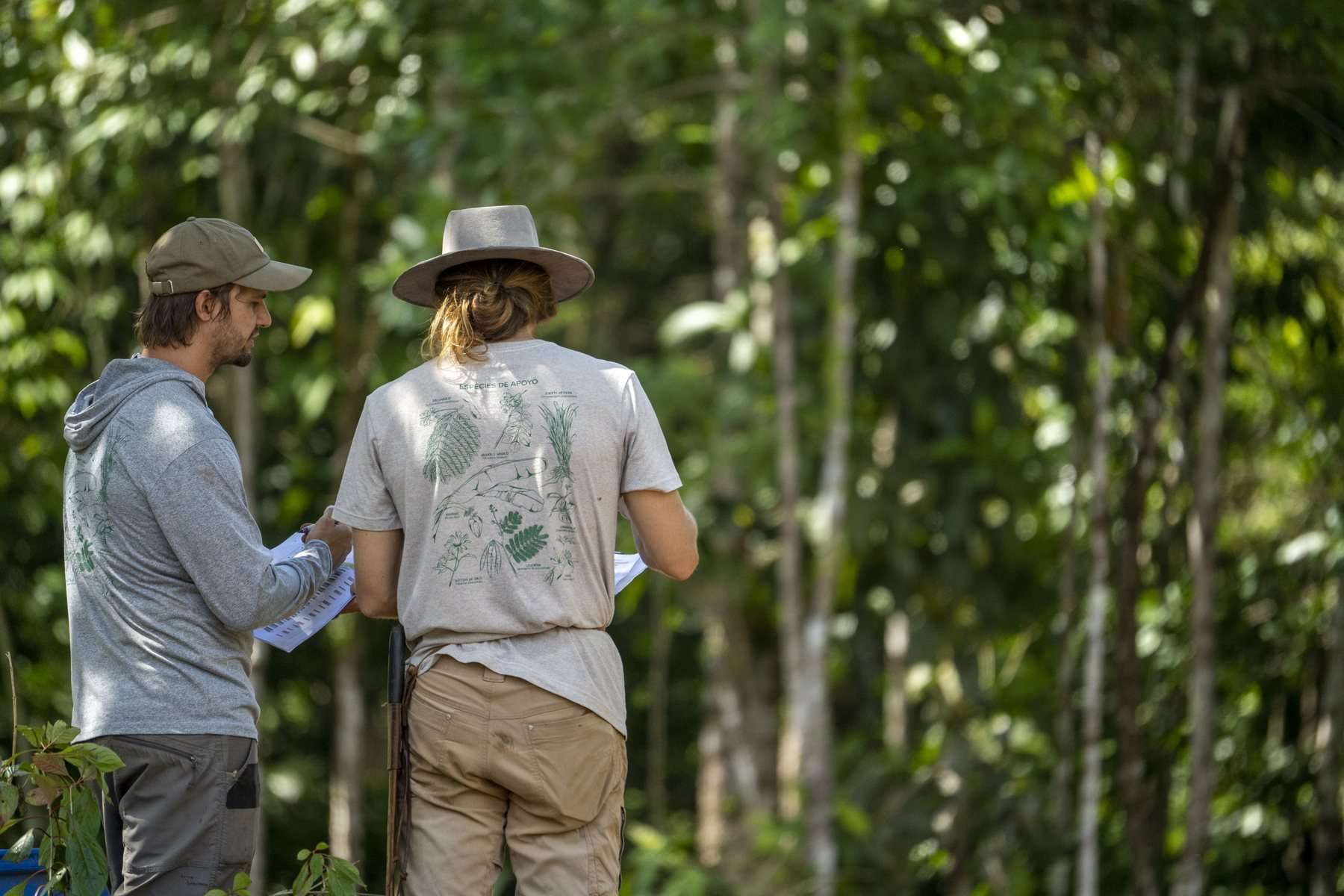
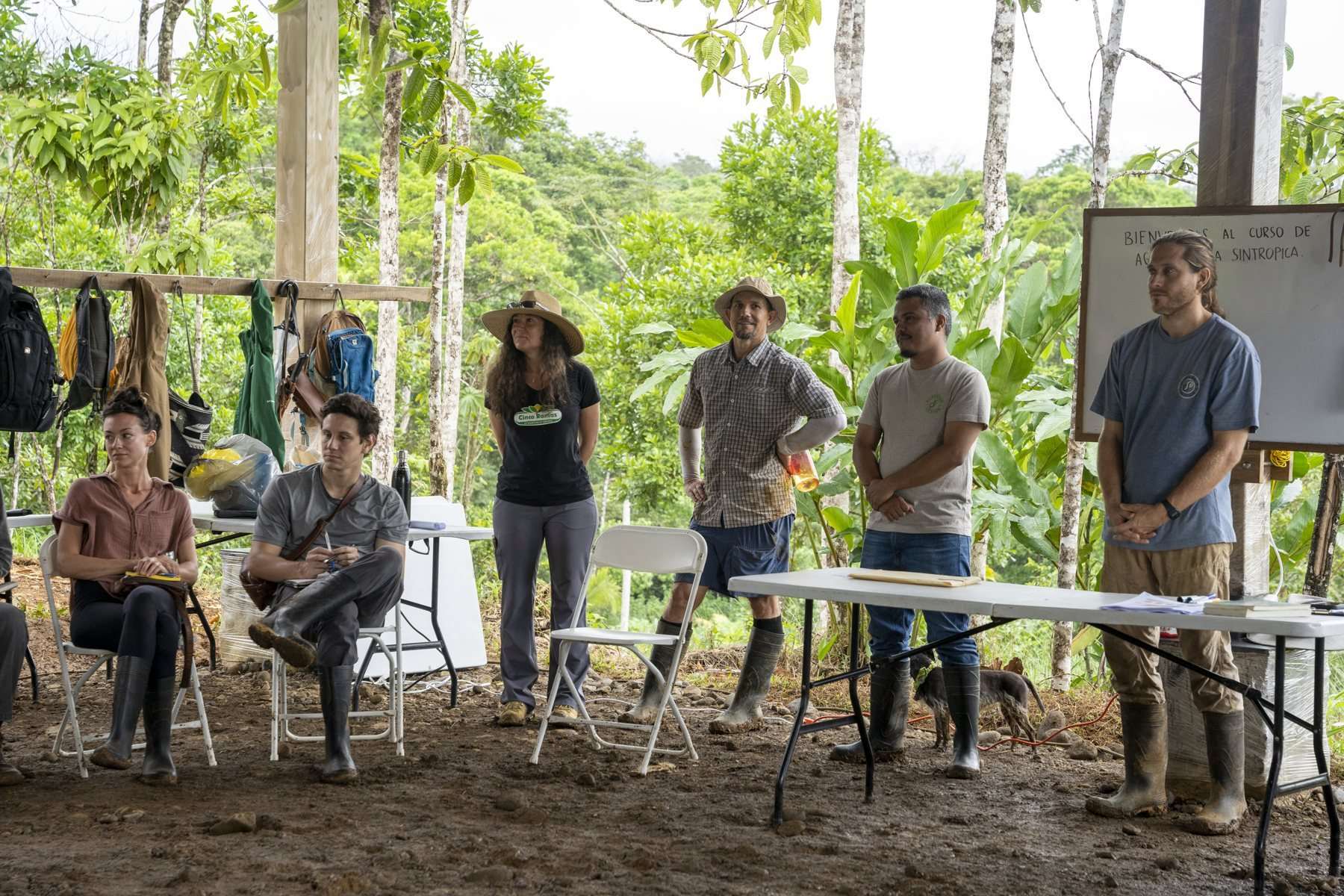
So far we have run the courses together with Porvenir Design, a Costa Rica-based land planning and design team specializing in tropical agroforestry and permaculture education. Instructors have been Scott Gallant, Alberto Koberg and Gerardo Calderón, alongside Rob Brown of Bodha Gardens.
Full team biographies, with photos, are on their site: Team — Porvenir Design.
The next one
The next course is in July 2027, around the installation of Lot 6: five thousand square meters of syntropic system for production and education. Exact dates are still to be confirmed, and it will most likely be with Porvenir Design again.
We also put courses together for groups that already come as one — farms, schools, work teams — on a date that suits them.
If you're interested, write to us and we'll let you know when dates open. We're happy to tell you what it's like before you decide.
The courses, in photographs
23–25 January 2026
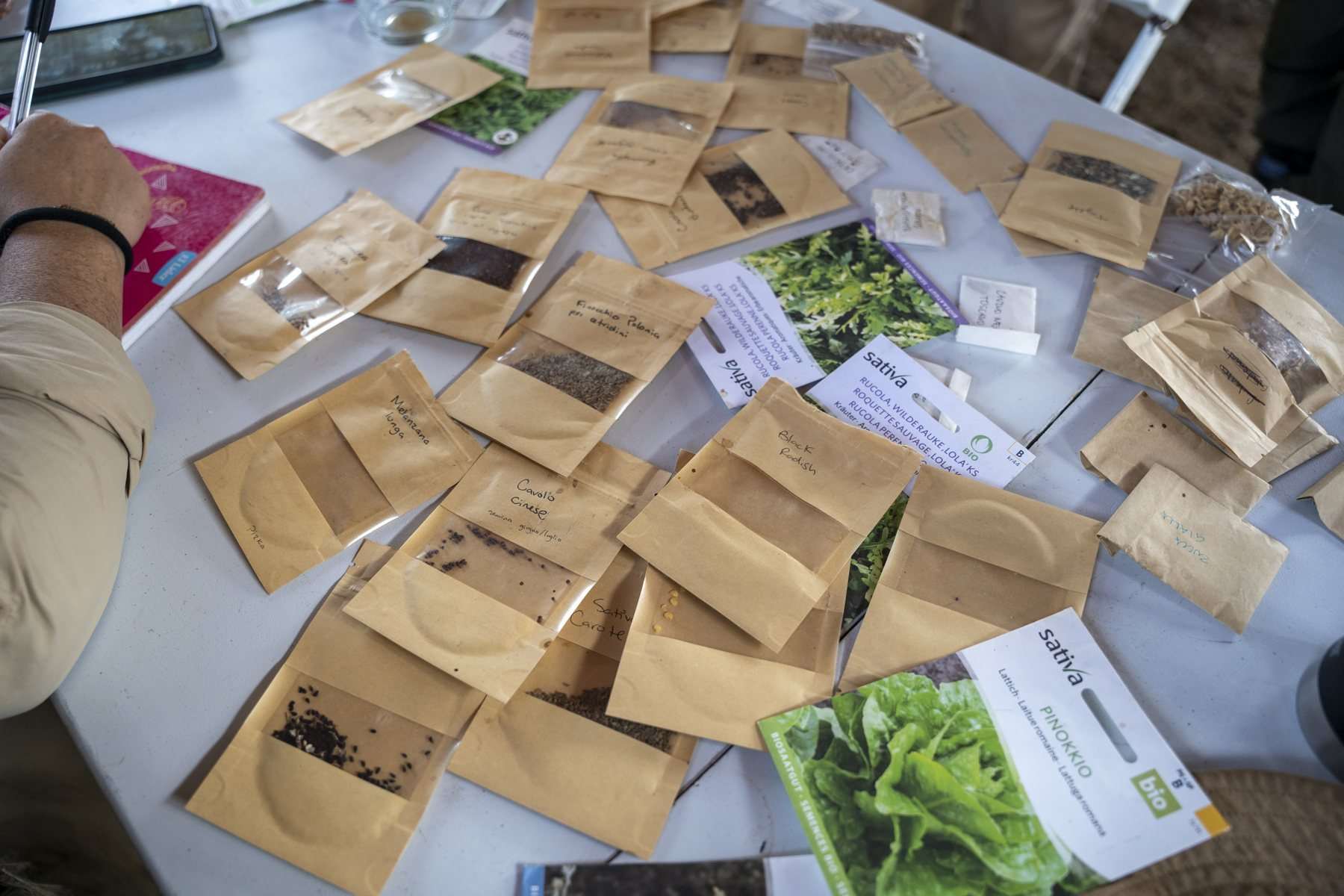
31 July – 2 August 2026