Anthurium clavigerum
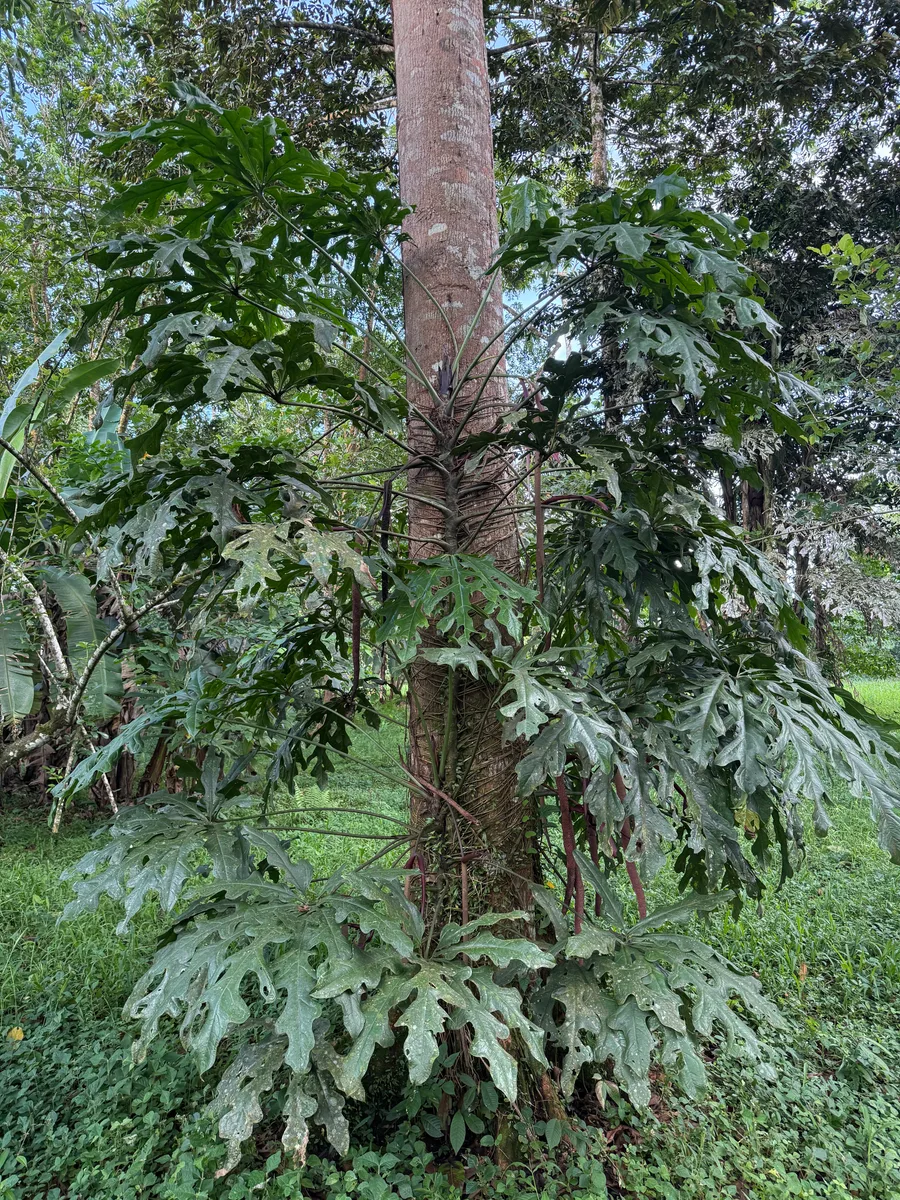
The size of the plant and of its bag can vary a little from the photograph — each one grows at its own pace. We keep them as consistent as we can.
Overview
Giant split-leaf anthurium has the largest leaves of any anthurium in Central America: palmate leaves, deeply divided into lobes, that can reach 2 meters across. It's native from Honduras to Brazil, Costa Rica included, and in the forest it grows as an epiphyte, climbing tree trunks on a stem several meters long. A sculptural plant that turns a tree into a corner of rainforest.
Culture
It thrives in a warm, humid climate between 18 and 28 °C, in bright indirect light like that of the understory, with no direct sun. As an epiphyte it wants a very airy mix, such as bark with organic matter, moist but never waterlogged. It needs a tree or a large support to climb; over the years its stem grows several meters long.
Edible Uses
Not edible: like other aroids, it contains calcium oxalate crystals that irritate the mouth.
Medicinal
No documented medicinal uses are known.
Traditional uses for information only. Not a substitute for advice from a health professional.
Agroforestry
In the catalog for its beauty, not for a role in an agroforestry system.