Begonia imperialis
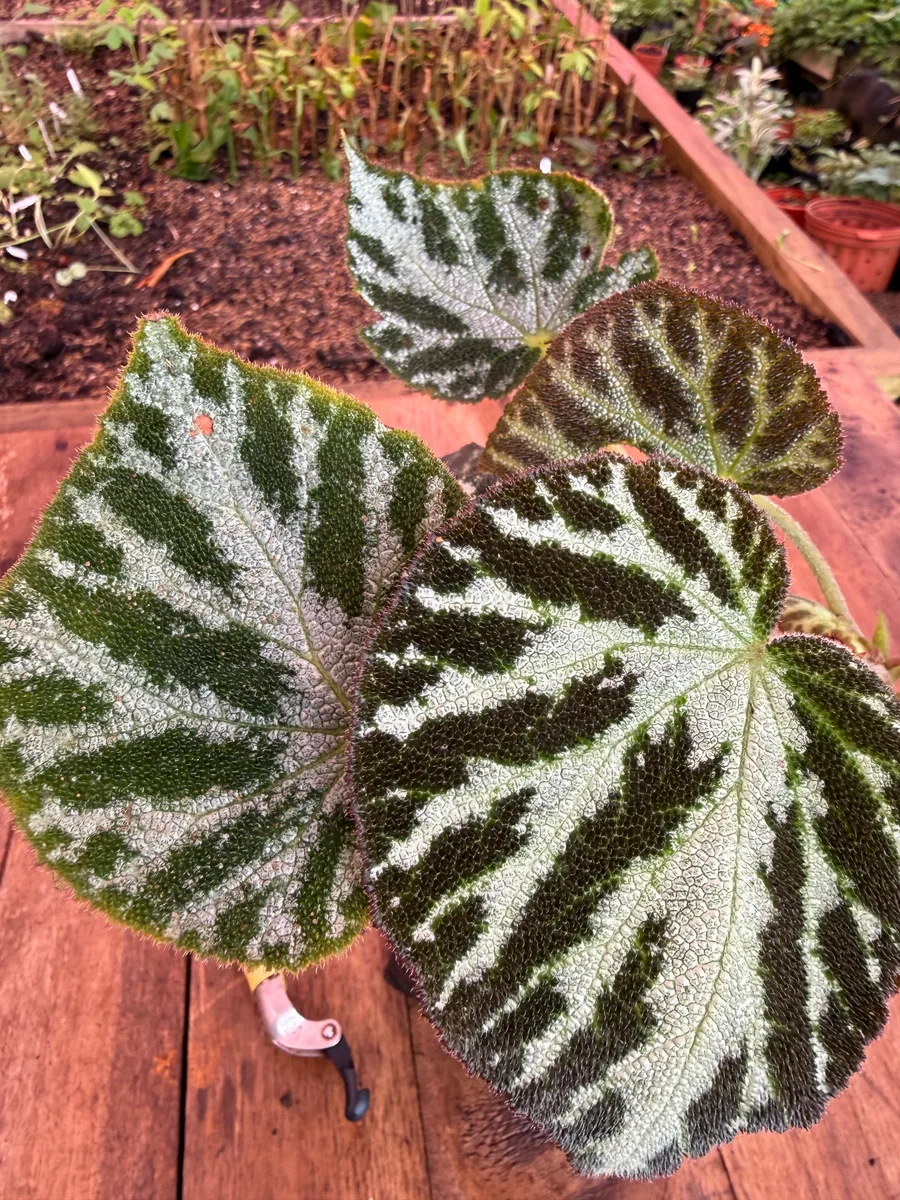
The size of the plant and of its bag can vary a little from the photograph — each one grows at its own pace. We keep them as consistent as we can.
Overview
A leaf of velvet. The imperial begonia is native to the cloud forests of southern Mexico, and its leaf — heart-shaped and quilted between the veins — has a velvety texture that asks to be touched: very dark green, with the veins traced in pale, almost silver green. It's a rhizomatous begonia, low and unhurried, flowering in small sprays of little white flowers. A plant to look at closely.
Culture
Shade and humidity, as in the forest it comes from: filtered light, never direct sun, and humid air. A very loose mix, rich in organic matter, barely moist; too much water at the crown rots it, so water at the edge of the pot and keep the leaves dry. It does well in a wide, shallow pot, because the rhizome runs along the surface. Multiply it by dividing the rhizome or from leaf cuttings.
Edible Uses
Not edible.
Medicinal
We don't offer it as a medicinal plant.
Traditional uses for information only. Not a substitute for advice from a health professional.
Agroforestry
In the catalog for its beauty, not for a role in an agroforestry system.