Coutarea hexandra
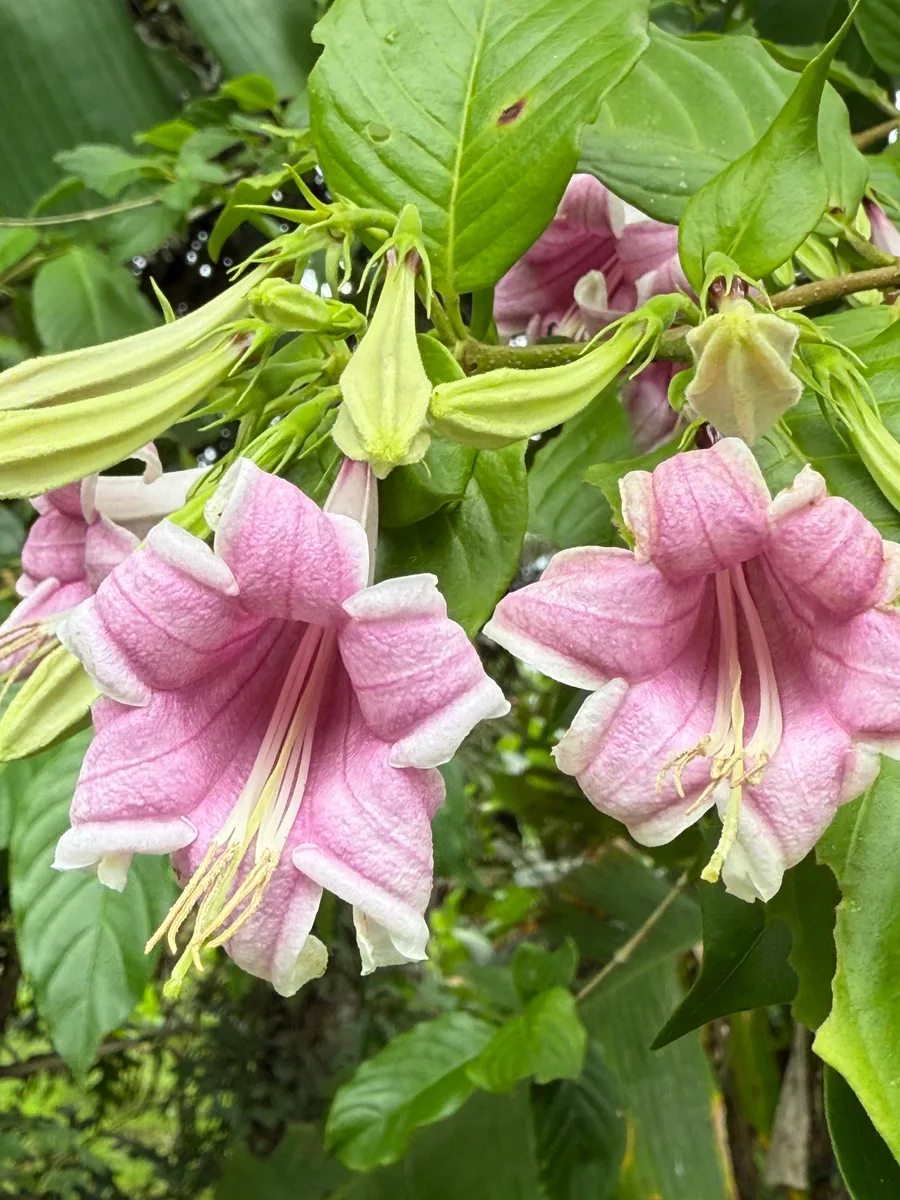
The size of the plant and of its bag can vary a little from the photograph — each one grows at its own pace. We keep them as consistent as we can.
Overview
Árbol de quina, "quinine tree", is named for its bitter bark, used for centuries as a substitute for quinine to treat malaria. It's a native tree, from Mexico to Argentina, Costa Rica included, where specimens up to 18 meters tall have been recorded. Its trumpet-shaped flowers make it very ornamental, and in places like Brazil its wild populations have shrunk badly from bark harvesting. Planting it is also a way of conserving it.
Culture
- Habit
- Semi-deciduous Tree
- Height
- 4.50 m
- Cultivation Status
- Wild
A semi-deciduous tree that can grow as a shrub with scrambling stems or as a small tree with a dense, round crown, about 4–6 meters tall. It prefers sun and moist soil; in the wild it grows in river valleys and near rivers, in both dense forest and more open formations. Its small size makes it ideal for narrow streets and under power lines. Planting distance: 6–8 m.
Edible Uses
No known edible uses.
Medicinal
The stem bark is bitter, tonic and lowers fever: its decoction is traditionally used against malaria, fevers and vomiting, as a substitute for quinine bark (Cinchona). Mixed with root bark, it's used against diabetes and intestinal worms. In studies, its extracts have shown anti-inflammatory effects.
Traditional uses for information only. Not a substitute for advice from a health professional.
Agroforestry
A very long-lived climax tree of the medium stratum. It adds structure and flowers to the system, and it's a way to conserve a medicinal species under pressure in the wild.