Heliconia stricta
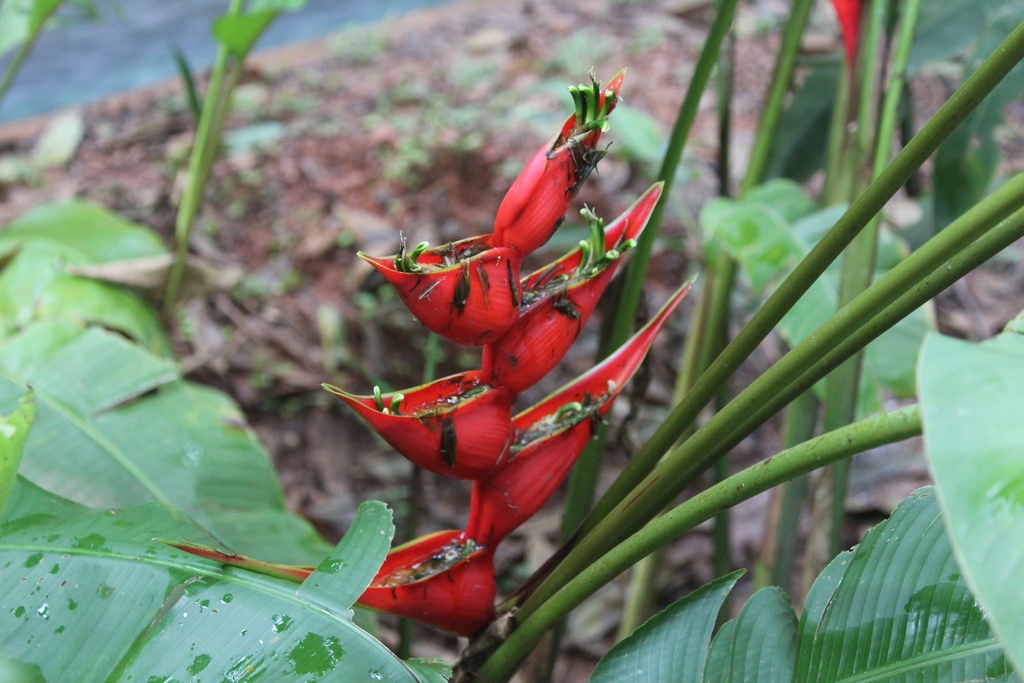
The size of the plant and of its bag can vary a little from the photograph — each one grows at its own pace. We keep them as consistent as we can.
Overview
Heliconias and hummingbirds evolved together: the curve of the flowers fits the beaks of the species that pollinate them. This dwarf heliconia produces upright red bracts that last for weeks on the plant or in a vase. Its cup-shaped bracts collect rainwater, a tiny habitat for insect larvae.
Culture
Native to our region. It wants fertile soil rich in organic matter, moist and well drained, in partial shade or sun. It forms clumps that widen over the years; plant 80–100 cm apart. Shelter it from strong winds that bend the flower heads.
Edible Uses
Not used as food.
Medicinal
No significant documented medicinal uses.
Traditional uses for information only. Not a substitute for advice from a health professional.
Agroforestry
A secondary species of the medium stratum. Its clumps protect the soil and give biomass: stems that have flowered are cut and left as mulch. It's a key plant for drawing hummingbirds into the system, and it doubles as a cut flower.