Iriartea deltoidea
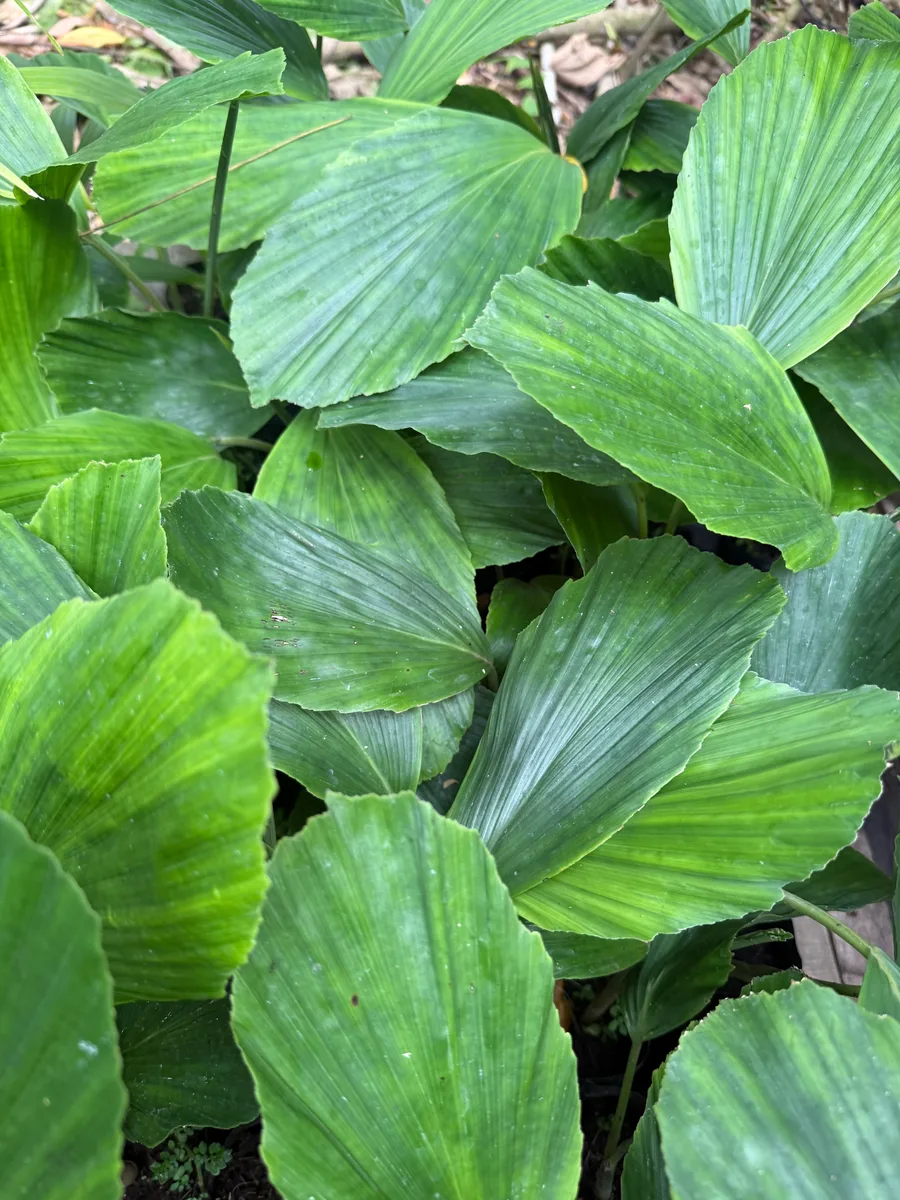
The size of the plant and of its bag can vary a little from the photograph — each one grows at its own pace. We keep them as consistent as we can.
Overview
The pambil is one of the dominant palms of lowland rainforests from Nicaragua to Bolivia, Costa Rica included. It stands on a cone of stilt roots that lift the trunk off the ground, and many trunks have a bulge halfway up. Its hard, fibrous wood has been used to build houses and floors, and even to make blowguns and spears.
Culture
- Habit
- Evergreen Tree
- Height
- 25.00 m
- Cultivation Status
- Wild
Native to our region. It wants a warm, humid, sheltered spot; when young it appreciates the shade of other trees, as in the forest. Soil with good organic matter and constant moisture. It grows slowly, but over the years it becomes a palm more than 20 meters tall.
Edible Uses
Its heart of palm is edible but not very tasty, and harvesting it kills the palm, since it has a single stem. In Indigenous tradition, ash from its flowers was used as a salt substitute.
Medicinal
No documented medicinal uses are known.
Traditional uses for information only. Not a substitute for advice from a health professional.
Agroforestry
A very long-lived climax species of the high stratum. It adds vertical structure to the system while casting little shade on the ground, and it's a legacy tree that stays with the system for generations.