Xiphidium caeruleum
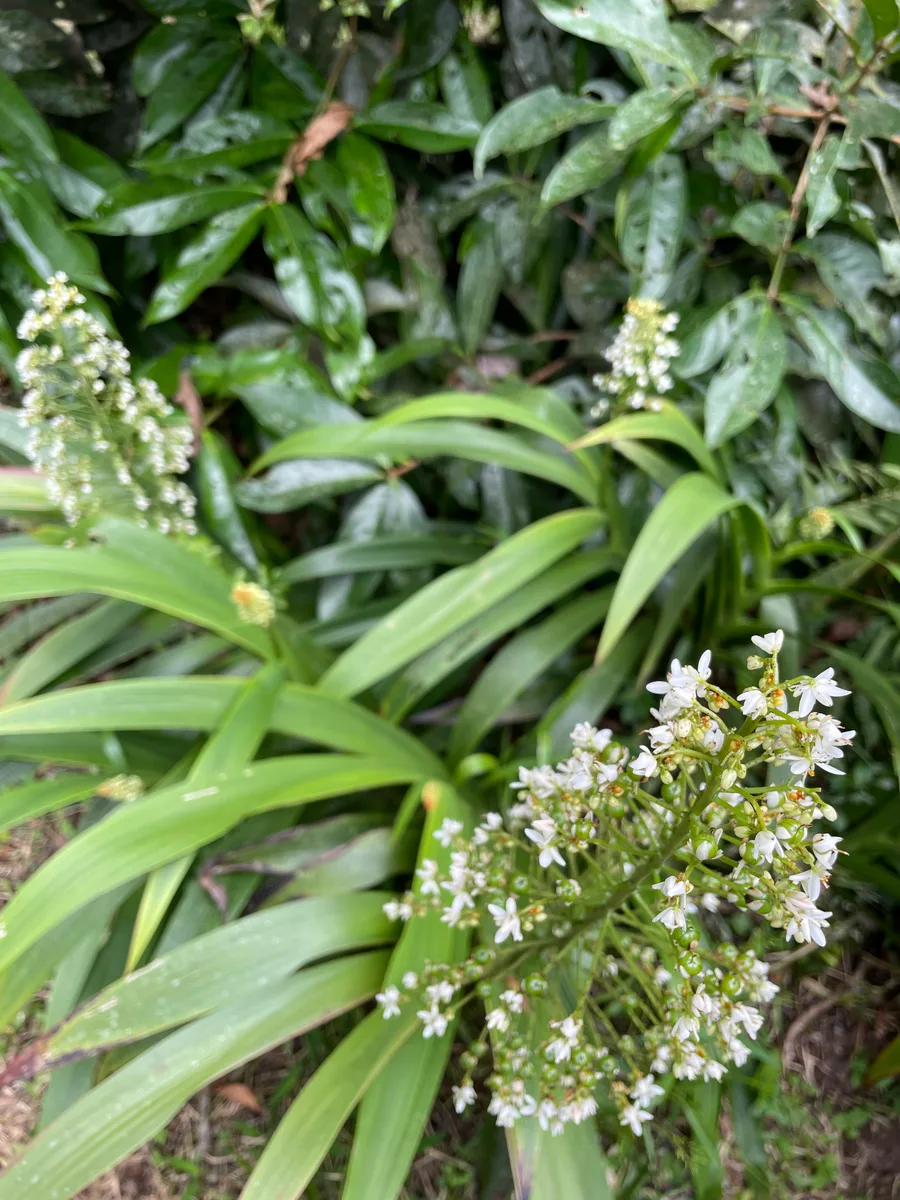
The size of the plant and of its bag can vary a little from the photograph — each one grows at its own pace. We keep them as consistent as we can.
Overview
Xiphidium means "little sword", and one look explains it: a flat fan of pleated, sword-pointed leaves, all held in the same plane, as if drawn. Above them opens a branched spike of small white flowers that turns into a cluster of red and orange berries half a centimeter across. It's native to our own forests — from Mexico to northern South America, Costa Rica included — and grows in the humid understory, which makes it one of the few plants that genuinely solves the dark, wet corner of a garden.
Culture
Shade and moisture: in the wild it lives in the understory of humid forest, in wet places or ground that floods seasonally, from sea level to about 1,400 meters. It wants soil rich in organic matter, always moist, and filtered light; direct sun scorches the leaf. It's a small herb that keeps itself tidy. Multiply it by dividing the clump.
Edible Uses
Not edible.
Medicinal
In Cuba it is traditionally used as a diuretic and for pain and inflammation.
Traditional uses for information only. Not a substitute for advice from a health professional.
Agroforestry
A native plant of the low stratum, for the shadiest and wettest part of the system, where almost nothing else wants to be. Being from our own forests it poses no risk if it spreads, and its berries give color in the shade for weeks. Plant 30–50 cm apart for cover.