Alpinia galanga
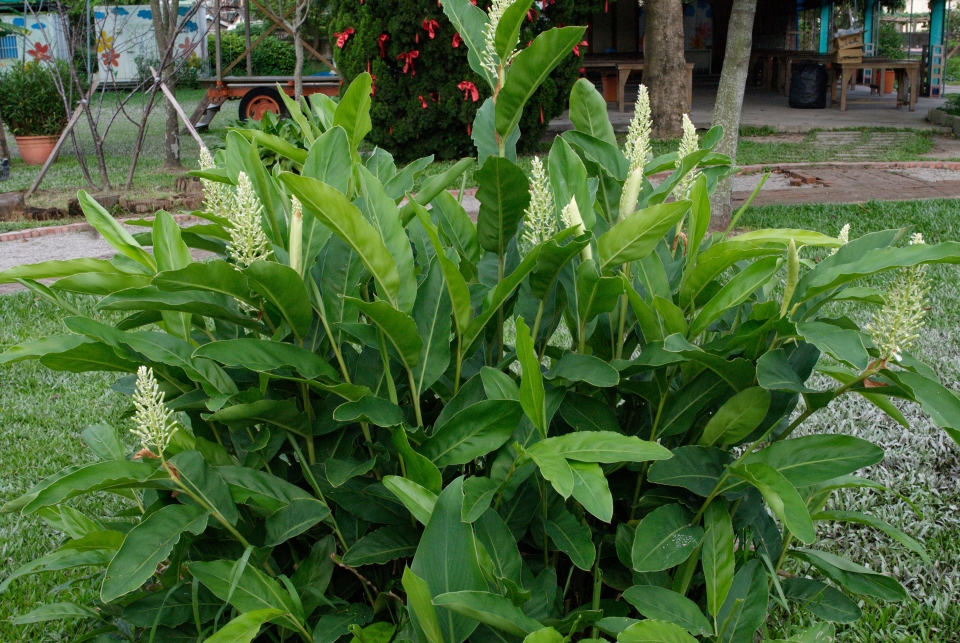
The size of the plant and of its bag can vary a little from the photograph — each one grows at its own pace. We keep them as consistent as we can.
Overview
Galangal is ginger's more perfumed cousin: its rhizome tastes of citrus, pepper and pine all at once, and it's the soul of the Thai soup tom kha. Its essential oil is even used to flavor liqueurs such as Chartreuse. It's a handsome plant too, with upright stems up to 2 meters, white flowers and red fruit.
Culture
- Habit
- Perennial
- Height
- 2.00 m
- Growth Rate
- Fast
- Cultivation Status
- Cultivated, Semi-cultivated, Wild
A plant of the warm, humid tropics, perfect for our area. It prefers partial shade and humus-rich, well-drained soil (pH 5.5–6.5), though it also grows in full sun. It spreads vigorously, so give it room or contain the clump: plant at 1–1.5 m. We sell it by the kilo of rhizome.
Edible Uses
The rhizome, fresh or dried, goes into curries, soups and spice pastes; it's hotter and more resinous than ginger, so use it in thin slices. The flowers and tender shoots are edible too, raw or steamed, and the red fruits are used as a cardamom substitute.
Medicinal
In traditional Asian medicine the rhizome is used mainly as a digestive stimulant, for indigestion and colic, and for its antibacterial properties.
Traditional uses for information only. Not a substitute for advice from a health professional.
Agroforestry
A long-lived secondary species of the medium stratum. It forms dense clumps that protect the soil, and its cut stems make good mulch. It's harvested in parts without lifting the whole plant, so it produces for many years.