Annona muricata
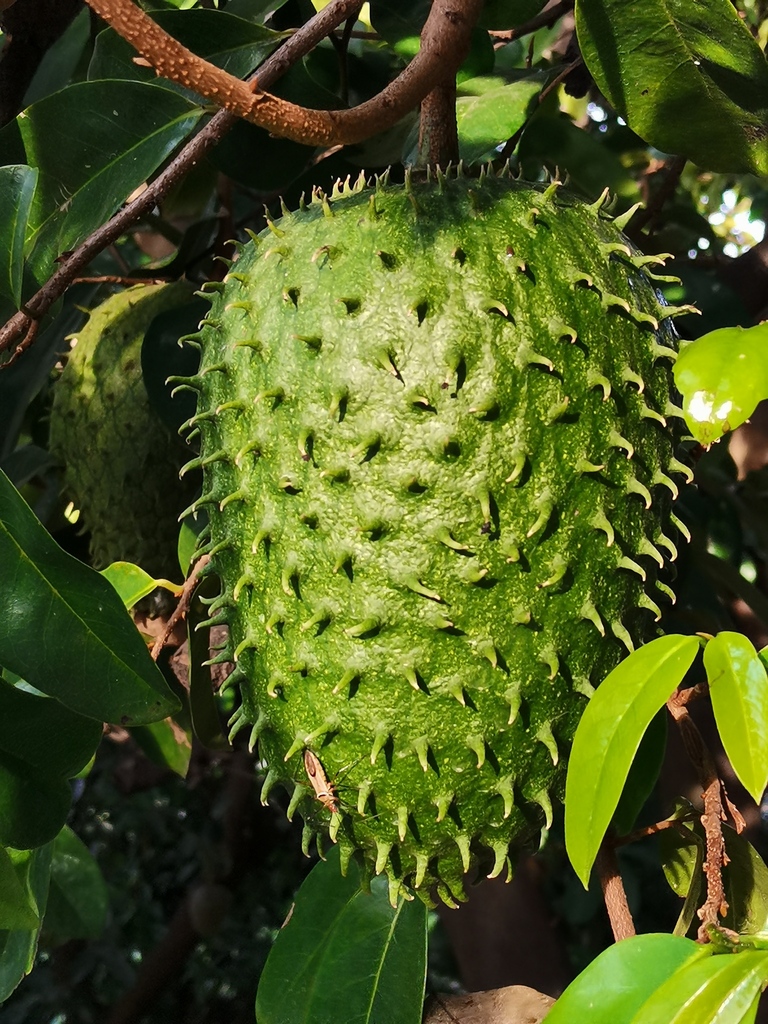
The size of the plant and of its bag can vary a little from the photograph — each one grows at its own pace. We keep them as consistent as we can.
Overview
Soursop is one of the great fruits of tropical America: a green, spiny fruit that can top a kilo, with white, juicy pulp and a pineapple-like aroma. Its sweet-tart flavor is unique. It was among the first fruits carried from the Americas to the tropics of Asia and Africa, and today it's grown from India to Polynesia. Its thin skin travels badly, so the best soursop is the one from your own backyard.
Culture
- Habit
- Evergreen Tree
- Height
- 7.00 m
- Growth Rate
- Fast
- Pollinators
- Flies, Beetles, Insects
- Cultivation Status
- Cultivated, Wild
A small tree, about 7 meters tall, that grows fast in warm, humid lowlands up to about 1,000 meters elevation. It prefers full sun and deep, well-drained loam, though it tolerates poor soils; once established it copes well with drought, but sheds many leaves in long dry spells. Its roots are shallow: keep the base weed-free and mulched. It starts bearing in the second year, and a 5-year-old tree can give 10 to 50 fruits. Its flowers pollinate poorly on their own, which explains misshapen fruit; hand-pollinating greatly improves yield and fruit shape.
Edible Uses
The pulp is eaten fresh when fully ripe, or blended with milk or ice cream into shakes and drinks; it's rich in vitamins A and C. Young fruits, while the seeds are still soft, are cooked as a vegetable in soups. Young shoots are eaten cooked, and the leaves make a tea. Don't eat the seeds.
Medicinal
It's widely used in traditional medicine: the leaves as a calmative and for colds, coughs and high blood pressure, and the bark and young fruits, rich in tannins, for diarrhea. It contains acetogenins, compounds that attack cells in the lab and have given soursop a reputation as a "cancer cure"; there is no clinical evidence for this, and frequent drinking of leaf tea has been linked in studies to neurological problems. Enjoy it as a fruit, not as a treatment.
Traditional uses for information only. Not a substitute for advice from a health professional.
Agroforestry
A medium-stratum fruit tree with a secondary life cycle: it grows and bears quickly between longer-lived trees such as mango or avocado. Its flowers draw small beetles and insects that pollinate them. Planting distance: 4–10 m, depending on the system design.