Arachis hypogaea
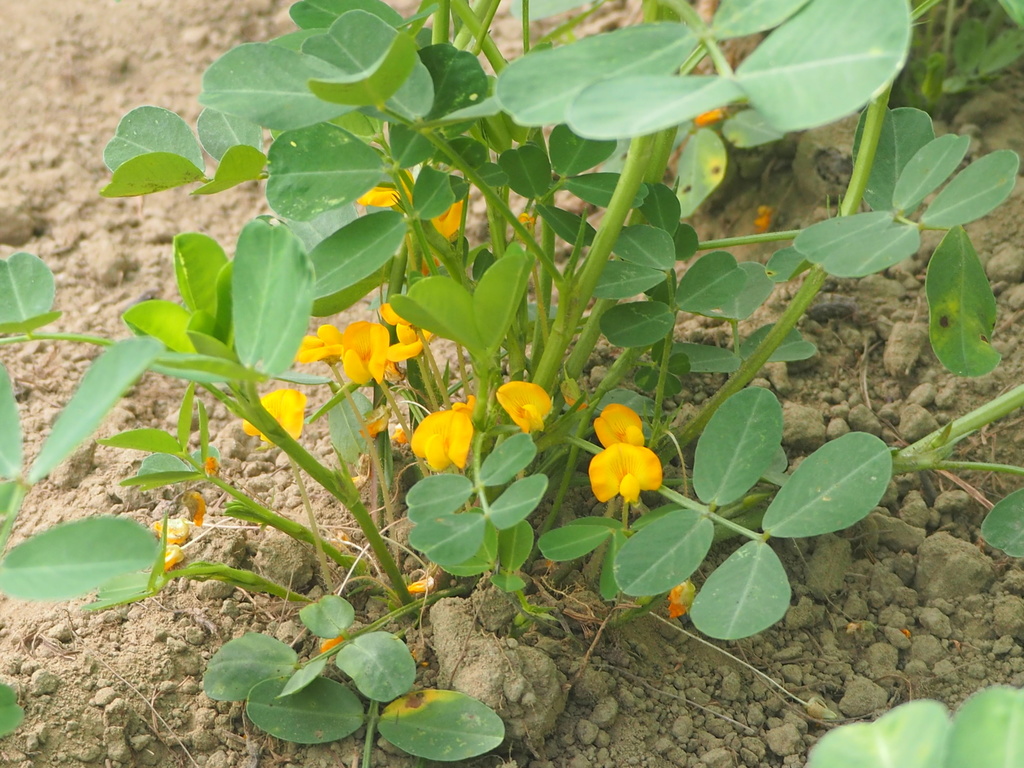
The size of the plant and of its bag can vary a little from the photograph — each one grows at its own pace. We keep them as consistent as we can.
Overview
The peanut has a unique trick: it flowers above ground, then each fertilized flower grows a little stalk that pushes into the soil to form the pod underground. Hence its scientific name, hypogaea, "below the earth". It comes from South America and today is one of the world's most important crops for its seed, rich in protein and oil. It's also a nitrogen-fixing legume that leaves the soil richer for whatever comes next.
Culture
An annual that grows best between 22 and 27 °C, up to about 1,500 meters. It wants full sun and loose, light, humus-rich, well-drained soil, so the stalks can bury themselves easily; calcium in the soil helps fill the pods. It doesn't tolerate waterlogging. It's harvested at 3–4 months, when the leaves start to yellow. Planting distance: 10–20 cm.
Edible Uses
The seeds are eaten raw, roasted or ground into peanut butter, and they yield a high-quality cooking oil. Young pods are eaten as a vegetable, and young leaves cooked. Dry the harvest well and throw out moldy nuts, which can contain aflatoxins, highly toxic compounds.
Medicinal
In folk medicine the seeds are used as an anti-inflammatory, and the oil for massage and to soften the skin. Keep in mind that peanuts are one of the most common food allergens.
Traditional uses for information only. Not a substitute for advice from a health professional.
Agroforestry
A short-cycle placenta species: in the early stages of a system it covers and protects the soil and adds nitrogen while the trees grow, and it gives a food harvest within a few months. Harvesting leaves the soil loose and enriched.