Artocarpus heterophyllus
The size of the plant and of its bag can vary a little from the photograph — each one grows at its own pace. We keep them as consistent as we can.
Overview
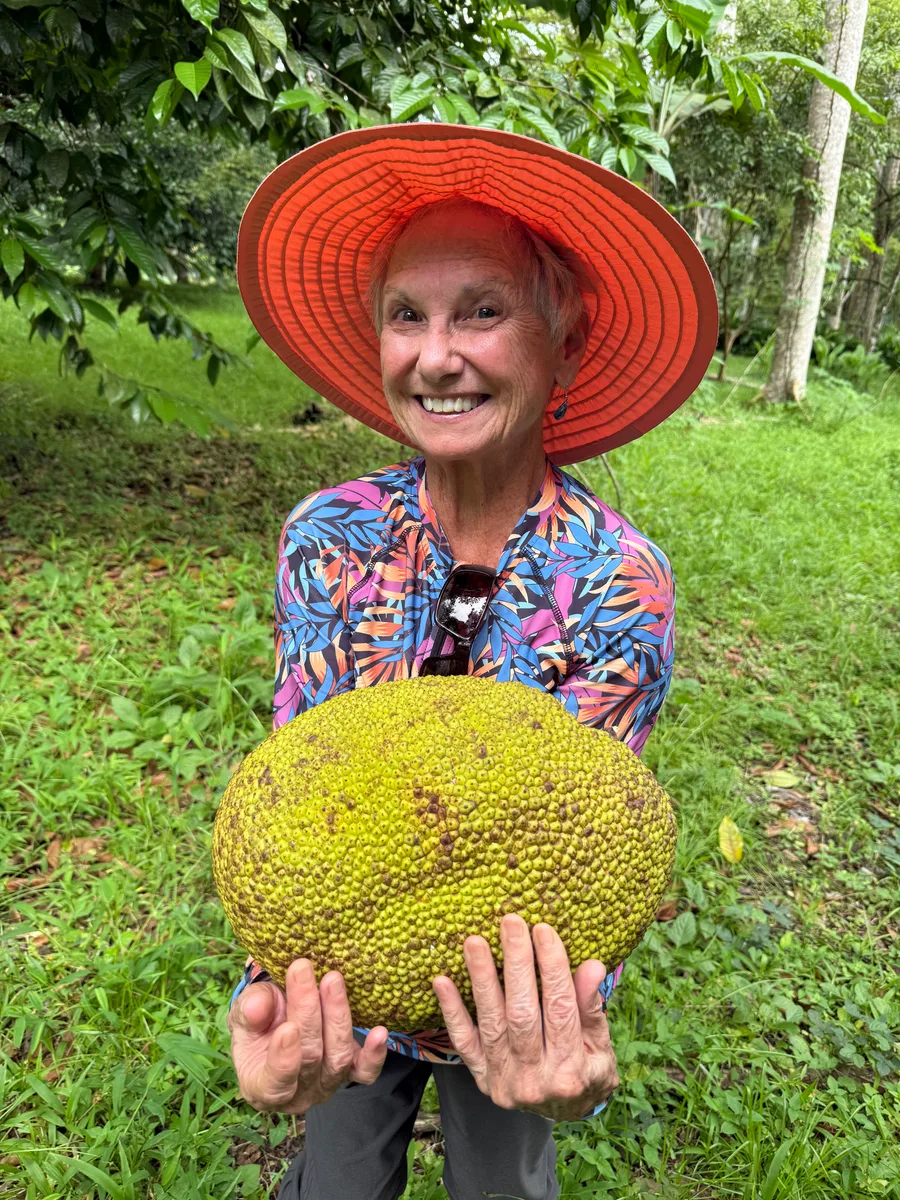
Jackfruit bears one of the largest fruits in the world: a single fruit can be 50 cm long and weigh up to 20 kilos, packed with hundreds of golden, sweet, fragrant pods. It's a multipurpose tree from India that gives ripe fruit to eat fresh, young fruit to cook as a vegetable, and seeds that taste like chestnuts when roasted or boiled. The fruits sprout straight from the trunk and thick branches, a sight in itself. One tree can feed a whole family.
Culture
- Habit
- Evergreen Tree
- Height
- 15.00 m
- Growth Rate
- Fast
- Pollinators
- Insects, Wind
- Cultivation Status
- Cultivated, Wild
A fast-growing tree of the humid lowlands that thrives below 1,000 meters with rainfall spread through the year; it tolerates a short dry season. It prefers deep, fertile, well-drained soil and has a deep taproot. Young plants appreciate some shade but need more and more light as they grow. It can give its first crop at 3 years, though 4–8 is more usual; each tree carries male and female flowers, and the share of female flowers rises with age. Planting distance: 5–10 m.
Edible Uses
The ripe fruit is eaten raw and is very sweet; it has a strong smell that not everyone likes. Young, before it sweetens, it's cooked as a vegetable in curries and stews, and today it's famous as a plant-based stand-in for pulled meat. The seeds, boiled or roasted, have the taste and texture of chestnuts and can be ground into flour. A practical tip: the sticky white latex comes off hands and knives with cooking oil.
Medicinal
In traditional medicine the ashes of the leaves are applied to ulcers, wounds and boils, and a root decoction is used for fever, diarrhea and asthma. The pulp and seeds are considered a cooling tonic.
Traditional uses for information only. Not a substitute for advice from a health professional.
Agroforestry
A very long-lived climax tree of the high stratum. Its extensive root system helps control erosion, and it's used as a shade tree for coffee and alongside coconut, mango and citrus. While the tree is young, it can be intercropped with banana, corn or peanuts.