Asterogyne martiana
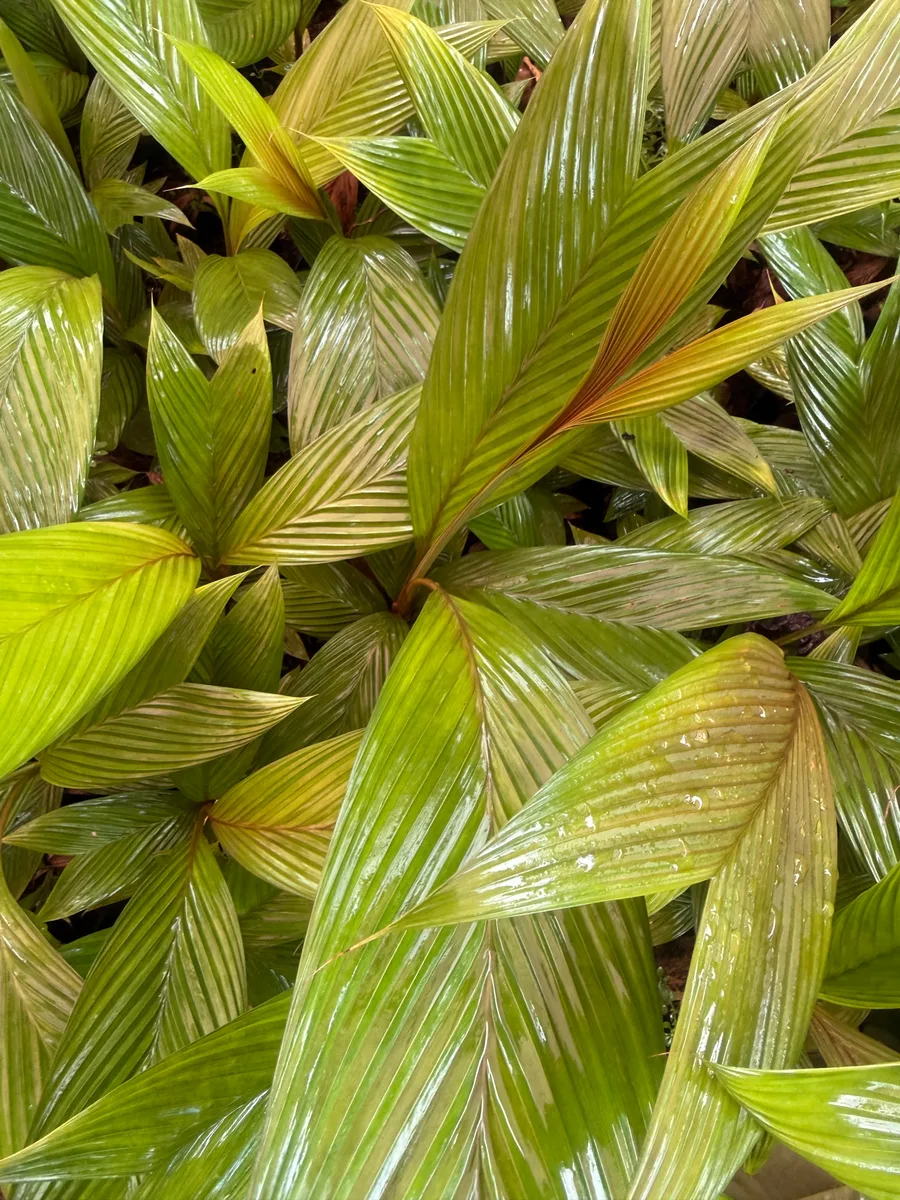
The size of the plant and of its bag can vary a little from the photograph — each one grows at its own pace. We keep them as consistent as we can.
Overview
Suita leaves have roofed Costa Rica's ranchos for as long as anyone has been building them. It is a small understory palm — no more than 2.5 meters, on a slender stem of 3 to 5 centimeters — carrying a tidy crown of eight to fifteen leaves, each up to a meter long. And the uncommon part: it does not want sun. The suita is a plant of closed shade, one of those that live underneath and stay there for decades.
Culture
Plant it under canopy, in shade, which is where it produces: full sun is not its place. One to two meters apart, in humid lowland conditions (zones 10 to 12). It is slow — four to six years to come into its own — and long-lived at thirty to fifty years, so you plant it once and keep it company. Now and then it sends out creeping stems that root as they go, so one plant gradually becomes a group.
Edible Uses
No information yet for this section.
Medicinal
No information yet for this section.
Agroforestry
This is a low-stratum climax species: it goes into the system to stay, beneath everything else, and needs little light at maturity. That makes it unusual in a consortium, because most of what produces in closed shade produces food, and the suita produces material — leaf for thatch. The leaf is harvested without felling the plant, so the same clump keeps yielding under the canopy for decades, at the level where almost nothing else pays.