Averrhoa bilimbi
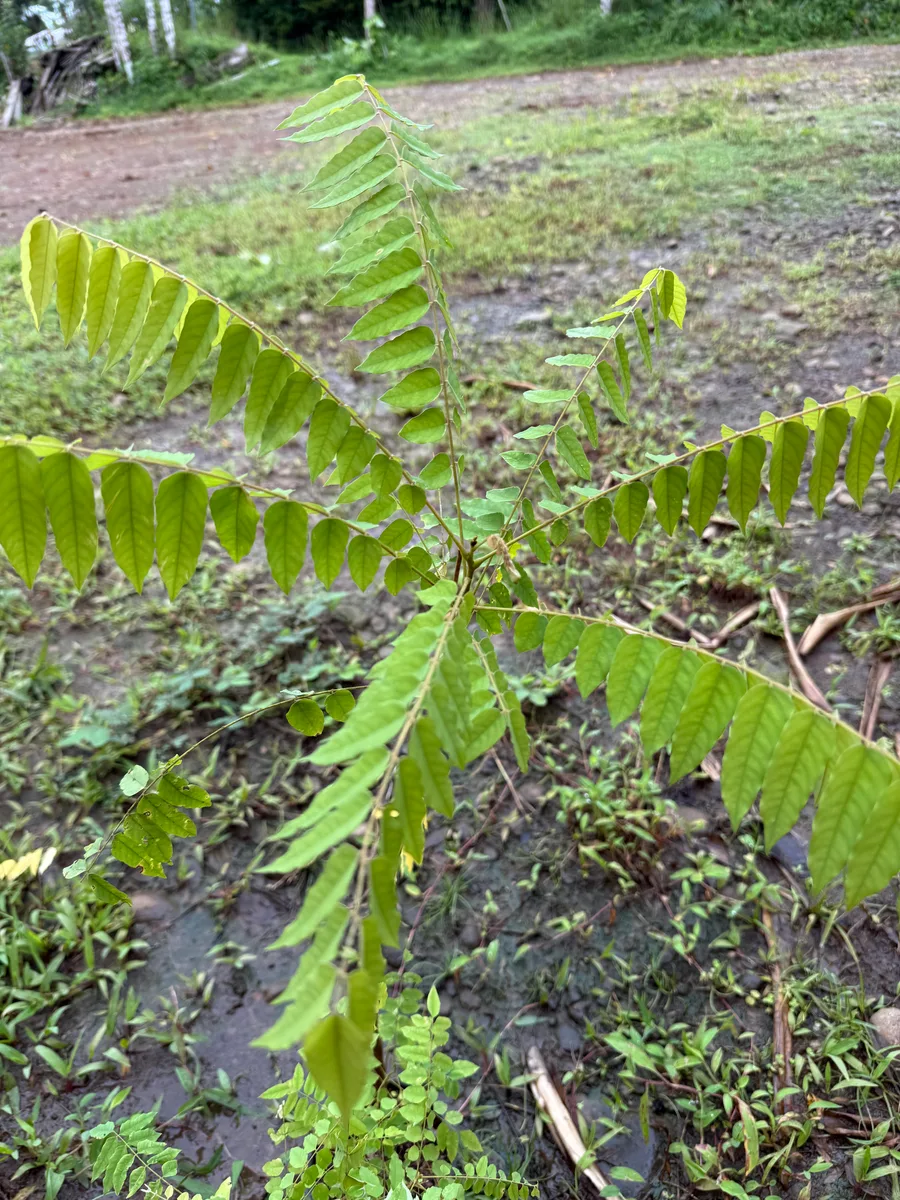
The size of the plant and of its bag can vary a little from the photograph — each one grows at its own pace. We keep them as consistent as we can.
Overview
Bilimbi is the lemon of the tropics: its green-yellow, translucent, crunchy fruits are so sour they're used to add tang to all kinds of dishes. They grow in clusters straight from the trunk and branches, and a single tree can give hundreds of fruits, 50–150 kilos a year. It's a relative of starfruit, native to the Moluccas in Indonesia. A small, generous tree, perfect by the kitchen door.
Culture
- Habit
- Evergreen Tree
- Height
- 3.00 m
- Growth Rate
- Slow
- Cultivation Status
- Cultivated, Wild
A tree of the humid lowlands that grows up to about 1,200 meters; it tolerates a dry season of 2–3 months. It prefers full sun, since it grows slowly in shade, and any well-drained soil, ideally deep and rich in organic matter, with shelter from strong winds. It usually stays at 2–3 meters. From seed it starts bearing at 5–6 years, grafted at 2–3. It flowers and fruits for most of the year, with one or two harvest peaks, especially in the drier season. Planting distance: 3–4 m.
Edible Uses
It's eaten raw with salt or thinly sliced in salads, but mostly it's used to sour curries, sauces and stews. It's also made into pickles, chutneys and candies, and it's a good source of vitamin C. The flowers, also sour, are made into preserves. A caution: it's very high in oxalic acid, so don't drink its concentrated juice in large amounts, especially if you have kidney problems.
Medicinal
Traditionally the fruit juice is made into a cooling syrup to bring down fever, and a few pickled fruits are eaten to control diarrhea. The leaves are used in an infusion for high blood pressure and as a poultice for itchy skin, and a flower infusion for coughs.
Traditional uses for information only. Not a substitute for advice from a health professional.
Agroforestry
A small fruit tree of the medium stratum with a secondary life cycle that fits into any home garden. It bears for most of the year, giving a steady harvest for the kitchen.