Banisteriopsis caapi
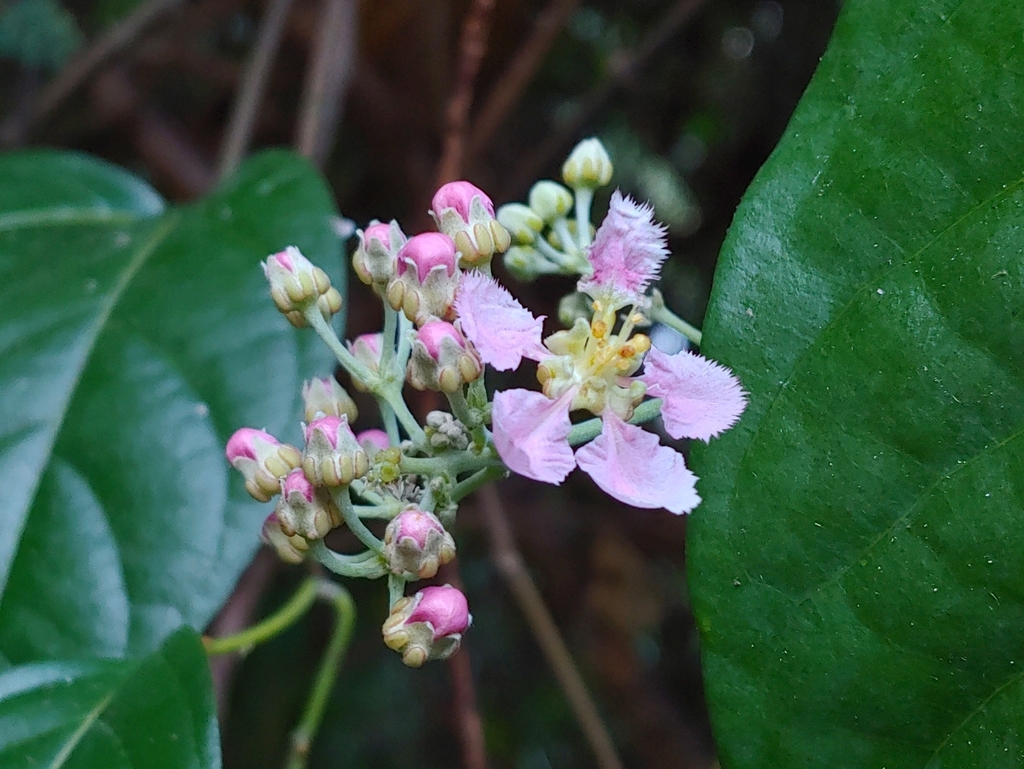
The size of the plant and of its bag can vary a little from the photograph — each one grows at its own pace. We keep them as consistent as we can.
Overview
The best-known liana of the Amazon. Caapi is a woody vine that climbs to 30 meters in search of light, and over the years its stem twists and ropes itself in a very distinctive way, like braided cord. For dozens of Amazonian peoples it is a sacred plant, and it is the base ingredient of ayahuasca. As a garden plant it's a long-lived vine: it can accompany a system for 20 to 40 years.
Culture
- Habit
- Climber
- Height
- 30.00 m
- Cultivation Status
- Cultivated, Wild
Humid tropics, from sea level to about 1,000 meters: warmth, humidity and rain spread through the year. It wants fertile soil with organic matter and good drainage, and filtered light while young. It needs something to climb, so plant it beside a well-grown tree or a solid structure, allowing for the weight it will become. It's propagated from stem cuttings, the usual way to multiply it; the seed is short-lived. Plant 1–2 m apart.
Edible Uses
Not edible.
Medicinal
Its bark and stem are the base of ayahuasca, a ceremonial preparation of Amazonian peoples used for centuries in contexts of healing and spiritual work, always within that tradition and guided by those with the experience to do so. The plant contains β-carboline alkaloids — harmine, harmaline and tetrahydroharmine — which are what science has studied. We offer the plant, not the preparation.
Traditional uses for information only. Not a substitute for advice from a health professional.
Agroforestry
A climax liana of the high stratum: in a mature system it climbs the established trees and occupies the vertical space no other plant uses, without competing at ground level. It's long-lived and unhurried, so it's planted with the adult system in mind rather than the first years. Give it a tree that already has some size to carry it.