Bixa orellana
The size of the plant and of its bag can vary a little from the photograph — each one grows at its own pace. We keep them as consistent as we can.
Overview
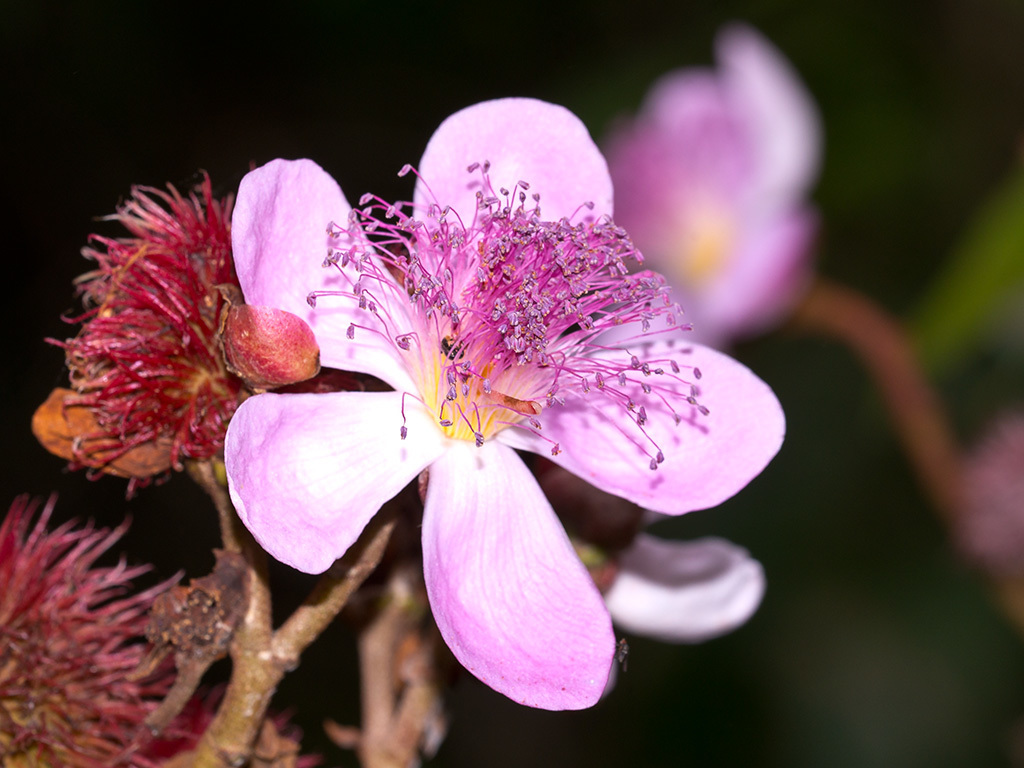
The red color of Latin American cooking comes from the seeds of this native shrub, and Indigenous peoples of the Americas have used it for centuries as body paint. It's such a good natural dye that industry uses it to color cheese, butter and margarine. Pink flowers and spiky red pods make it as pretty as it is useful, and it grows fast into a living fence.
Culture
- Habit
- Evergreen Tree
- Height
- 5.00 m
- Growth Rate
- Fast
- Pollinators
- Bees
- Cultivation Status
- Cultivated, Ornamental, Wild
Native to our region and very easy to grow: almost any well-drained soil (pH 5.5–7.5) in full sun. It grows fast, takes hard pruning and withstands droughts of up to 4 months, though it yields best with well-spread rain and a dry season to ripen the seed. It starts fruiting from about 2 years, with full crops at 3–4 years. Planting distance: 2–4 m.
Edible Uses
The red seeds give arroz con achiote its color and gentle flavor. Fry them briefly in oil and strain it, keeping the colored oil, or grind them with other spices into a paste: Yucatán's recado rojo, the base of cochinita pibil, is achiote. The pods are harvested once they dry and split, and the seeds are stored dry.
Medicinal
In folk tradition, a leaf decoction is used as a gargle for sore throats, and in baths to ease aching muscles and bring down fever. It is also used traditionally for digestion and against intestinal parasites.
Traditional uses for information only. Not a substitute for advice from a health professional.
Agroforestry
A secondary species of the medium stratum. Because it takes pruning so well, it makes an ideal living fence or productive hedge along plot edges, and the prunings feed the soil. Its flowers draw bees, and it regrows strongly after every cut.