Camellia sinensis
The size of the plant and of its bag can vary a little from the photograph — each one grows at its own pace. We keep them as consistent as we can.
Overview
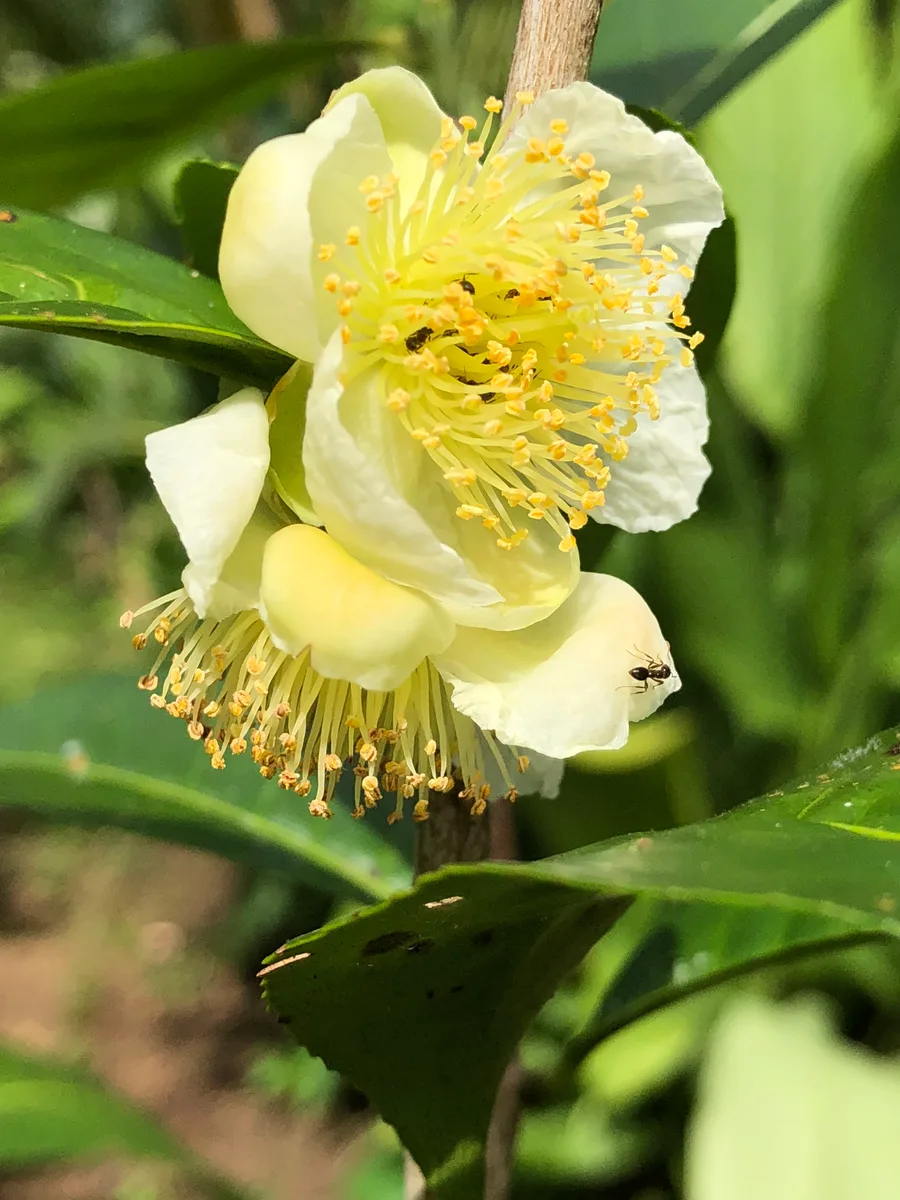
All the tea in the world, green, white, oolong or black, comes from this one plant: what changes is how the leaves are processed. Having one at home lets you make your own tea, from fresh leaf to roasted. It also gives fragrant white flowers that draw bees, and it lives for decades.
Culture
It wants acidic soil rich in organic matter, well drained and consistently moist but never waterlogged. It prefers partial shade and shelter from wind. Although it's associated with mountains, it also grows in the humid lowlands, especially with some shade. Plant at 1–2 m; with pruning it can be kept as a low hedge.
Edible Uses
For tea, pick the shoots: the bud and the two youngest leaves. Dried as they are, they give a green or white tea; left to oxidize before drying, a black tea.
Medicinal
The leaves contain caffeine and catechins, much-studied antioxidants. In traditional Asian medicine, tea is used for digestion, circulation and mental clarity.
Traditional uses for information only. Not a substitute for advice from a health professional.
Agroforestry
A climax species of the low stratum that sits comfortably under taller trees. With regular pruning it stays a productive hedge, and its roots help hold the soil on slopes.