Cananga odorata
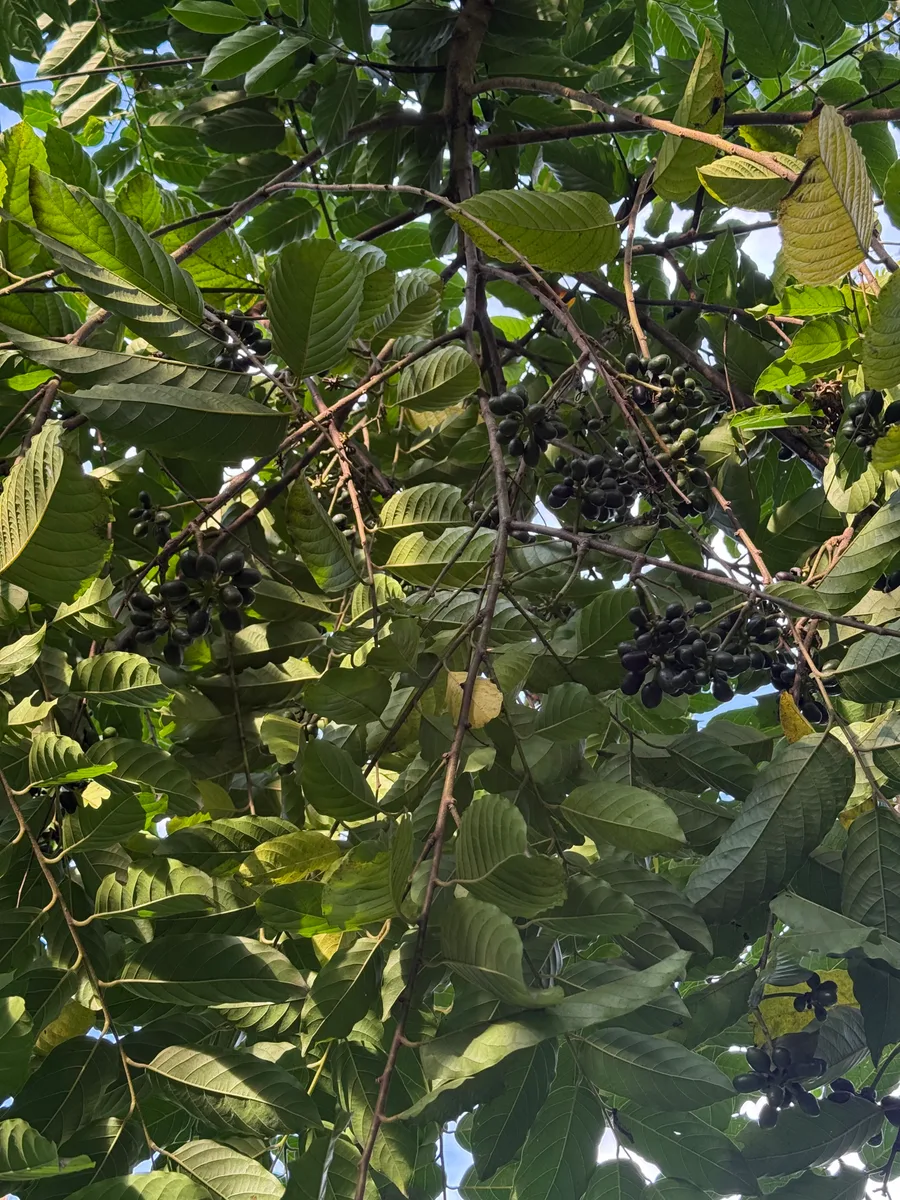
The size of the plant and of its bag can vary a little from the photograph — each one grows at its own pace. We keep them as consistent as we can.
Overview
Ylang-ylang is the tree behind one of the world's most famous perfumes: its yellow flowers, with long, twisted, ribbon-like petals, yield an essential oil used in perfumery, aromatherapy and even food flavorings. The scent is rich and sweet, strongest at night. It's a very fast-growing tree with drooping branches, native to Southeast Asia, that flowers very young. Having one near the house perfumes the whole garden.
Culture
- Habit
- Evergreen Tree
- Height
- 20.00 m
- Growth Rate
- Fast
- Cultivation Status
- Cultivated, Ornamental, Semi-cultivated, Wild
It thrives in the humid lowlands below 1,200 meters, in full sun and fertile, moist, well-drained soil. It grows very fast: at sea level it can flower at 1.5–2 years, when barely 2 meters tall, though at higher elevations it takes longer. The flowers open green and scentless and turn yellow and fragrant as they mature; they're picked at night or at dawn. Unpruned it can reach 20 meters, with branches hanging 3 to 6 meters. Planting distance: 5–10 m.
Edible Uses
The flowers aren't eaten, but their essential oil is used by the food industry, especially in peach and apricot flavorings, candies, baked goods and drinks.
Medicinal
In aromatherapy the oil is used to ease tension and lower blood pressure and heart rate. Traditionally the flowers are used against malaria and as a paste for asthma, and on the skin for irritations and boils. A bark infusion is used for stomach pain and indigestion.
Traditional uses for information only. Not a substitute for advice from a health professional.
Agroforestry
A very fast-growing tree of the emergent stratum with a secondary life cycle. Its fruits attract birds and bats, which is why it's used in rainforest regeneration in Australia. It yields a high-value flower crop from very early on. In some areas it has naturalized outside cultivation.