Chromolaena odorata
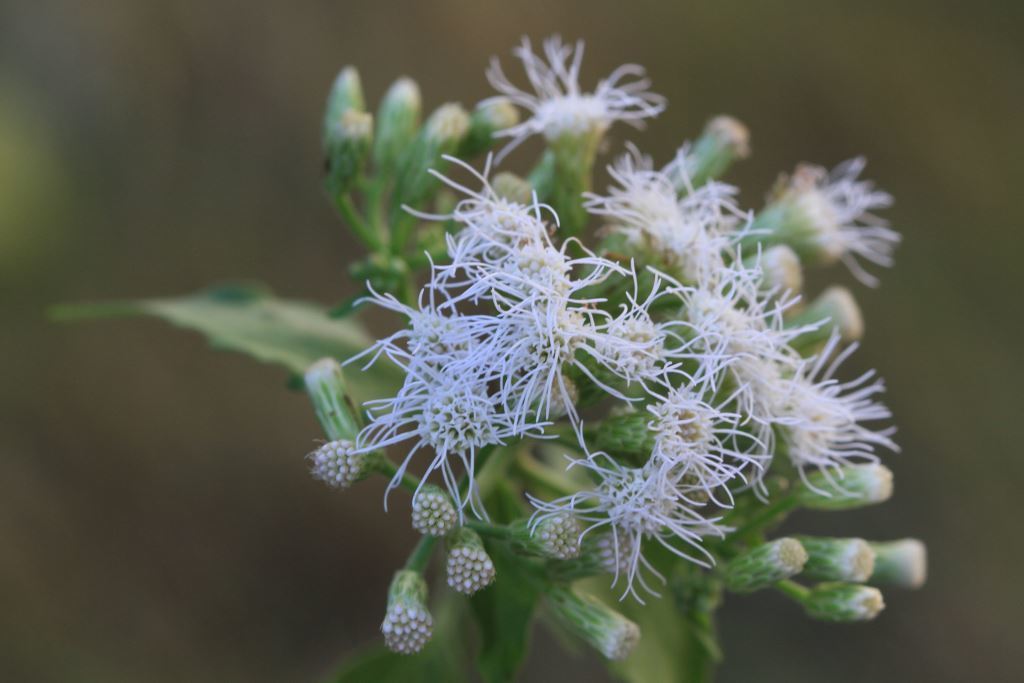
The size of the plant and of its bag can vary a little from the photograph — each one grows at its own pace. We keep them as consistent as we can.
Overview
Albahaquilla grows with a haste that cost it its reputation elsewhere: introduced into the Asian, African and Pacific tropics, it is a feared weed there. Here it is native, and that same haste is precisely what it is wanted for. A green manure is worth the speed at which it comes back — cut it, it returns, cut it again, and every cut ends up in the soil. It has a curious habit too: the stems bend under their own weight, apical dominance breaks, new shoots push out, and the bent ones build a mattress of organic matter. It is among the first plants into a clearing, and it sees itself out once trees close the canopy above it.
Culture
- Habit
- Shrub
- Height
- 3.00 m
- Growth Rate
- Fast
- Cultivation Status
- Ornamental, Wild
It asks for full sun and little else. It grows in almost any well-drained soil, prefers a pH of 5 to 6.5, and our rainfall suits it: its best range is 2,000 to 4,000 mm a year. It does well up to 1,000 meters and takes 16 to 38 °C. It is short-cycle — a year or two to its best, three to five years of life — so plant it where you want organic matter soon, not where you want a permanent shrub.
Edible Uses
The leaves have occasionally been used to give aroma to soups. This is not a kitchen plant: its value is in the soil.
Medicinal
In folk tradition the leaves are considered antibiotic, antimalarial and febrifuge, and an infusion is drunk to cleanse the blood. Crushed young leaves release a liquid applied to skin wounds, and the leaves are also used for eye pain.
_Traditional uses for information only. Not a substitute for advice from a health professional._
Traditional uses for information only. Not a substitute for advice from a health professional.
Agroforestry
This is a short-cycle biomass plant (placenta 2) and it needs full sun at maturity, so it belongs in the system's early years while the ground is still open. Management is cutting: prune it before the stems bend over and build that mattress across its neighbors, because the same mattress that feeds the soil takes light from whatever sits beneath it. Everything cut stays on site as mulch. It will not regenerate in shade, so it sees itself out as the long-cycle species close the canopy — there is nothing to pull, only company to keep while it does its work.