Chrysophyllum cainito 'Blanco'
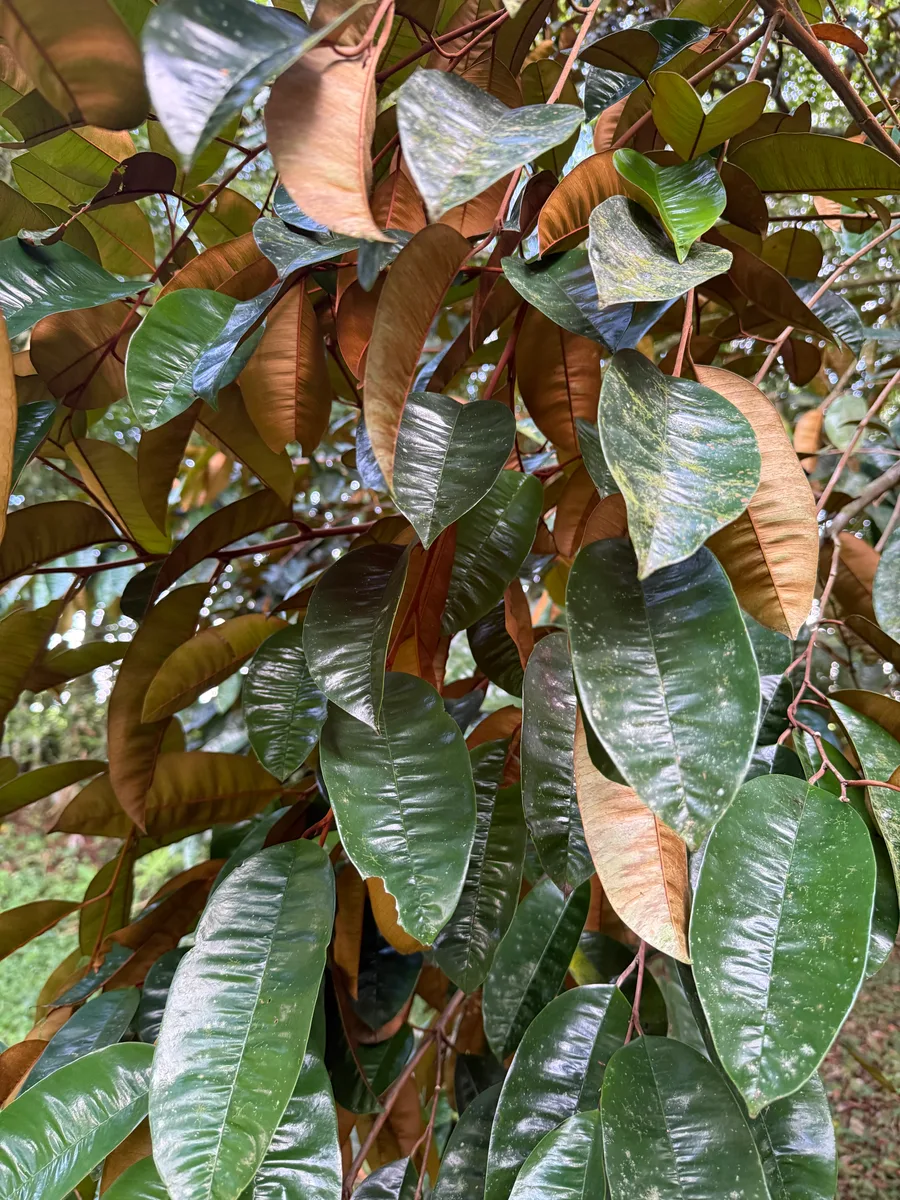
The size of the plant and of its bag can vary a little from the photograph — each one grows at its own pace. We keep them as consistent as we can.
Overview
Cut a star apple in half across the middle and you see where the name comes from: the seeds open out in a star inside the flesh. The tree is just as striking, and that's what its botanical name records — Chrysophyllum means "golden leaf", because the underside of the leaf is gold and the whole tree changes color when the wind turns it over. It's native to the Caribbean and Central America, and the sweet, smooth flesh is eaten with a spoon, well chilled.
Culture
- Habit
- Evergreen Tree
- Height
- 18.00 m
- Growth Rate
- Medium
- Self-fertile
- Yes
- Cultivation Status
- Cultivated, Ornamental, Wild
A tree of the warm lowlands, to about 400 meters, that appreciates a marked dry season and thrives on 1,000 to 1,400 mm of rain a year. It wants full sun and deep, fertile, well-drained soil, slightly acid. From seed it takes 5 to 10 years to bear; grafted, 2 to 4. It reaches 20 meters, so give it room.
Edible Uses
Wait for the fruit to ripen on the tree: while still green it is astringent and releases a sticky latex. Ripe, it's halved and the flesh eaten with a spoon, best chilled; it also makes good preserves. Keep the skin off the flesh, as its latex is bitter.
Medicinal
In Caribbean folk medicine a decoction of the tannin-rich bark is used for diarrhea, and one of the leaves as a pectoral for coughs.
Traditional uses for information only. Not a substitute for advice from a health professional.
Agroforestry
A climax fruit tree of the high stratum: a tree for decades, planted with the mature system in mind, giving shade to what grows beneath it. Its reddish-brown timber is good for joinery when the time comes to renew. Plant 8–10 m apart.