Citrus × paradisi
The size of the plant and of its bag can vary a little from the photograph — each one grows at its own pace. We keep them as consistent as we can.
Overview
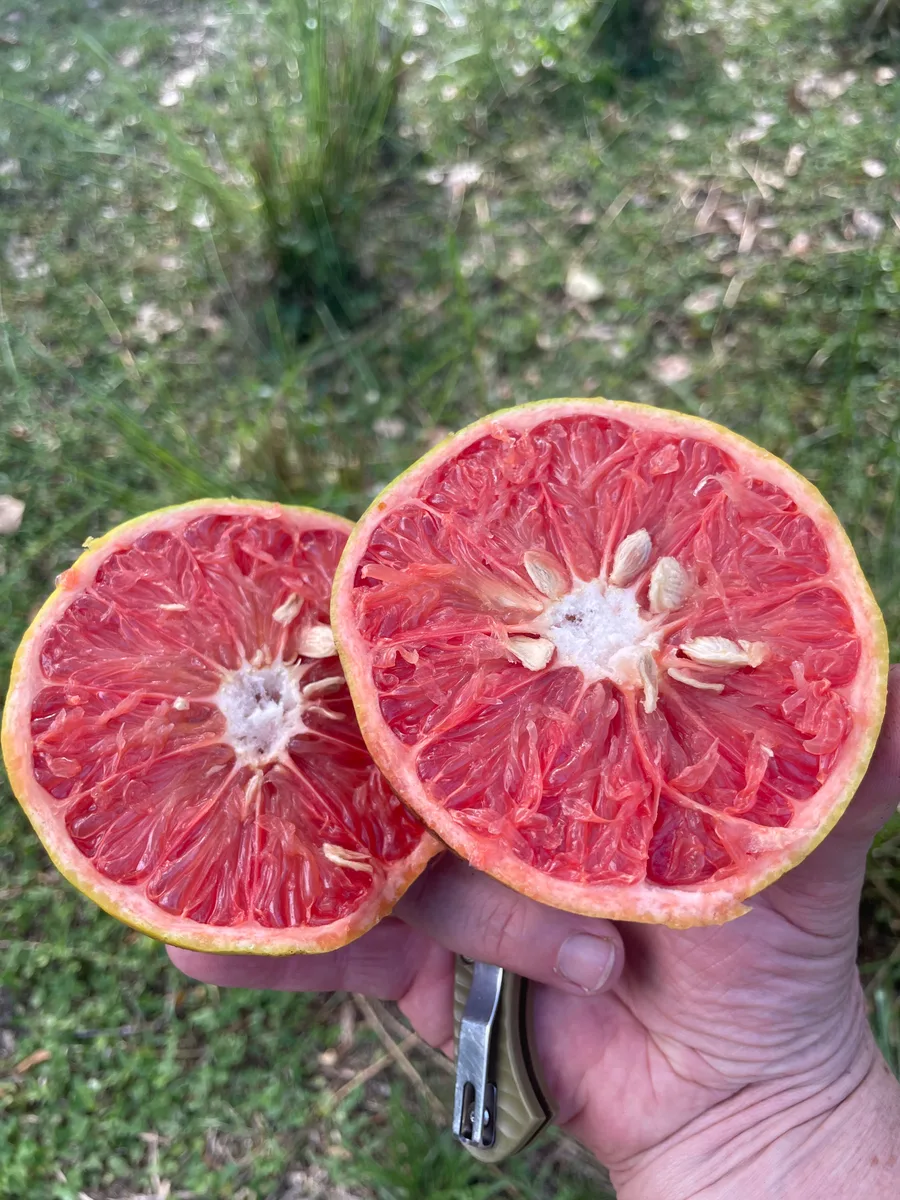
Grapefruit was born by chance in Barbados in the 1700s, from a natural cross between the pomelo and the orange; there it was called "the forbidden fruit". Its English name comes from the way the fruit grows: in clusters, like grapes. The pink kind owes its color to lycopene, the same pigment as in tomatoes, and it's sweeter than the white.
Culture
It wants full sun, at least 6–8 hours a day, and well-drained soil, slightly acidic to neutral and rich in organic matter. Water it in the dry season, but never let it get waterlogged: the roots will rot. It starts bearing at 3–5 years and can live for many decades. Spacing: 5–10 m.
Edible Uses
Eat it fresh, in segments or halved with a spoon; it also makes excellent juice. The peel makes a fine, bitter marmalade.
Medicinal
It is rich in vitamin C. Important: grapefruit interferes with many common medicines (for blood pressure, cholesterol and others), increasing their effect. If you take medication, check before eating it regularly.
Traditional uses for information only. Not a substitute for advice from a health professional.
Agroforestry
A long-lived climax species of the medium stratum, productive for decades. In a syntropic system it's pruned to keep its crown airy and at a good picking height. Its flowers are very fragrant and draw bees.