Clitoria ternatea
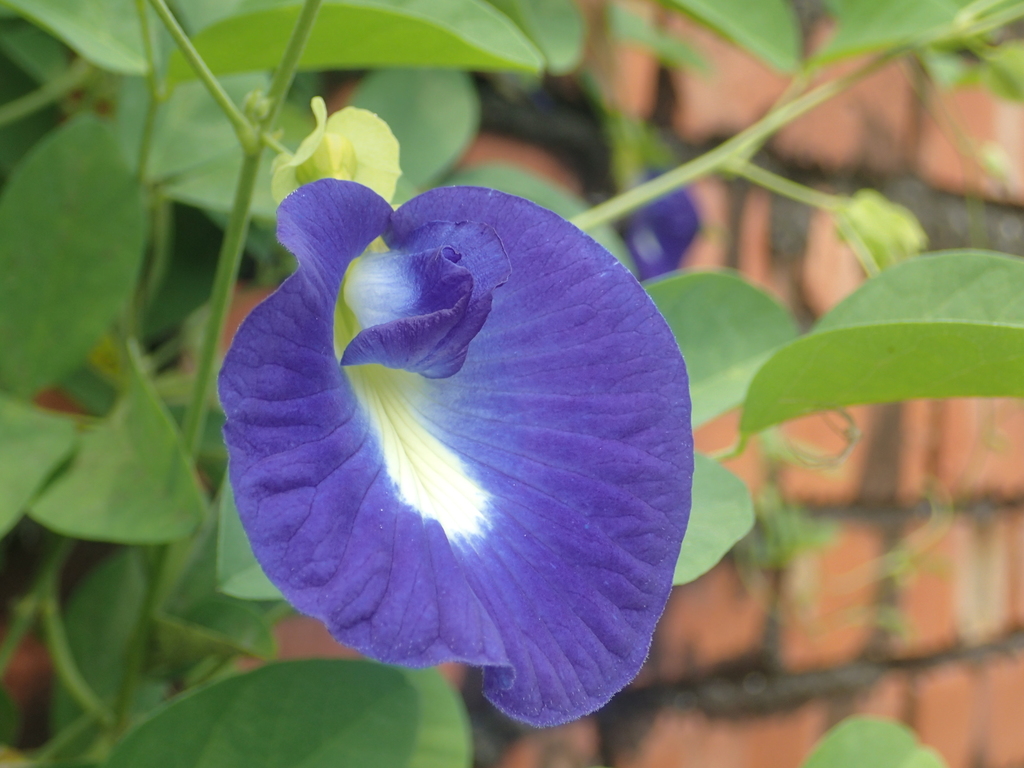
The size of the plant and of its bag can vary a little from the photograph — each one grows at its own pace. We keep them as consistent as we can.
Overview
The flower that dyes things blue. Steeped in hot water it gives a deep blue tea, and Southeast Asian kitchens have long used it to color rice and rice cakes. It is a short-cycle climbing legume: it flowers at three or four months, covers the ground as it grows, and leaves the soil better than it found it. We have it in three colors — blue, pink and white.
Culture
- Habit
- Deciduous Perennial
- Height
- 3.00 m
- Growth Rate
- Fast
- Self-fertile
- No
- Pollinators
- Insects
- Cultivation Status
- Cultivated, Ornamental, Wild
A climber with a woody base that sends up new stems to 3 meters each year. Plant it in full sun, 1 meter apart, with something to climb: a fence, a living stake, a neighboring shrub. It prefers fertile, well-drained soil but takes heavy clay, and tolerates a very wide pH range, 5.5 to 8.9. It produces on around 1,500 mm of rain and has a reputation for standing dry spells; it lives one or two years, so let it reseed or save seed.
Edible Uses
The young pods are eaten as a vegetable, and the young leaves cooked as greens. The flowers are the famous part: they give a clean blue to rice, to rice cakes and to tea.
Medicinal
The flowers in water are traditionally used for eye complaints, and the plant appears in folk tradition in the treatment of snakebite. Worth knowing: the powdered ripe seed and the root are strongly purgative — not parts to try out of curiosity.
_Traditional uses for information only. Not a substitute for advice from a health professional._
Traditional uses for information only. Not a substitute for advice from a health professional.
Agroforestry
An early secondary legume that needs high light, so it goes in during the system's first months while the canopy is still open. Its job is cover: it grows fast, blankets bare soil between newly planted trees and crowds out weeds while the long-cycle species establish. As a cover crop it is used under coconut in southern India and under rubber in Malaysia. Manage it by cutting whenever it climbs over its neighbors, leaving what you cut on the ground; when the shade arrives it gives up its place without a fight.