Coffea arabica
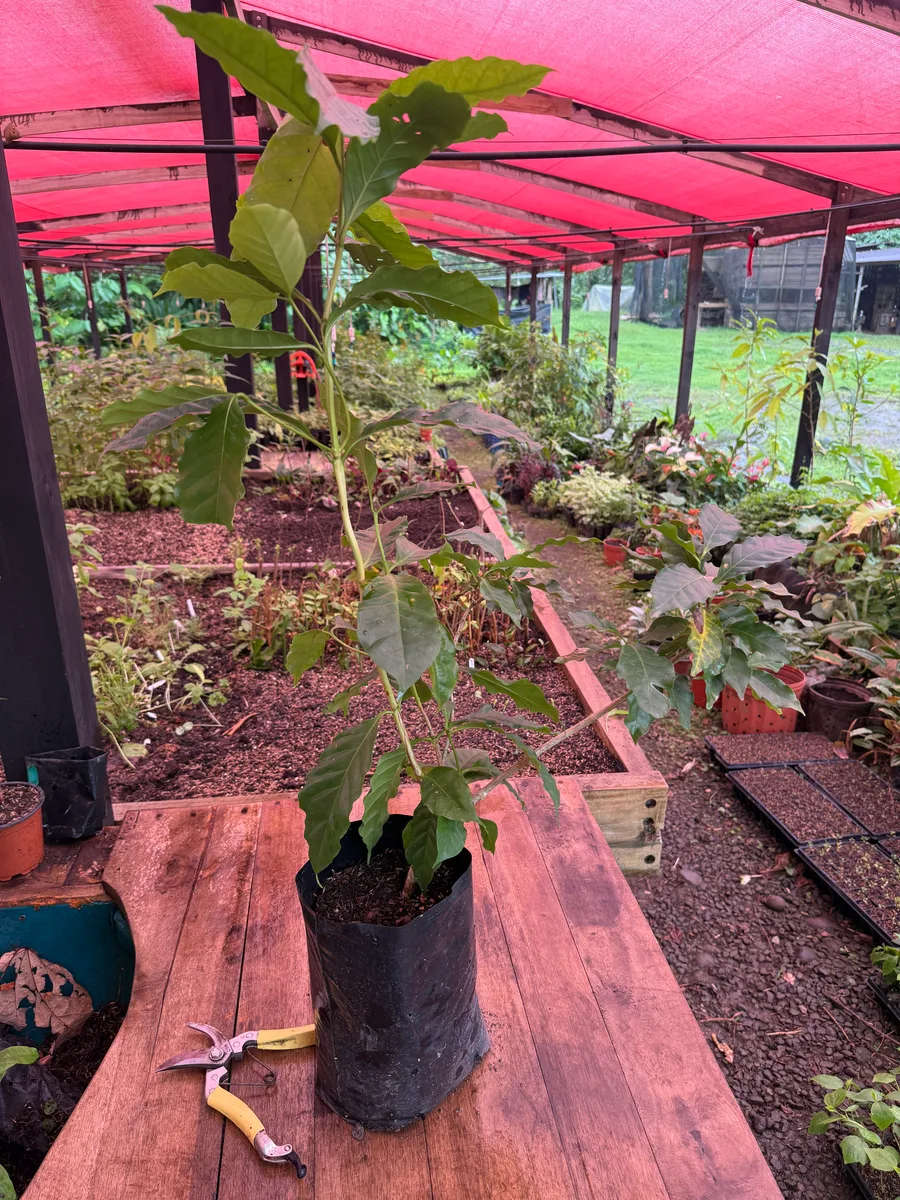
The size of the plant and of its bag can vary a little from the photograph — each one grows at its own pace. We keep them as consistent as we can.
Overview
Arabica coffee is the source of one of the two most popular drinks in the world, and it comes from the mountain forests of northeastern Africa, where it grows as an understory shrub. Its white flowers smell like jasmine and pollinate themselves or with help from bees; its red fruits hold the two seeds we roast. Beyond the bean, its leaves carry more caffeine than the fruit and are brewed as a tea. A few bushes at home means harvesting, drying and roasting your own coffee.
Culture
- Habit
- Evergreen Shrub
- Height
- 7.00 m
- Growth Rate
- Medium
- Self-fertile
- Yes
- Pollinators
- Bees, Self
- Cultivation Status
- Cultivated, Ornamental, Wild
It's a highland coffee: near the equator it does best between 1,300 and 1,900 meters, so in Costa Rica it gives its best quality at mid and high elevations; in the lowlands it grows, but produces less. It prefers light shade, deep, loose soil and temperatures of 14–28 °C. One or two dry months help it flower evenly, and too much rain makes it grow wood instead of fruit. It starts bearing at 2–3 years, reaches full crop at 6–8, and can produce for 30–40 years. Planting distance: 1–2 m.
Edible Uses
The seeds are dried, roasted, ground and brewed, and used to flavor ice cream, pastries, candies and liqueurs. The ripe red fruit pulp is eaten and chewed as a stimulant. The leaves, cooked or as tea, have a neutral, barely bitter taste and more caffeine than the bean.
Medicinal
The seed contains caffeine, theobromine and theophylline, stimulants that sharpen attention and physical performance; caffeine is added to painkillers to boost their effect, and coffee helps with some headaches and migraines. In folk medicine it's also used for asthma, fever and flu.
Traditional uses for information only. Not a substitute for advice from a health professional.
Agroforestry
A climax shrub of the low stratum that lives in forest shade in the wild: that's why it fits so well beneath shade trees in a syntropic system. While young it can be intercropped with short-cycle crops such as corn or beans. Its flowers feed bees.