Coffea liberica
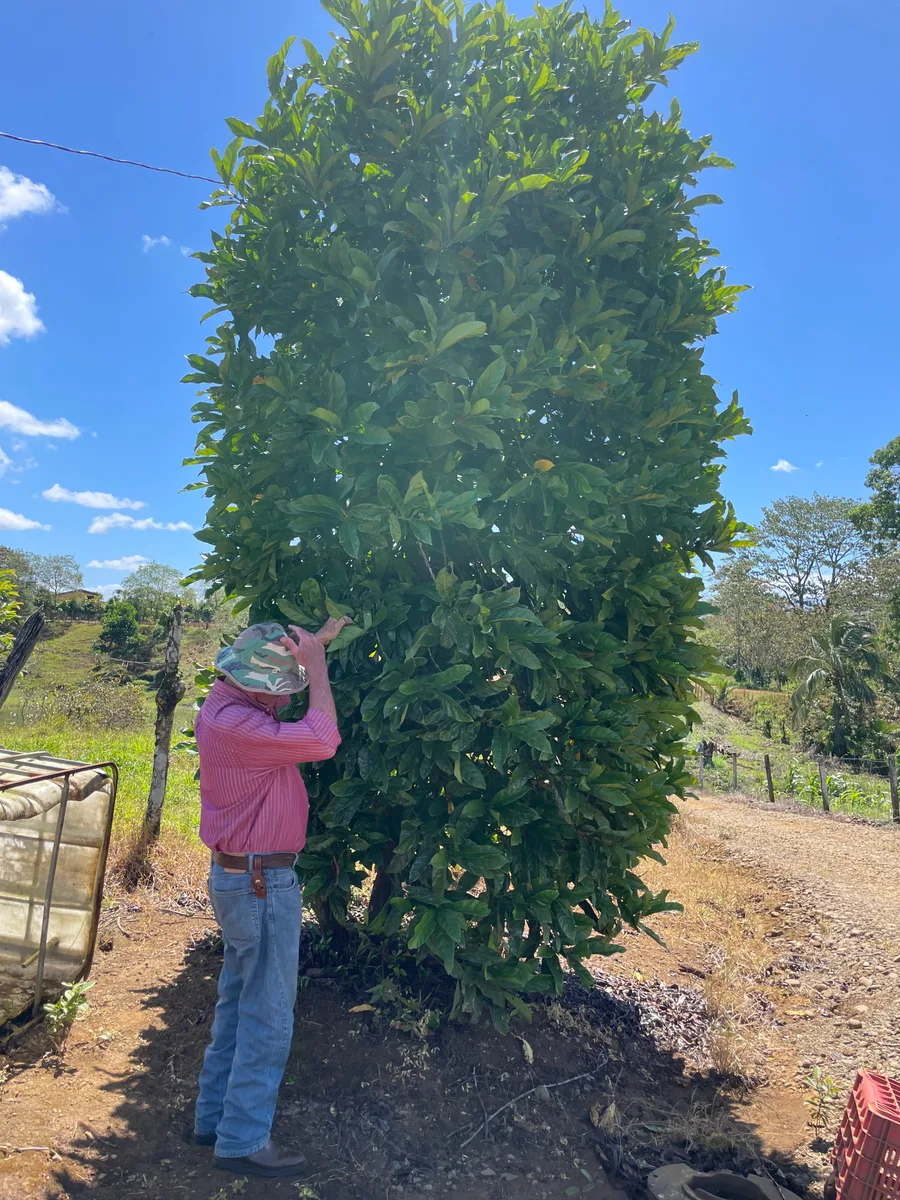
The size of the plant and of its bag can vary a little from the photograph — each one grows at its own pace. We keep them as consistent as we can.
Overview
The lowland coffee. While arabica wants altitude and cool air, liberica thrives in the humid heat, where it outperforms both arabica and robusta. Everything about it is bigger: leaves, cherries and beans. The cup is bolder and more bitter, with smoky and fruity notes, and it's attracting new interest for its heat tolerance.
Culture
- Habit
- Evergreen Shrub
- Height
- 20.00 m
- Self-fertile
- No
- Cultivation Status
- Cultivated, Wild
A plant of the humid lowland tropics, perfect for our area. It grows best in light shade and tolerates acidic, poor soils. It doesn't pollinate itself: plant several for a good crop. It starts bearing at 3–5 years. Spacing: 2–3 m.
Edible Uses
The roasted, ground beans make a strong coffee, more bitter than arabica. The excelsa variety, from the same group, is milder.
Medicinal
Traditionally, the leaves are used for headaches and sore eyes.
Traditional uses for information only. Not a substitute for advice from a health professional.
Agroforestry
A very long-lived (50–100 years) secondary species. Unpruned, it becomes a tree of up to 20 meters; in a syntropic system it's pruned to keep it productive and at a good picking height, and the prunings feed the soil.