Coleus scutellarioides
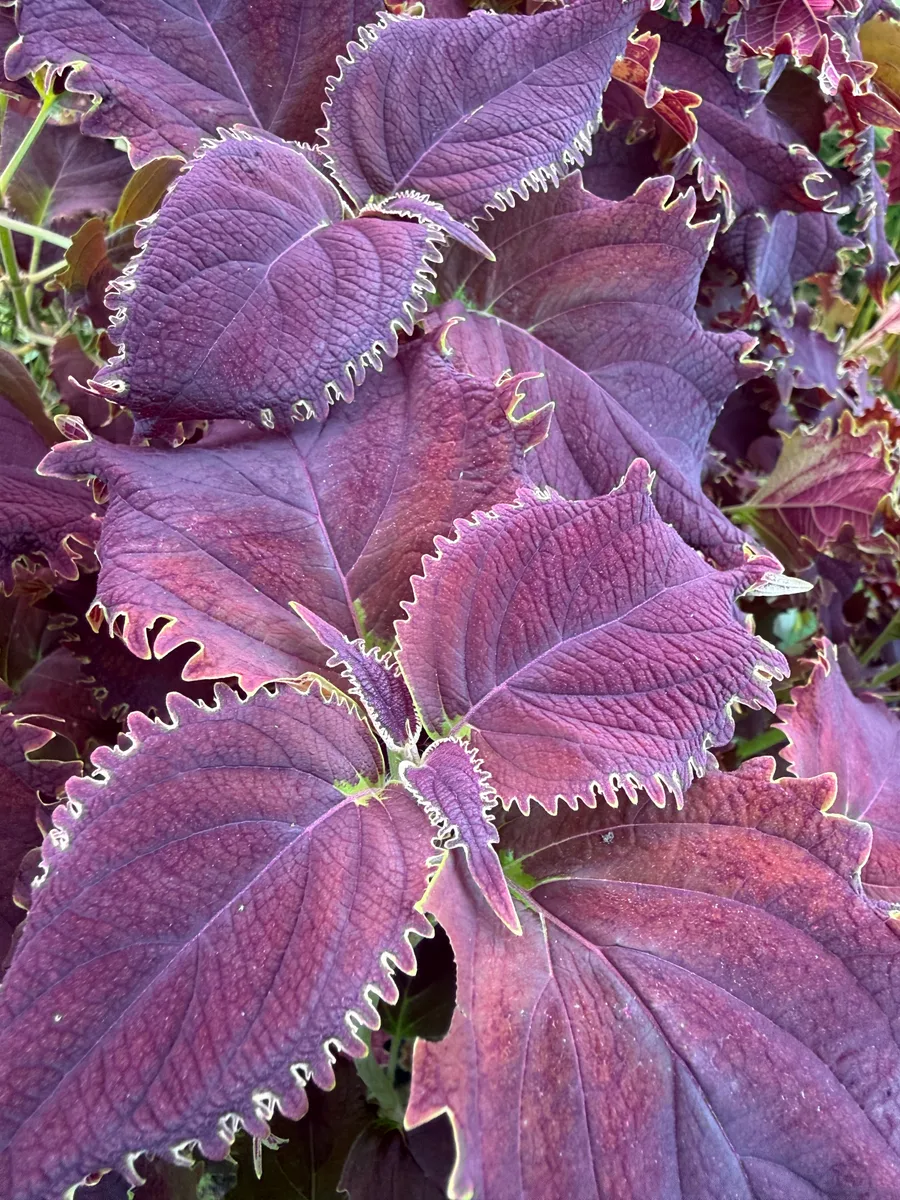
The size of the plant and of its bag can vary a little from the photograph — each one grows at its own pace. We keep them as consistent as we can.
 'Wicked Witch' · Coleus
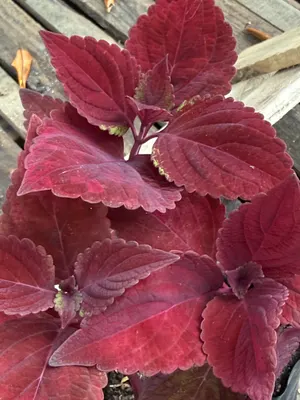 'Rediculous' – small bag · Coleus
Overview
Coleus is pure color: velvety leaves in wine red, fuchsia and lime green, often with a pale edge that lights up against the sun. It's an aromatic plant of the mint family, native to Southeast Asia and New Guinea, that has given rise to hundreds of different forms and patterns in cultivation. It fills partly shaded corners with color without needing a single flower.
Culture
A perennial herb of 50–150 cm, with stems that turn woody at the base. It grows in full sun or partial shade, in moist, well-drained soil; in the wild it lives from lowlands to mountains, on shady stream banks and in forests. To keep it compact and at its best color, pinch off the flower spikes as they appear. It roots very easily from cuttings, even in a glass of water. It has escaped from gardens on some Caribbean islands, though it's considered a minor pest.
Edible Uses
It isn't grown as food, but in its native region the fresh leaves are sometimes eaten with bread, and bruised leaves are used to flavor a homemade beer.
Medicinal
In traditional medicine the leaves are used for indigestion, headaches, diarrhea and colic, and as a poultice on bruises, swellings and sores. It has also been used to induce abortion: don't take it during pregnancy.
Traditional uses for information only. Not a substitute for advice from a health professional.
Agroforestry
In the catalog for its beauty, not for a role in an agroforestry system.