Crotalaria longirostrata
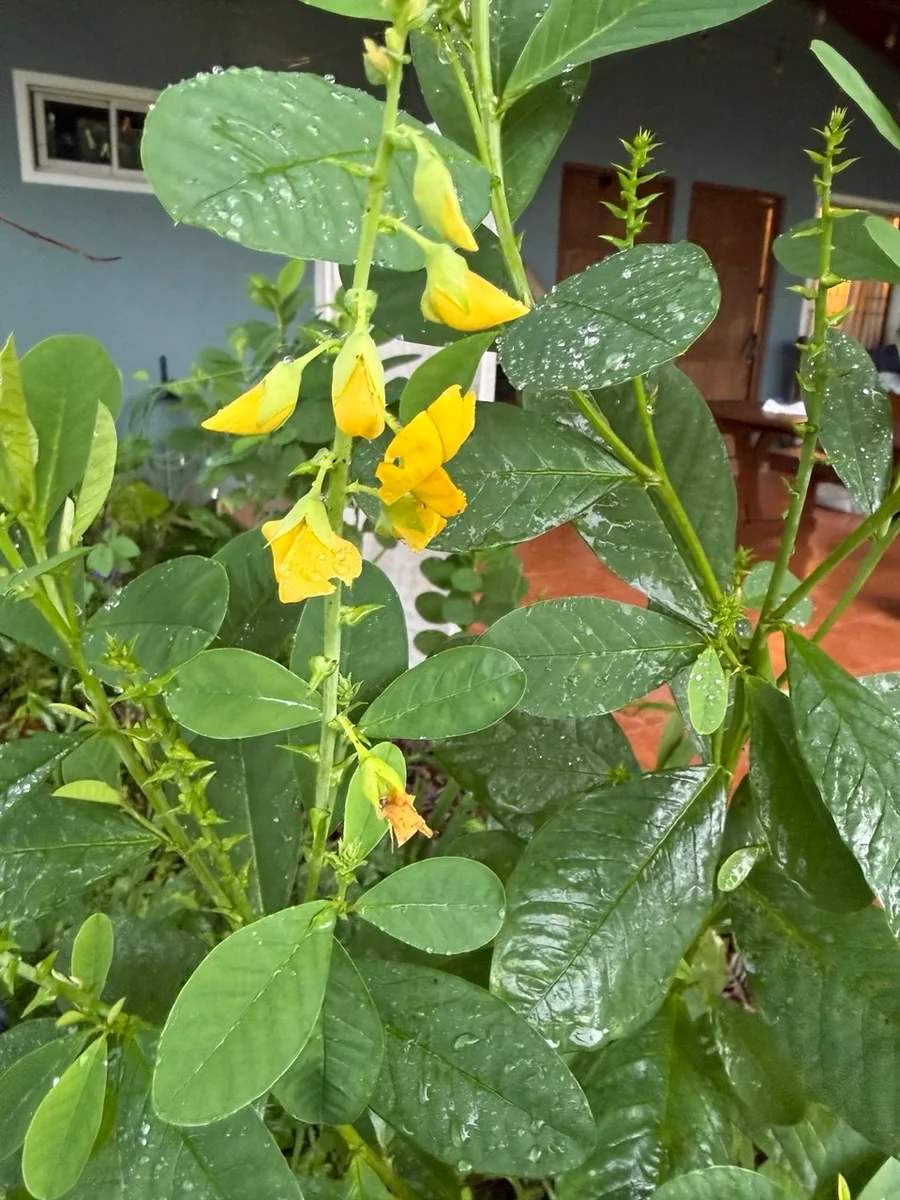
The size of the plant and of its bag can vary a little from the photograph — each one grows at its own pace. We keep them as consistent as we can.
Overview
Chipilín is an old-school Mesoamerican green: in Guatemala it's so important that it's sold in bunches in every market, and its leaves flavor tamales, soups and rice. Its taste recalls tender green beans. It's a nitrogen-fixing legume, so it feeds the family and the garden at the same time. It's probably the Crotalaria species most used as food.
Culture
- Habit
- Annual/Perennial
- Height
- 1.00 m
- Cultivation Status
- Cultivated, Wild
An annual that often lives more than a year and grows a meter or more tall. It prefers full sun and well-drained soils, dry to moist; in its native range it springs up on its own in gardens and cornfields up to 2,300 meters. It self-seeds readily, and it has become invasive in Hawaii, so collect the seeds before they drop if you don't want it to spread.
Edible Uses
The young shoots and leaves are cooked like spinach, and the leaves and flowers are stripped from the stem for tamales, soups and rice. Always eat it cooked and in moderation: it's said to cause drowsiness at times, and some species in its genus contain toxic alkaloids.
Medicinal
In folk medicine the leaves are used as a purgative or to induce vomiting.
Traditional uses for information only. Not a substitute for advice from a health professional.
Agroforestry
A placenta support species that reaches the high stratum during its short cycle: it covers the soil quickly, fixes nitrogen and gives a crop of greens while the system establishes. When pruned, it adds nitrogen-rich biomass.