Curcuma caesia
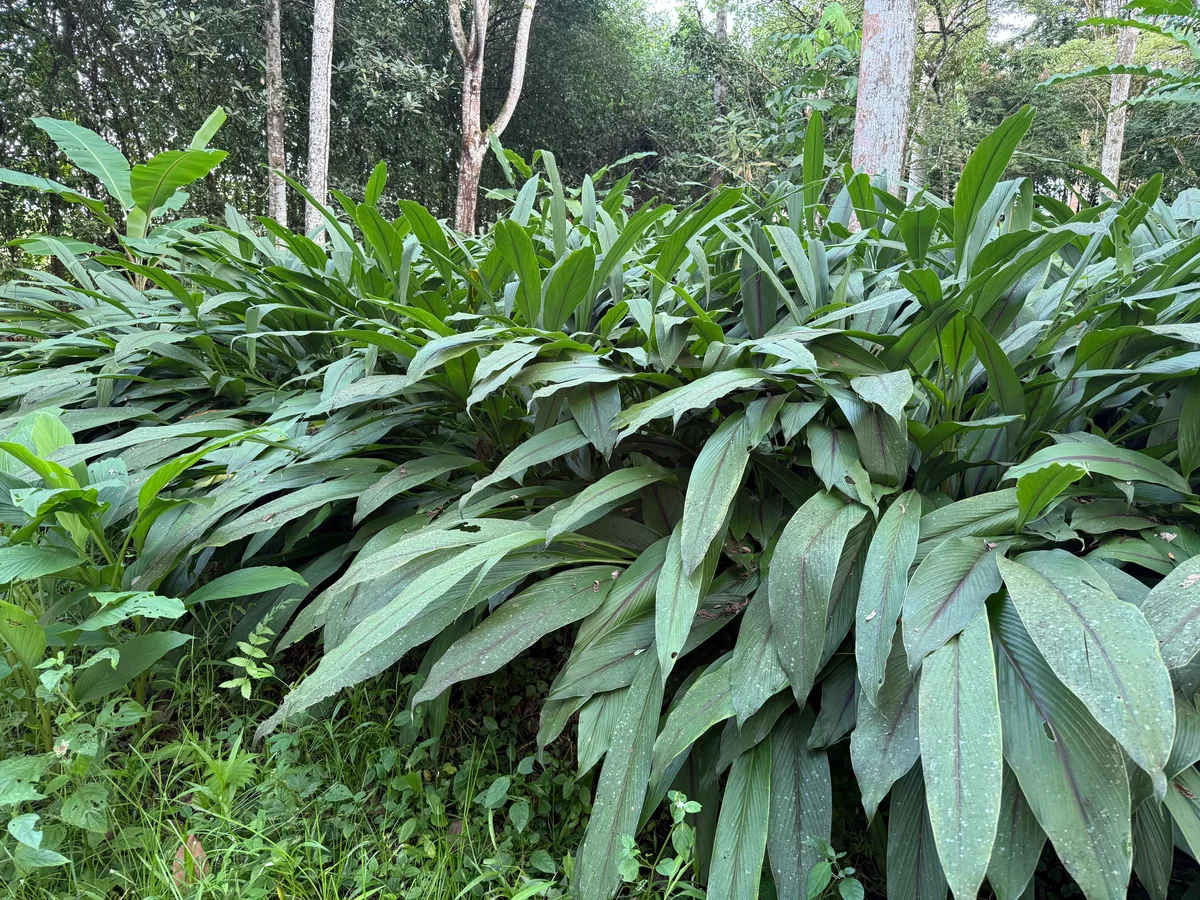
The size of the plant and of its bag can vary a little from the photograph — each one grows at its own pace. We keep them as consistent as we can.
Overview
Black turmeric is the rare cousin of turmeric: cut its rhizome and you find a deep blue-violet color, with a strong, camphor-like aroma. It comes from India, where it's valued above all as a medicinal plant, and it has become scarce in the wild. A gem for collectors of useful plants.
Culture
Like common turmeric, it wants a warm, humid climate, partial shade or filtered sun, and loose, well-drained soil rich in organic matter. Keep it moist while it's growing, but never waterlogged, because the rhizome rots. It's harvested when the leaves die back, after 6–9 months. Planting distance: 30–50 cm.
Edible Uses
Its flavor is bitter and earthy, so it's rarely used in cooking and more often as a medicinal plant; in small amounts it can be used as a spice, fresh or dried.
Medicinal
In traditional Indian medicine the rhizome is used as an anti-inflammatory and for digestion, and as a paste on bruises and sprains. There is little scientific research on it: use it in moderation.
Traditional uses for information only. Not a substitute for advice from a health professional.
Agroforestry
A short-cycle placenta species of the medium stratum: it grows in the shade of taller trees and uses parts of the system other plants leave empty. When harvested, it adds organic matter and leaves the soil loose.