Curcuma longa
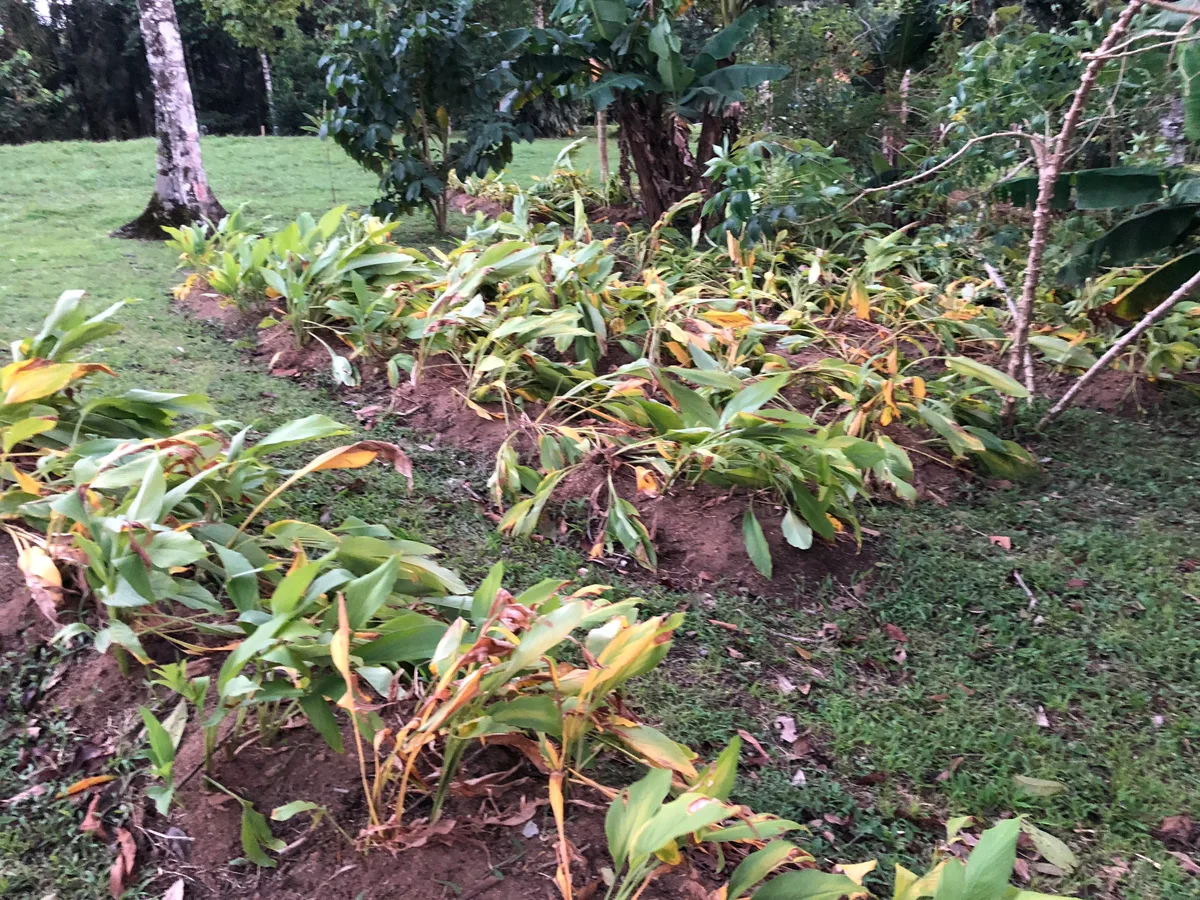
The size of the plant and of its bag can vary a little from the photograph — each one grows at its own pace. We keep them as consistent as we can.
Overview
Turmeric is the gold of Asian cooking: its rhizome, deep orange inside, gives color and flavor to curry, rice and countless sauces, and it's also a natural dye. It's a member of the ginger family, domesticated in South or Southeast Asia, that is no longer known in the wild. It's also one of the most studied medicinal plants in the world. Plant a piece of rhizome and in under a year you harvest a handful.
Culture
- Habit
- Perennial
- Height
- 0.90 m
- Cultivation Status
- Cultivated
A plant of the humid tropics that grows up to 2,000 meters, in full sun or light shade, in fertile, loose, well-drained soil. It sprouts about 4 weeks after planting and is harvested when the leaves die back, after 9–12 months; the rhizomes are then dug up and pieces are kept for replanting. It's adapted to areas with a dry season, which it spends resting underground. Planting distance: 40 cm to 1 m.
Edible Uses
The rhizome is used fresh and grated, or dried and ground, in curries, rice, soups, sauces and drinks; it's an essential ingredient of curry powder. The young shoots and rhizome tips are eaten too, raw or cooked, and add a subtle, spicy flavor.
Medicinal
The rhizome is anti-inflammatory and antibiotic, stimulates digestion and circulation, and has been shown to lower cholesterol. It's traditionally used for digestive, skin and liver problems, and as a paste on bruises, sprains and insect bites. Because it slows blood clotting, check with your doctor if you take blood thinners. It's absorbed better together with black pepper.
Traditional uses for information only. Not a substitute for advice from a health professional.
Agroforestry
A short-cycle species of the medium stratum, perfect for the early stages of a system or the gaps between young trees. It gives a high-value harvest in under a year, and harvesting leaves the soil loose and ready for the next planting.