Elettaria cardamomum
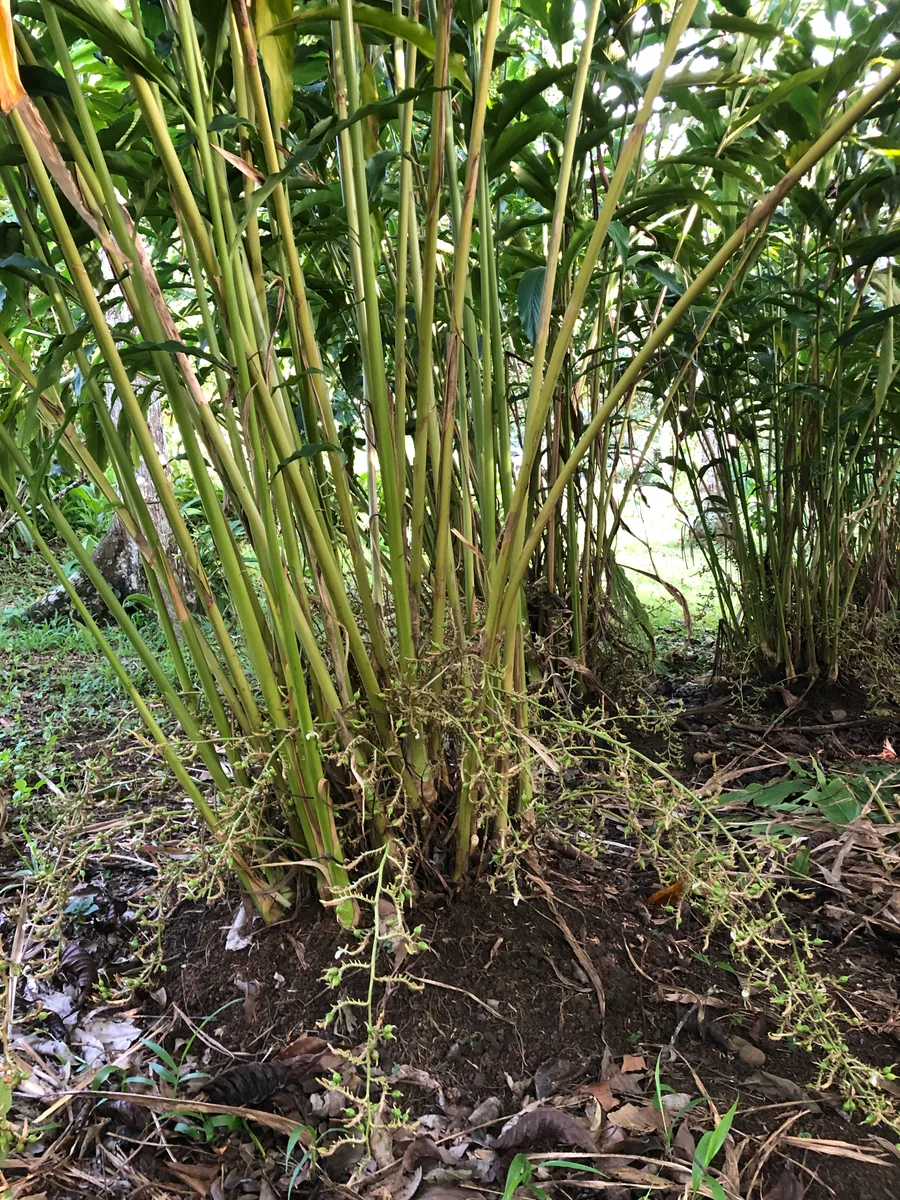
The size of the plant and of its bag can vary a little from the photograph — each one grows at its own pace. We keep them as consistent as we can.
Overview
Cardamom is one of the oldest spices in the world: ancient Egyptians used it as a perfume, and India has grown it for thousands of years. It's a member of the ginger family that forms clumps of long, aromatic leaves, and its flowers and pods grow on stems that sprawl along the ground. The seeds inside those green pods give their unmistakable aroma to coffee, chai and curries. Guatemala, our neighbor, is today the world's largest exporter.
Culture
- Habit
- Perennial
- Height
- 3.00 m
- Self-fertile
- No
- Pollinators
- Bees, ants
- Cultivation Status
- Cultivated
A plant of the humid tropics that grows best in rich, moist, well-drained soil with about 50% shade: it can't take direct sun for long. It needs abundant, well-distributed rain; it doesn't tolerate drought, and if it runs short of water while flowering it sets no seed. It starts bearing about 3 years after planting and gives economic crops for 10–15 years. Its flowers can't pollinate themselves, so plant stock from different origins. Planting distance: 1–2 m.
Edible Uses
The pods and seeds are used whole or ground in rice dishes, curries, meats, baking and drinks, and to flavor coffee and tea. The tender shoots are eaten raw, steamed or roasted, and the leaves are used to wrap food while cooking. Chewing a few seeds after a meal freshens the breath.
Medicinal
A warm, aromatic spice that aids digestion, relaxes spasms and helps clear phlegm. It's traditionally used for indigestion, nausea and bronchial complaints, including in Ayurvedic medicine.
Traditional uses for information only. Not a substitute for advice from a health professional.
Agroforestry
A medium-stratum species with a secondary life cycle, ideal for partial shade under taller trees, where it uses space other plants leave empty. It produces a high-value spice in a small area, and its flowers draw bees.