Eugenia uniflora
The size of the plant and of its bag can vary a little from the photograph — each one grows at its own pace. We keep them as consistent as we can.
Overview
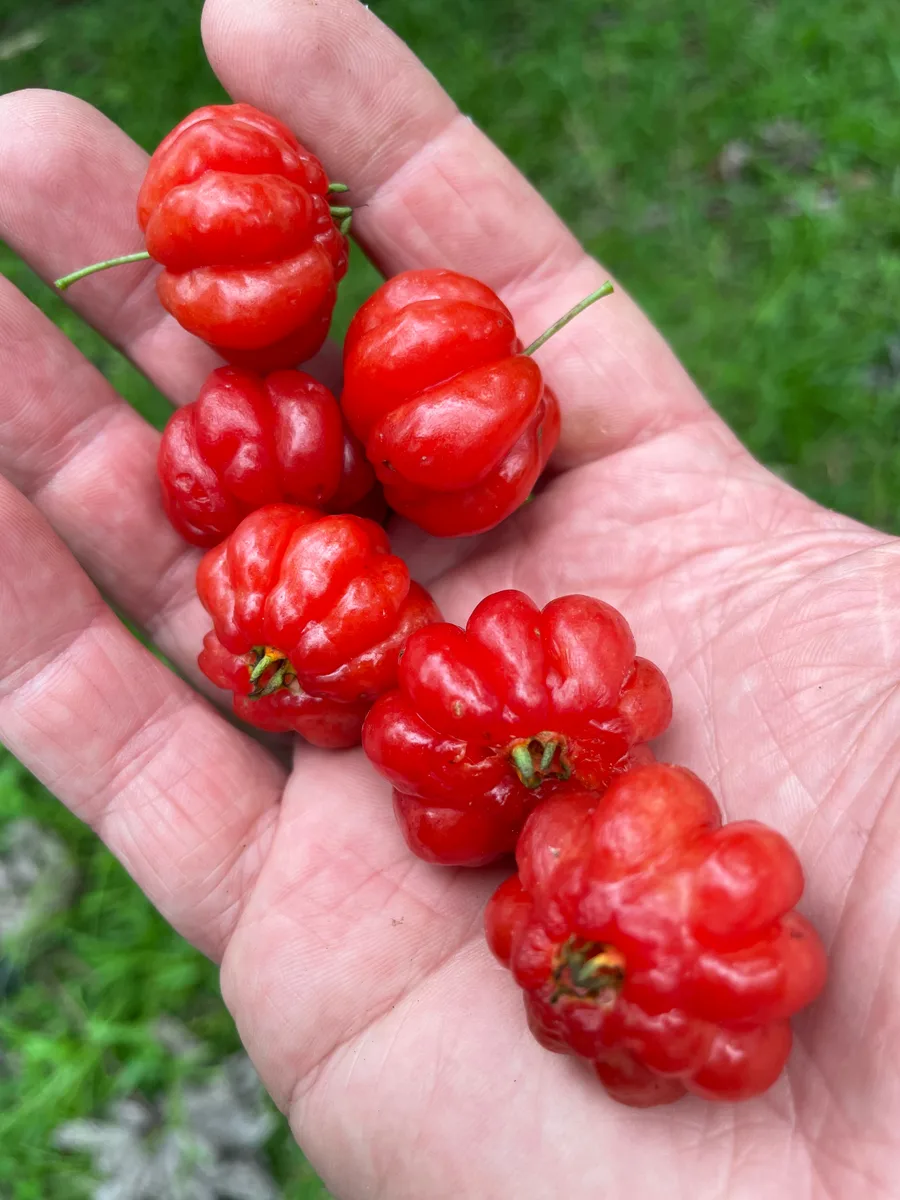
Pitanga is a tropical cherry shaped like a small ribbed pumpkin, bright red or almost black. Its flavor divides opinion: for some it's sweet, juicy and slightly spicy; for others, sour and resinous, and much of the difference lies in the plant, since the dark forms tend to be sweeter. One fruit a day is said to provide all the vitamin C the body needs. It's also a lovely ornamental shrub with reddish new growth that works as a living fence.
Culture
- Habit
- Evergreen Shrub
- Height
- 6.00 m
- Growth Rate
- Slow
- Cultivation Status
- Cultivated, Ornamental, Wild
Very adaptable: it grows from the tropics to warm temperate zones, up to 1,800 meters, and handles both high humidity and a long dry season thanks to its deep roots. It prefers fertile, moist soil rich in organic matter, and full sun to keep its best shape. It grows slowly; it can fruit from 2 years, though 5–6 is usual, and depending on the climate it gives several crops a year, some forms for up to 7 months straight. It can spread by root suckers and form thickets. Planting distance: 4–8 m.
Edible Uses
It's eaten fresh when fully ripe and made into jams, jellies, juices, sorbets and pies. It's very rich in pectin and vitamin C. Unripe fruit is used for chutneys and relishes, and the aromatic leaves for tea.
Medicinal
A leaf infusion is traditionally used for colds, flu, coughs and fever, and as a wash to soothe irritated skin. The fruit is made into a syrup for flu.
Traditional uses for information only. Not a substitute for advice from a health professional.
Agroforestry
A climax fruit shrub of the medium stratum that takes pruning very well: trimmed often, it becomes dense, ideal for productive hedges and living fences. Its white flowers feed bees.