Euterpe oleracea
The size of the plant and of its bag can vary a little from the photograph — each one grows at its own pace. We keep them as consistent as we can.
Overview
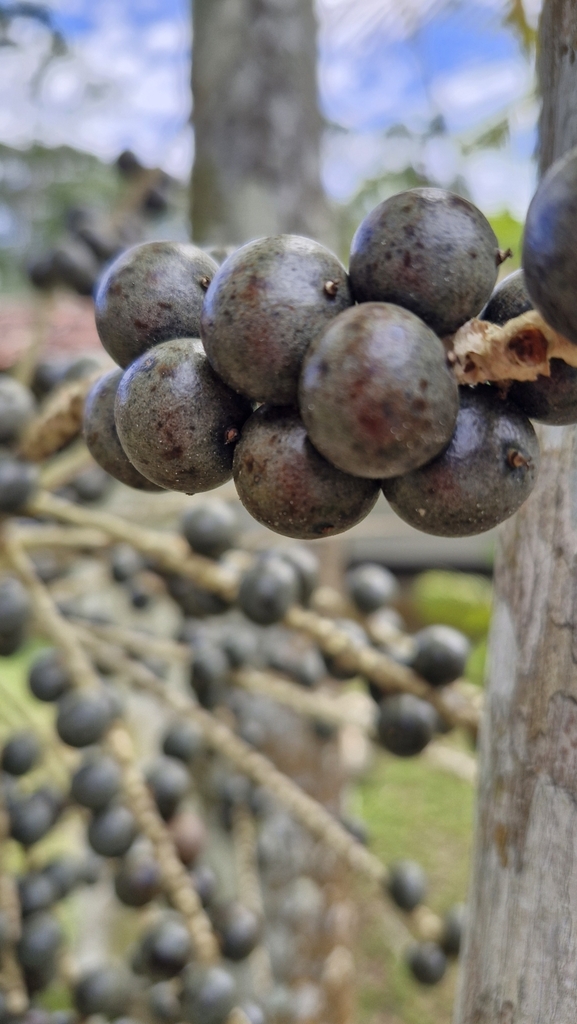
Açaí is the palm that gave the world the famous purple bowl: in the Brazilian Amazon its thick, dark juice is everyday food, served cold with sugar and tapioca. It's a slender, elegant palm that grows in clumps of up to 12 stems and bears huge bunches of up to a thousand small purple-black fruits. It also gives an excellent heart of palm, and since it resprouts from the base, harvesting one stem doesn't kill the plant.
Culture
- Habit
- Evergreen Tree
- Height
- 25.00 m
- Growth Rate
- Fast
- Cultivation Status
- Cultivated, Ornamental, Wild
A palm of the humid tropics that grows wild in swampy ground and along rivers, on land that floods seasonally. It wants rich, moist, acid soil; young plants prefer shade, and adults tolerate full sun if there's plenty of humidity. It grows fast. It flowers most of the year, though the fruit harvest is concentrated in about 6 months. Planting distance: 5–10 m.
Edible Uses
The fruits, 1.5–2.5 cm across, have little pulp: they're soaked in water to soften them, then squeezed and strained into a thick, nourishing purple liquid rich in antioxidants. It's made into drinks, ice cream, mousses and sweets. The heart of palm, the tender bud of the stem, is crunchy and sweet, a bit like artichoke, and the seed yields an edible oil.
Medicinal
In traditional Amazonian medicine the sap is used on wounds and cuts, a leaf decoction and seed tea for fever, and root tea for jaundice. Eating too much heart of palm can cause diarrhea.
Traditional uses for information only. Not a substitute for advice from a health professional.
Agroforestry
A long-lived climax palm of the high stratum, ideal for the low, wet parts of the land where other fruit trees struggle. Because it grows in clumps, you can harvest heart of palm and fruit continuously without losing the plant.