Ficus religiosa
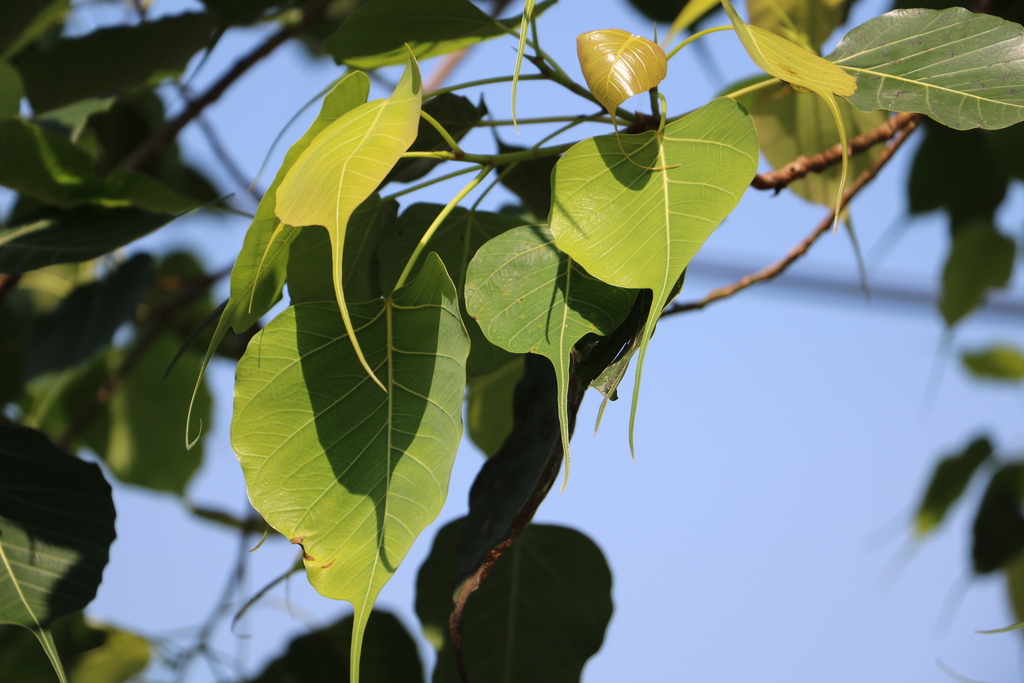
The size of the plant and of its bag can vary a little from the photograph — each one grows at its own pace. We keep them as consistent as we can.
Overview
The sacred fig is the Bodhi tree: under a tree of this species in India, the Buddha attained enlightenment. That's why it's sacred to Buddhists and Hindus and has been planted at temples throughout Asia. Its heart-shaped leaves, with a long, fine tip, tremble in the slightest breeze. It's a majestic, wide-crowned tree that can live for many centuries.
Culture
- Habit
- Evergreen Tree
- Height
- 15.00 m
- Pollinators
- Wasps
- Cultivation Status
- Ornamental, Wild
A tree of 15–30 meters for the tropics and subtropics, up to about 1,500 meters. It prefers full sun, though it tolerates partial shade, and deep, moist, well-drained soil; it also grows in shallow soils and even rock crevices. In the wild it often starts life as an epiphyte on another tree, wraps it in aerial roots and eventually replaces it. Plant it well away from houses, walls and pipes, because its roots are very strong. Planting distance: 15–20 m.
Edible Uses
Its small figs and young shoots are edible but bland; they're eaten only in times of scarcity.
Medicinal
In traditional Indian medicine the leaf sap is used for diarrhea and to heal wounds, a bark infusion for diabetes, and a bark decoction to wash sores and skin diseases. The figs are laxative.
Traditional uses for information only. Not a substitute for advice from a health professional.
Agroforestry
A very long-lived climax tree of the high stratum, for shade and as a landmark tree in open spaces. Like all figs, it depends on a tiny, specific wasp to pollinate its flowers, which grow hidden inside the fig. Its figs feed birds and bats.