Flemingia macrophylla
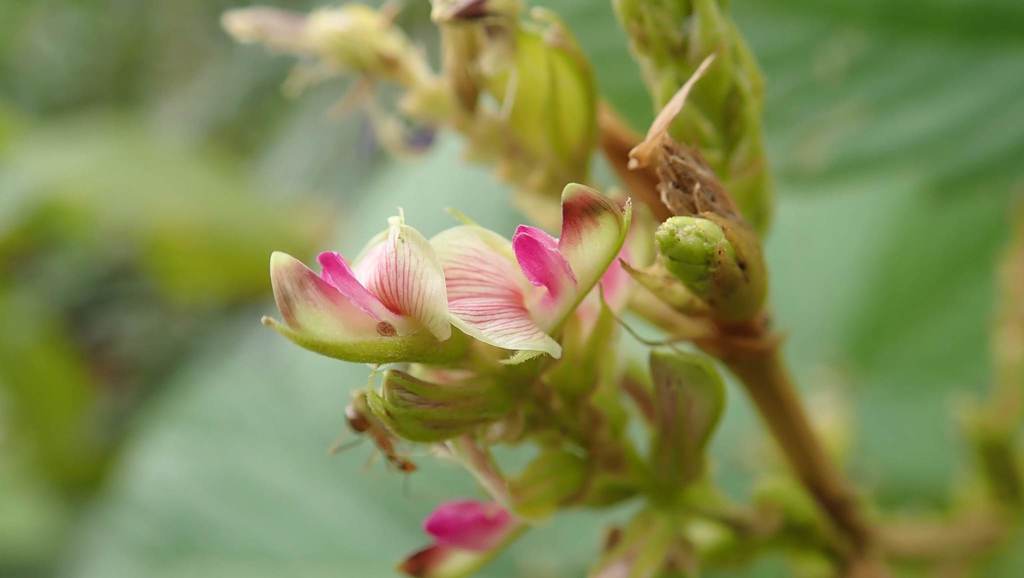
The size of the plant and of its bag can vary a little from the photograph — each one grows at its own pace. We keep them as consistent as we can.
Overview
Flemingia is a leguminous shrub built for work: it fixes nitrogen, resprouts vigorously after every pruning and produces a mulch that lasts for months on the ground. Its leaves break down slowly and form a firm layer that stops weeds germinating for up to 100 days, while it holds moisture and cools the soil. That's why it's planted as shade and green manure in cacao, coffee and banana plantings across the tropics. A quiet ally for any syntropic system.
Culture
- Habit
- Shrub
- Height
- 3.00 m
- Pollinators
- Bees, Insects
- Cultivation Status
- Cultivated, Wild
A shrub of 1–4 meters with a deep taproot that grows from sea level to 2,000 meters. It prefers sun but tolerates light shade; it handles poorly drained, waterlogged soils and also up to 4 months of drought. It's slow at first: keep it weeded for the first 6 months; after that it needs almost no care. It can be pruned every 3 months, never less than 40 days apart, and tolerates this for many years. Planting distance: 1–2 m.
Edible Uses
The leaves are eaten only occasionally; it's grown for its work in the soil, not as food.
Medicinal
Traditionally the leaves are used for fever and joint pain, and a decoction to bathe sores and swellings. The resinous powder from its dry fruits has been used against intestinal worms and coughs, and as a dye.
Traditional uses for information only. Not a substitute for advice from a health professional.
Agroforestry
A support species of the medium stratum with a secondary life cycle: it's planted in hedges to control erosion on terraces, as shade and cover in young plantations, and as a windbreak. Its prunings give a long-lasting mulch that controls weeds, holds moisture and enriches the soil with nitrogen. It has become invasive on some Pacific islands.