Hedychium coronarium
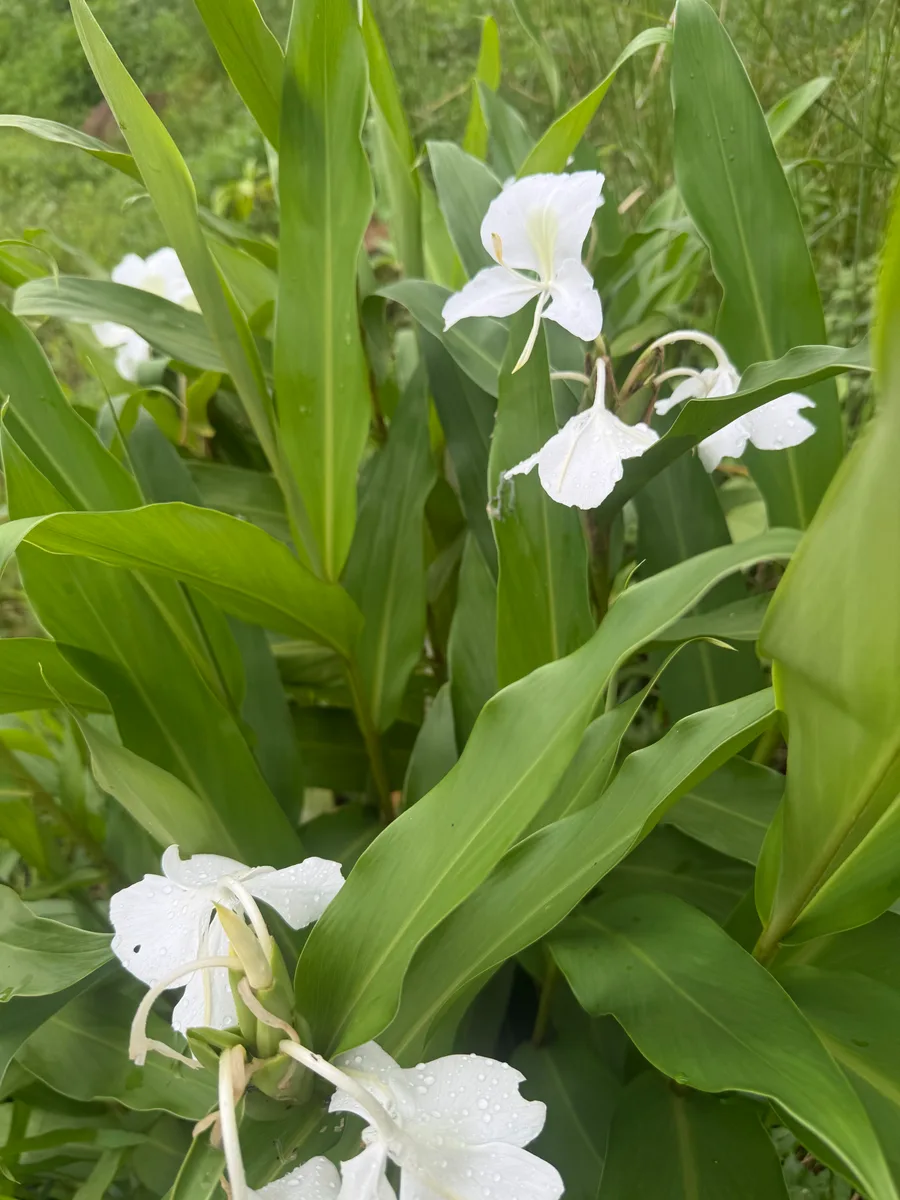
The size of the plant and of its bag can vary a little from the photograph — each one grows at its own pace. We keep them as consistent as we can.
Overview
Of all the flowers in the ginger family, this is the one that perfumes most: white butterflies of fine petals that release their scent above all at dusk, when you catch it from across the garden. It's a rhizomatous herb of a meter and a half — Cuba's national flower — and in the garden it solves the wet spot where almost nothing blooms: it grows even with its feet in water.
Culture
- Habit
- Perennial
- Height
- 1.50 m
- Cultivation Status
- Cultivated, Ornamental, Wild
Rich, moist soil, in full sun or partial shade, and it thrives even in shallow water: a ditch, a pond margin, or the low ground that never dries out is its place. Multiply it by dividing the rhizome and it flowers early. Be aware that it travels: the rhizome spreads until it forms dense thickets, and taking it out afterward is work. Plant it where that advance works in your favor, or give it an edge. Plant 1–2 m apart.
Edible Uses
The buds and tender flowers are eaten steamed or used as a flavoring: in Thailand they're served with chili sauce, and in Hawaii the flowers are used as a vegetable. Starch has been taken from the rhizome, though that is a use of necessity rather than pleasure.
Medicinal
It has a broad tradition in Asia: the ground rhizome has been used for fever, a decoction of the stem base as a gargle for tonsillitis, and boiled leaves applied to aching joints.
Traditional uses for information only. Not a substitute for advice from a health professional.
Agroforestry
A support species of the medium stratum, for the wet ground you can't plant with anything else: the ditch, the margin, the low spot. The rhizome forms a mesh that binds soil and slows water, and the leafy stems give good biomass at every cut. For the same reason it's useful, it needs directing: it's vigorous and won't stop on its own. Plant 1–2 m apart.