Hibiscus sabdariffa
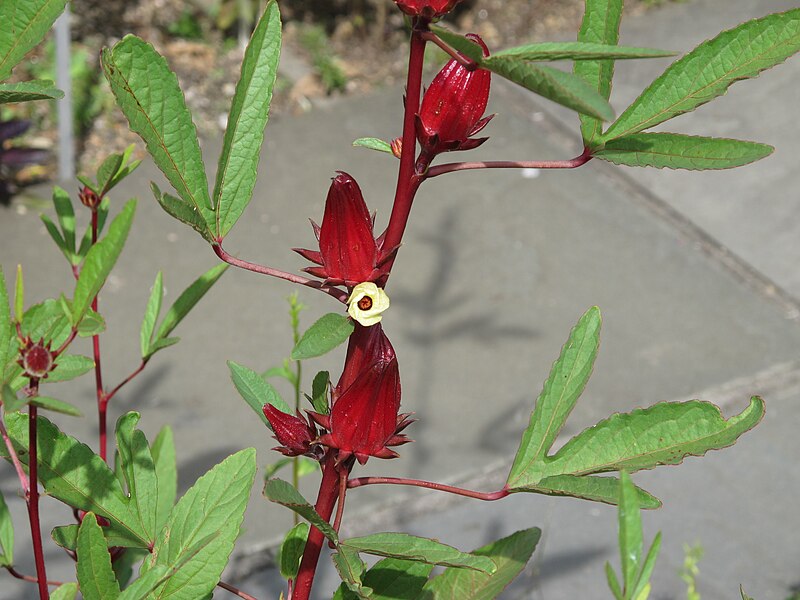
The size of the plant and of its bag can vary a little from the photograph — each one grows at its own pace. We keep them as consistent as we can.
Overview
The deep red of agua de jamaica comes from the fleshy calyces around the fruit, not from the flower. They have a cranberry-like tartness with a citrus note, and lots of pectin: perfect for cold drinks, teas and jams. It's a fast, generous plant that crops within months. In Australia, Aboriginal communities wove the fiber of its stems into bags, twine and nets.
Culture
- Habit
- Annual/Perennial
- Height
- 3.00 m
- Self-fertile
- Yes
- Pollinators
- Insects, Self
- Cultivation Status
- Cultivated, Ornamental, Wild
A full-sun plant: it doesn't tolerate shade and should be kept weed-free while young. It does best in loose, fertile, well-drained soil, though it adapts to many. Plant at 50–75 cm; it crops in 6–8 months. We offer it in bags, or in flats of 50 for larger plantings.
Edible Uses
The fresh calyces are boiled for the cold drink, sweetened and sometimes spiced with ginger; they also go into teas, jellies, sauces and desserts. The tender, tart leaves are eaten raw or cooked as a green.
Medicinal
Calyx tea is a widely used traditional remedy in the tropics as a diuretic and cooling drink, and it is being studied today for its effect on blood pressure. The very mucilaginous leaves are traditionally used for coughs.
Traditional uses for information only. Not a substitute for advice from a health professional.
Agroforestry
A short-cycle placenta species: it fills the sunny beds in the system's first months, gives a quick harvest, and then the whole plant is cut and left on the ground as biomass. Ideal for food and income while the trees grow.