Inga edulis
The size of the plant and of its bag can vary a little from the photograph — each one grows at its own pace. We keep them as consistent as we can.
Want it? Tell us and we will write to you when it is ready.
Want it? Tell us and we will write to you when it is ready.
Overview
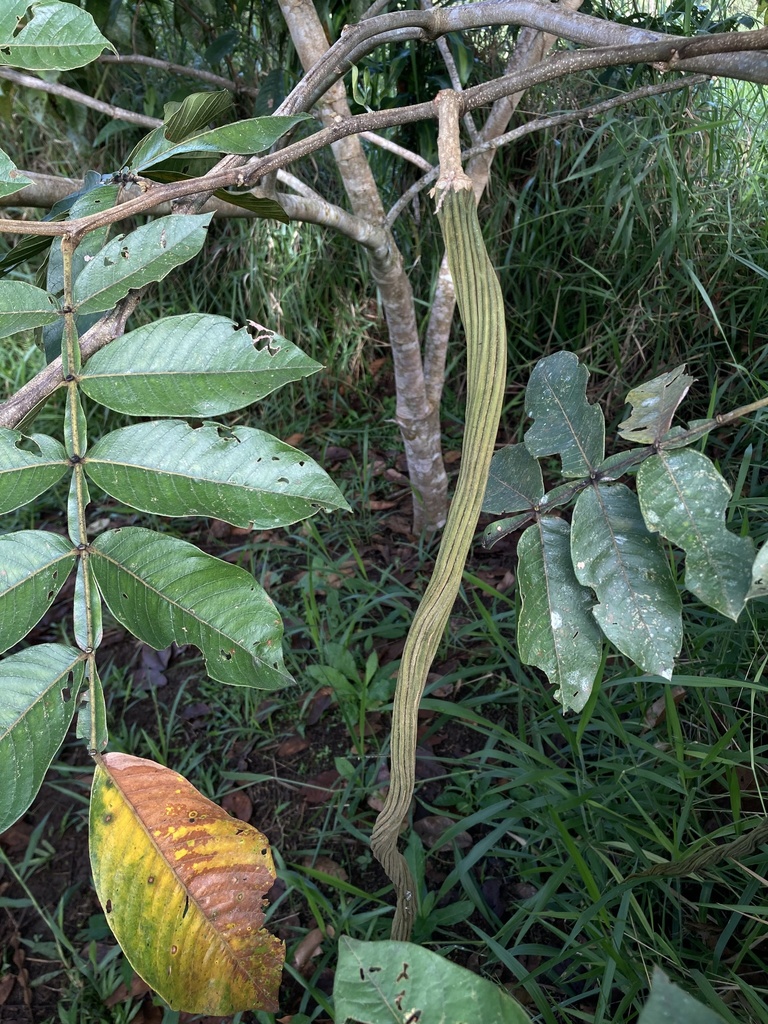
One of the great allies of tropical agroforestry. Guaba grows very fast, fixes nitrogen from the air and drops so many leaves that it covers the ground and holds back weeds. And it rewards whoever plants it: pods that can be almost a meter long, with a sweet, cottony white pulp around the seeds. In English it's called ice cream bean.
Culture
- Habit
- Evergreen Tree
- Height
- 17.00 m
- Growth Rate
- Fast
- Cultivation Status
- Cultivated, Wild
Very tough: it tolerates acidic, poor soils, handles drought and even flooding for 2–3 months. It prefers sun but also grows in light shade. We offer two varieties: the flat-podded guaba cuchillo, in bulk and bare-root, and the long-podded guaba, in small bags. Plant bare-root trees promptly, keeping the roots moist, ideally at the start of the rains.
Edible Uses
The white pulp around the seeds is sweet and perfumed, with the texture of damp cotton; some guabas have a hint of cinnamon. It's eaten straight from the pod, and it's a favorite with children.
Medicinal
Traditionally, a decoction of the leaves is used to relieve coughs, and applied to sores on the lips.
Traditional uses for information only. Not a substitute for advice from a health professional.
Agroforestry
The support species par excellence: a classic shade tree for coffee and cacao. Its nitrogen-rich leaf litter breaks down slowly: it protects the soil for months, suppresses weeds and builds organic matter over the long term. In trials on slopes, its mulch cut erosion almost to the level of secondary forest. In a syntropic system it's pruned often to let in light and feed the soil, and it always grows back.