Ipomoea batatas
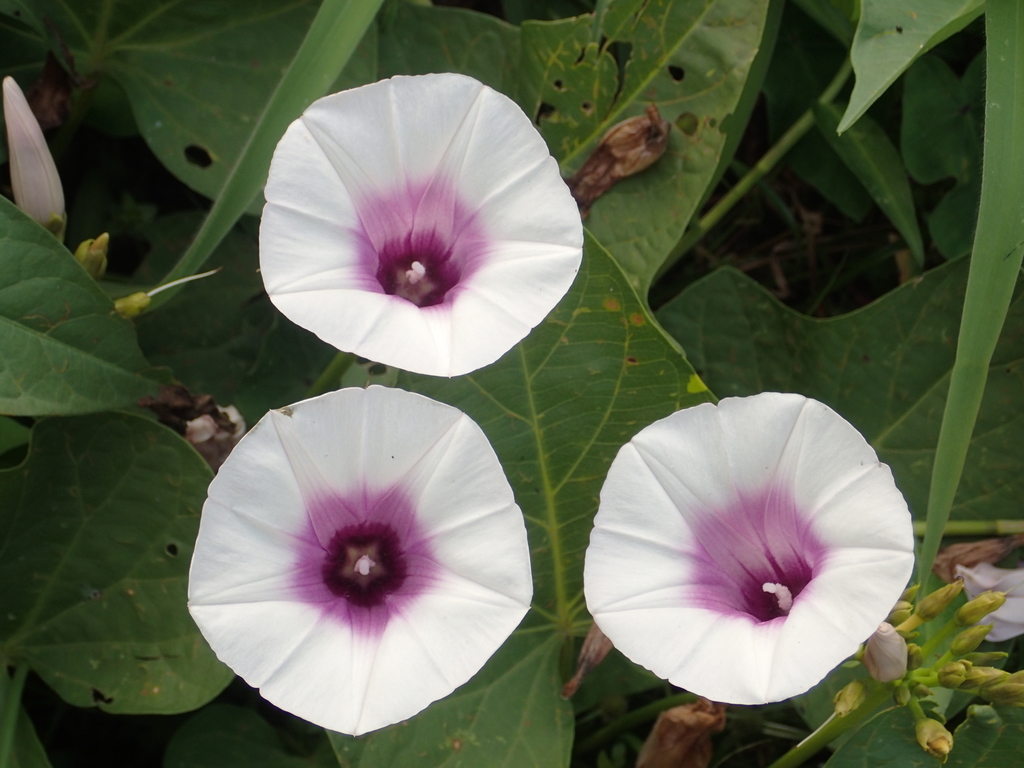
The size of the plant and of its bag can vary a little from the photograph — each one grows at its own pace. We keep them as consistent as we can.
Overview
Sweet potato is a gift from our region to the world: it originated in Mesoamerica and northern South America, and today it's one of only seven crops topping 100 million tons a year. This is the purple sweet potato, with deep violet, sweet, nourishing flesh. It's one of the plants best at turning sunlight into calories, and it starts storing starch so early that it allows early harvests. Its tender tips are eaten like spinach, too: one plant, two harvests.
Culture
- Habit
- Perennial Climber
- Height
- 3.00 m
- Growth Rate
- Fast
- Cultivation Status
- Cultivated
Very easy: it wants full sun and loose, sandy, well-drained loam; potash is key for a good crop. It's planted from cuttings, which root right away. Its vines spread 4 meters or more and root at the nodes, where they also form tubers. It's harvested at 4–6 months. It has escaped cultivation in some regions, so keep the vines managed. Planting distance: 50 cm.
Edible Uses
The tubers are eaten boiled, roasted or mashed and are a rich source of vitamins and minerals; the purple flesh owes its color to natural antioxidants. The tender vine tips are cooked like spinach. To store them longer, cure them in the sun for a few days before storing.
Medicinal
Traditionally the leaves are used for measles, though it's valued above all as food.
Traditional uses for information only. Not a substitute for advice from a health professional.
Agroforestry
A placenta species of the low stratum: it quickly covers the ground like a living carpet, protects it from sun and rain and holds back weeds in the early stages of a system, while giving a food harvest. It's ideal between newly planted trees.