Magnolia champaca
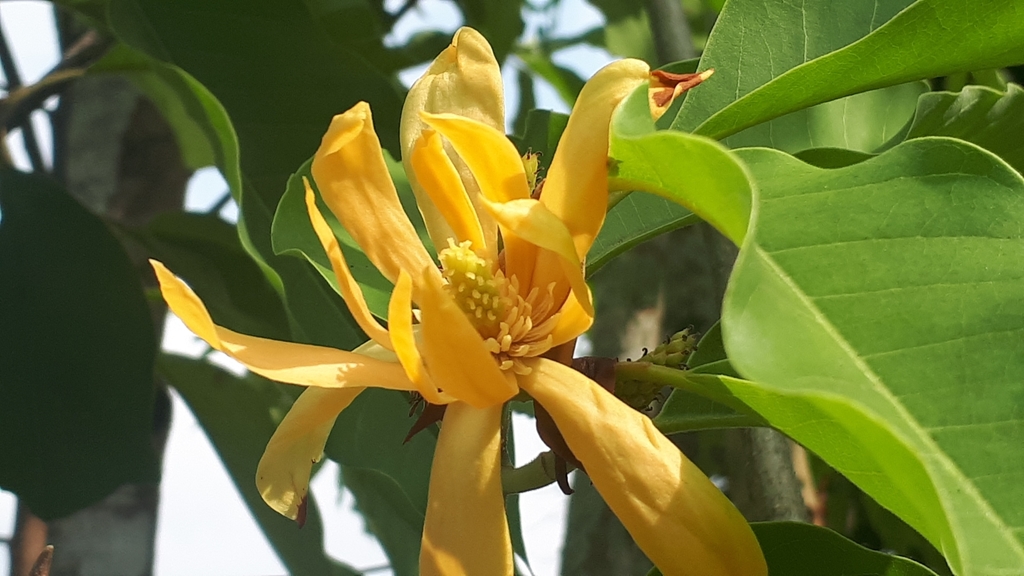
The size of the plant and of its bag can vary a little from the photograph — each one grows at its own pace. We keep them as consistent as we can.
Overview
Few flowers scent a garden like champaca: its yellow-orange blossoms are used in perfumery and as offerings in Hindu and Buddhist temples. It's a true magnolia, from a lineage so ancient that it's pollinated by beetles, not bees. Over the years it becomes a tree of up to 30 meters that lives for more than a century, gives fine timber and improves the soil beneath its crown.
Culture
- Habit
- Evergreen Tree
- Height
- 30.00 m
- Pollinators
- Beetles
- Cultivation Status
- Cultivated, Ornamental, Wild
It wants full sun, deep, fertile, well-drained soil and plenty of rain: our humid climate suits it. It prefers acidic soil (pH 4.5–5.5). Seed-grown trees take about 8–10 years to flower. Plant at 8–12 m: this is a big tree.
Edible Uses
Not a kitchen plant. Its aromatic bark has been used to adulterate cinnamon, and the fruit is reported as edible, but its value lies in the flowers and the wood.
Medicinal
In its native region the bark is traditionally used for fevers and the leaves for colic, and the seed oil is applied to chapped skin.
Traditional uses for information only. Not a substitute for advice from a health professional.
Agroforestry
A climax species of the high stratum, planted for the next generations: it grows up into the canopy and leaves valuable timber in the long run. Under its crown the soil gains organic matter, available phosphorus and a less acidic pH; in Java it is used to reforest badly eroded land. Plant it at the start of a system, with room to grow, among shorter-lived species that keep it company while it grows.