Myristica fragrans
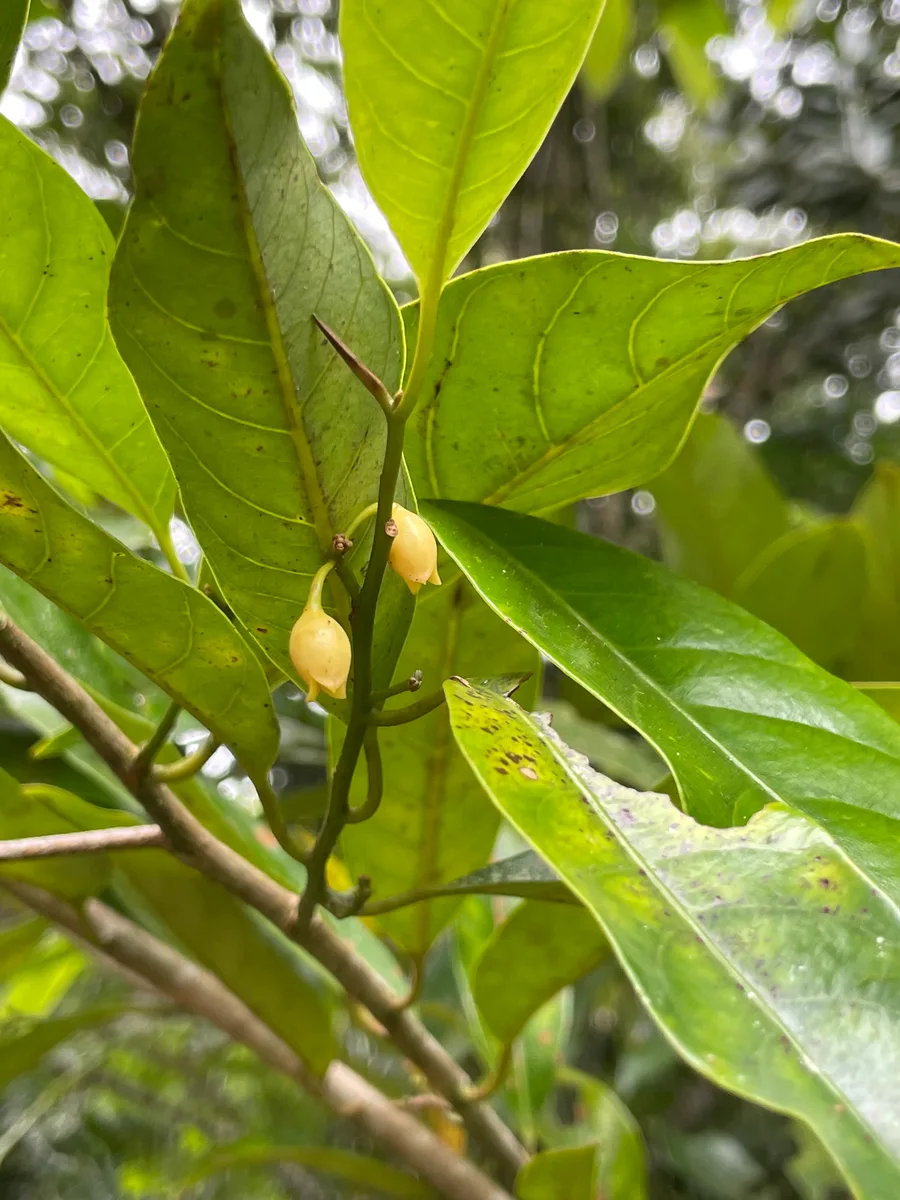
The size of the plant and of its bag can vary a little from the photograph — each one grows at its own pace. We keep them as consistent as we can.
Overview
One fruit, two spices: the seed is nutmeg, and the red lace wrapped around it is mace. It comes from the tiny Banda Islands of Indonesia, and for centuries it was one of the most valuable spices in the world. So valuable that in 1667 the Dutch kept Run, a small nutmeg island, and handed Manhattan to the English in exchange.
Culture
- Habit
- Evergreen Tree
- Height
- 15.00 m
- Growth Rate
- Slow
- Self-fertile
- No
- Pollinators
- Moths, Insects
- Cultivation Status
- Cultivated
A tree of the humid lowland tropics, with no marked dry season: our climate suits it. It wants well-drained soil rich in organic matter, in full sun or partial shade. It grows slowly and starts producing at around 6–7 years. There are male and female trees, and only females bear fruit, so plant several. Spacing: 4–5 m.
Edible Uses
The seed, freshly grated, flavors desserts, sauces, eggnog and savory dishes; mace is more delicate and goes into soups and curries. The fruit's flesh is used too: in Indonesia and Malaysia it becomes sweets and jam.
Medicinal
Traditionally used in small doses as a digestive tonic and for nausea and colic. Take care: in large amounts it is toxic and causes dizziness and delirium. Use it only as a spice, in pinches.
Traditional uses for information only. Not a substitute for advice from a health professional.
Agroforestry
A long-lived (50–70 years) climax species of the high stratum. It tolerates partial shade in its early years, so it establishes well under pioneer species that are later pruned back or harvested.