Passiflora ambigua
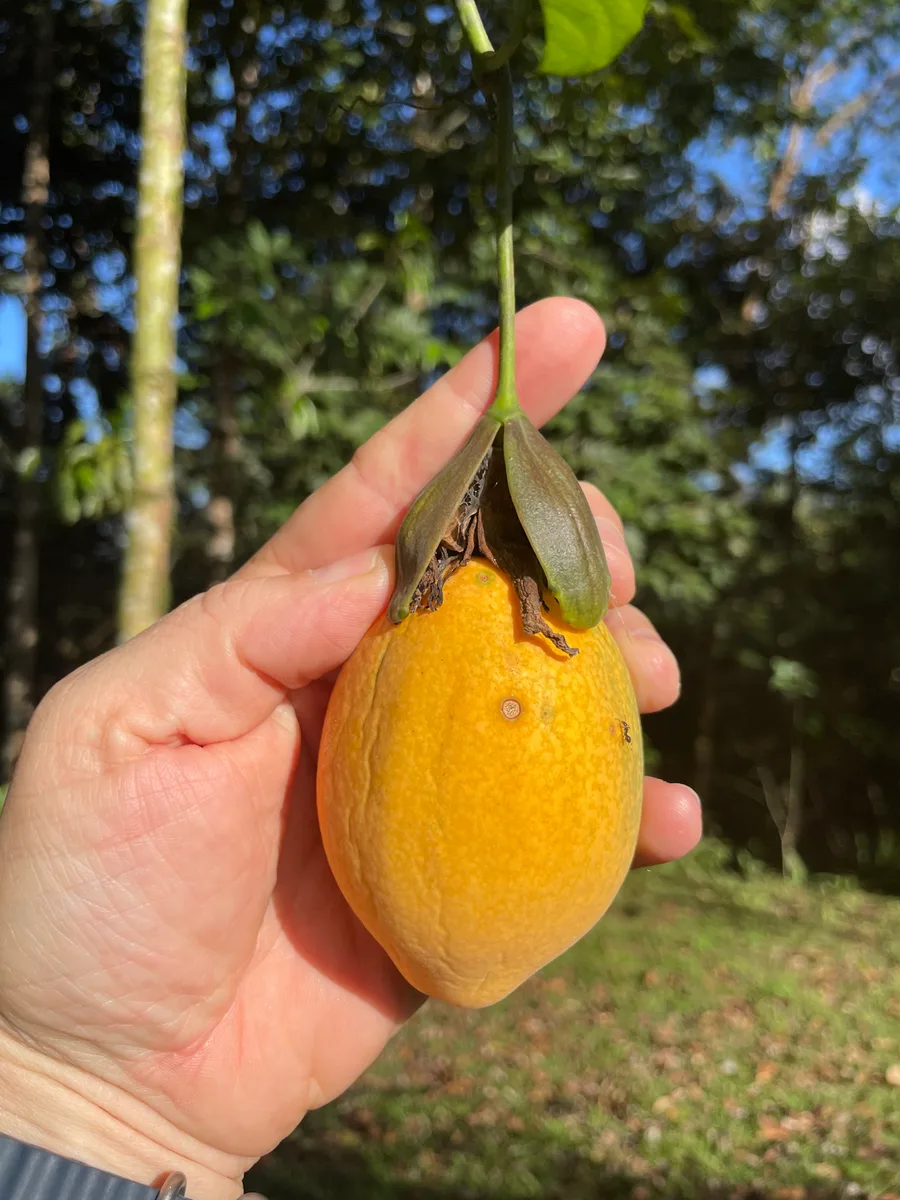
The size of the plant and of its bag can vary a little from the photograph — each one grows at its own pace. We keep them as consistent as we can.
Overview
This wild granadilla of the lowland rainforest, from Mexico to Colombia, is one of the showiest in the genus: the flower opens as a star of wine-purple sepals over a corona of filaments banded purple and white, and the fruit comes hand-sized, deep yellow and thick-skinned. It is easy to pick out among passionflowers because its leaf is entire and glossy, without the lobes nearly all of them have (it belongs to section Laurifolia, the laurel-leaved group). Our plants come from seed Rob collected in the Osa Peninsula: he watched a female great curassow (Crax rubra) feeding on something on the forest floor, and when he went to look he found the last few seeds she had left. Those became the first plants, and he waited until they fruited to collect more seed, as with so much else in this catalog. It is a forest liana rather than a garden trellis plant: stems run 8–12 m or more, so it wants a support tree and patience.
Culture
A plant of warm, wet lowlands, up to about 500 m: fertile soil with organic matter and good drainage, and steady moisture while it establishes. It takes considerable shade, which is how it lives in the understory, but it flowers and fruits better with direct sun for part of the day. The stems are long and heavy, so plant it at the foot of a support tree, a living post or a solid structure, not on light mesh. It grows from seed, which is how we raise it here, and also from cuttings or layering.
Edible Uses
The yellow fruit is opened and eaten fresh: the pulp around the seeds is juicy and sweet, with the perfume of the family. The rind is thick, 1.5 to 4 cm, so the fruit weighs more than it yields; this is forest fruit to eat on the spot or blend into a drink, not a heavy-pulp commercial granadilla. It is best in small helpings: eaten in quantity the flavor turns sour.
Medicinal
Across the genus Passiflora, several species are traditionally taken as an infusion to calm the nerves and help with sleep, the use the family is known for. For this species in particular the record is thin and we have not verified it, so we offer it as a fruit, garden and wildlife plant rather than a medicinal one.
Traditional uses for information only. Not a substitute for advice from a health professional.
Agroforestry
A climber of the upper stratum: it uses the vertical space of the system without competing for ground, and does best running up an established support tree or living fence. The large, nectar-rich flower draws big bees and other pollinators, and foliage in this genus feeds the caterpillars of Heliconius butterflies. Fallen fruit feeds wildlife on the ground: in Osa it was a curassow doing exactly that which led us to the plant.