Petiveria alliacea
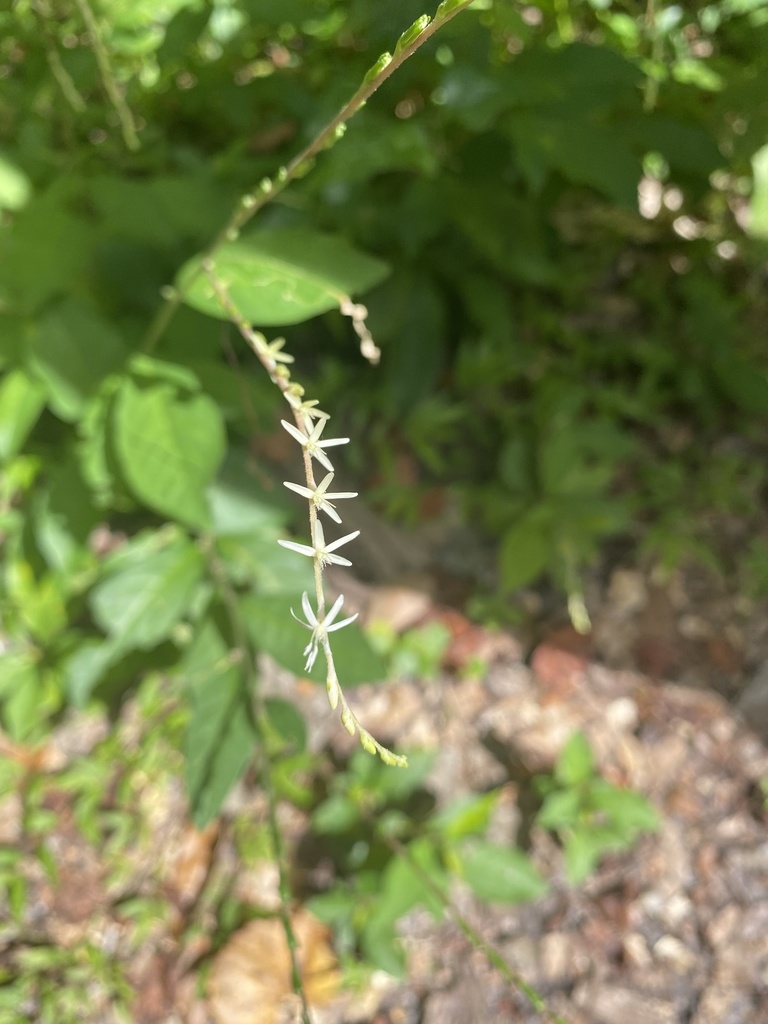
The size of the plant and of its bag can vary a little from the photograph — each one grows at its own pace. We keep them as consistent as we can.
Overview
Guinea hen weed smells of garlic: just brush a leaf and the aroma gives it away. It's one of the most popular medicinal herbs in tropical America, native from the southern United States to Argentina, and its fame has reached markets worldwide. Its smell comes from sulfur compounds similar to those in garlic and onion, now being studied in the lab. A medicine-cabinet plant worth keeping close, and using with respect.
Culture
- Habit
- Perennial
- Height
- 1.00 m
- Cultivation Status
- Cultivated, Wild
A perennial subshrub of 60–150 cm with a thick, deep taproot. It prefers partial shade and rich, moist soil. It grows easily and in many areas behaves as a roadside weed. Planting distance: 1–1.5 m.
Edible Uses
Not edible: all parts are very acrid.
Medicinal
It's traditionally used for flu, fever, asthma, headaches and muscle aches, and the root for toothache. In lab studies its extracts have shown antimicrobial, pain-relieving and immune-stimulating activity, and have slowed the growth of cancer cells in culture, which doesn't mean it cures cancer. It stimulates the uterus and has been used to induce abortion: don't use it during pregnancy.
Traditional uses for information only. Not a substitute for advice from a health professional.
Agroforestry
A support species of the low stratum with a secondary life cycle that grows well in partial shade under trees. Plant it in the medicinal garden near the house, to keep it at hand.