Piper nigrum
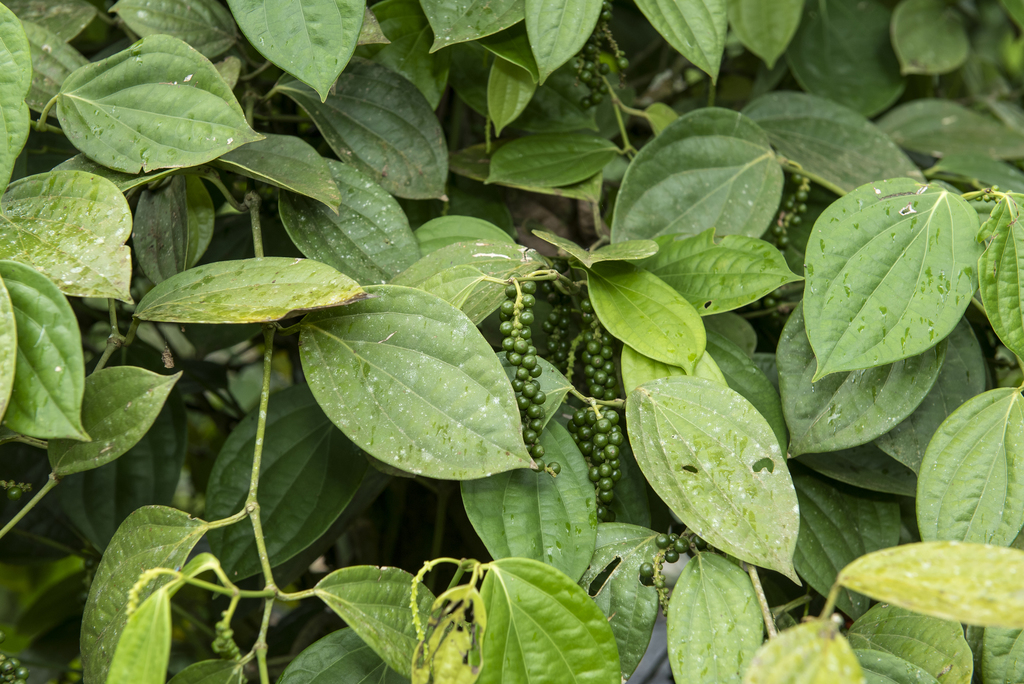
The size of the plant and of its bag can vary a little from the photograph — each one grows at its own pace. We keep them as consistent as we can.
Overview
Black pepper was for centuries the most valuable spice in world trade, and it all comes from this vine from India. One fruit gives three peppers: green, if picked young and pickled; black, if dried whole; and white, if the outer skin is removed. Its small fruits hang in spikes and turn red when ripe. Growing your own pepper means tasting an aroma that supermarket pepper has lost.
Culture
- Habit
- Climber
- Height
- 6.00 m
- Self-fertile
- Yes
- Cultivation Status
- Cultivated, Wild
A vine of the hot, humid lowlands that yields best below 500 meters, with plenty of rain. It climbs by clinging with aerial roots; in cultivation it's kept at 3–4 meters on a living support tree or a post. It prefers partial shade, a spot sheltered from wind and soil rich in organic matter, with no waterlogging. It starts bearing at 3–4 years, reaches full production at 7, and produces for 12–20 years. Planting distance: 1–3 m.
Edible Uses
The dried fruits are ground into black pepper; with the outer layer removed they give milder white pepper; and the green fruits are pickled in vinegar. Its heat comes from piperine.
Medicinal
A warm, aromatic spice that aids digestion, lowers fever and is antiseptic. Western and Ayurvedic medicine use it as an expectorant, and Chinese medicine for diarrhea, vomiting and stomach chills. Its essential oil has been used to ease rheumatic pain and toothache.
Traditional uses for information only. Not a substitute for advice from a health professional.
Agroforestry
A climax vine of the low stratum, traditionally grown as a second crop in the shade of a taller one. In a syntropic system it climbs support trees, so each trunk gives two harvests in the same space. Its roots can reach 4 meters deep or more.