Plectranthus amboinicus
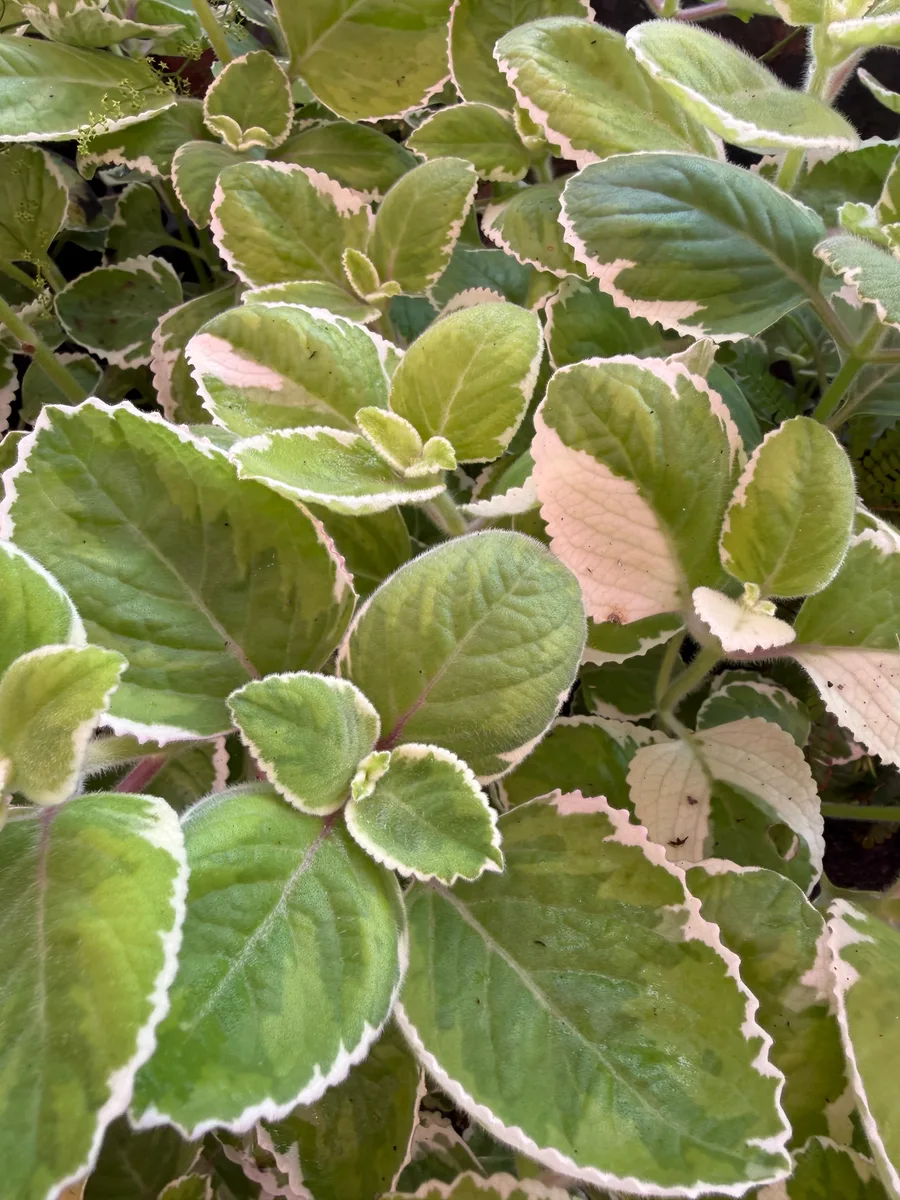
The size of the plant and of its bag can vary a little from the photograph — each one grows at its own pace. We keep them as consistent as we can.
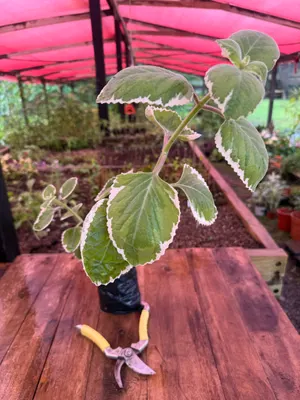 'Variegatus' · Cuban oregano
Overview
The oregano that actually takes the tropics. Its leaves are thick, fleshy and downy, and crushing one releases an aroma of oregano and thyme far stronger than Mediterranean oregano, which dies in our heat and humidity. It's a herb in the mint family, native to southern and eastern Africa and now grown throughout tropical America, and it grows with almost offensive ease: a sprig in damp soil is already a new plant.
Culture
- Habit
- Evergreen Perennial
- Height
- 1.00 m
- Pollinators
- Insects
- Cultivation Status
- Cultivated, Ornamental, Wild
Sun or partial shade, and above all drainage: in heavy, waterlogged soil it rots, while in a pot, planter or hanging basket it thrives with no attention at all. It's succulent in its own way, so it forgives you for forgetting to water. Multiply it from stem cuttings, which root in water or straight in soil. Prune it often so it doesn't sprawl, and to keep tender leaf coming.
Edible Uses
This is a kitchen herb, and a strong one: use it like oregano but with a light hand, because one leaf does the work of several. It's good in beans, meats, soups and sauces, and since the leaf is thick it's used fresh. In the Caribbean it's also chopped into stuffings and marinades.
Medicinal
It's one of the most widespread home remedies in tropical America: an infusion of the leaves is traditionally used for coughs, colds and sore throats.
Traditional uses for information only. Not a substitute for advice from a health professional.
Agroforestry
A support species of the low stratum with an early secondary cycle, for covering the ground between young trees: its fleshy leaf stands the sun of the first years, while there's still no shade to be had. You start harvesting within a few months, and every pruning leaves leaf for the kitchen and some matter on the soil. Since it roots from any sprig, a single plant is enough to fill a whole edge. Plant 50 cm apart.