Plinia spp. 'Gigante'
The size of the plant and of its bag can vary a little from the photograph — each one grows at its own pace. We keep them as consistent as we can.
Overview
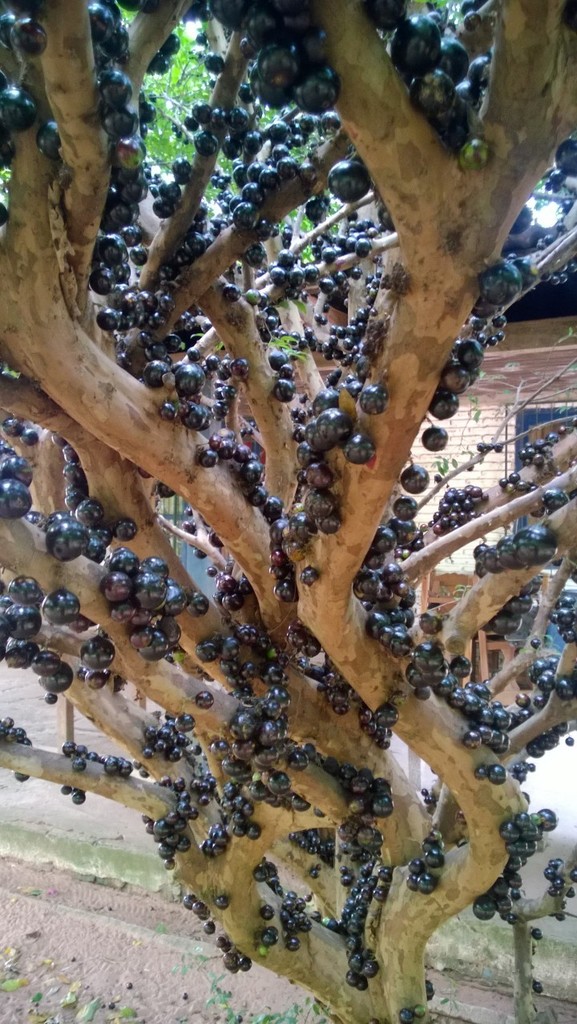
A tree that bears its fruit right on the trunk: when a jaboticaba crops, its branches and trunk are covered in glossy black fruits like grapes. It's one of the most striking sights in the tropics. The white pulp is sweet and fragrant, and the 'Gigante' selection has larger fruit than the common kinds.
Culture
It comes from Brazil and does well in our warm, humid climate. It wants fertile soil rich in organic matter, well drained and consistently moist; water it in the dry season. It grows slowly: allow about 5–8 years for the first harvests. Once established, it can fruit several times a year. Spacing: 6–8 m.
Edible Uses
Eat it straight from the tree: squeeze the fruit, enjoy the sweet pulp and discard the skin. It ferments quickly after picking, so whatever isn't eaten fresh becomes jam, juice, liqueur or wine.
Medicinal
In Brazilian folk medicine the skin is used for diarrhea, asthma and skin irritation. It is rich in tannins and antioxidants, though its medicinal use has been little studied.
Traditional uses for information only. Not a substitute for advice from a health professional.
Agroforestry
A long-lived (30–50 years) secondary species that reaches the high stratum over the years. Because it grows slowly, it establishes well alongside faster species that shelter it in its early years.