Pogostemon cablin
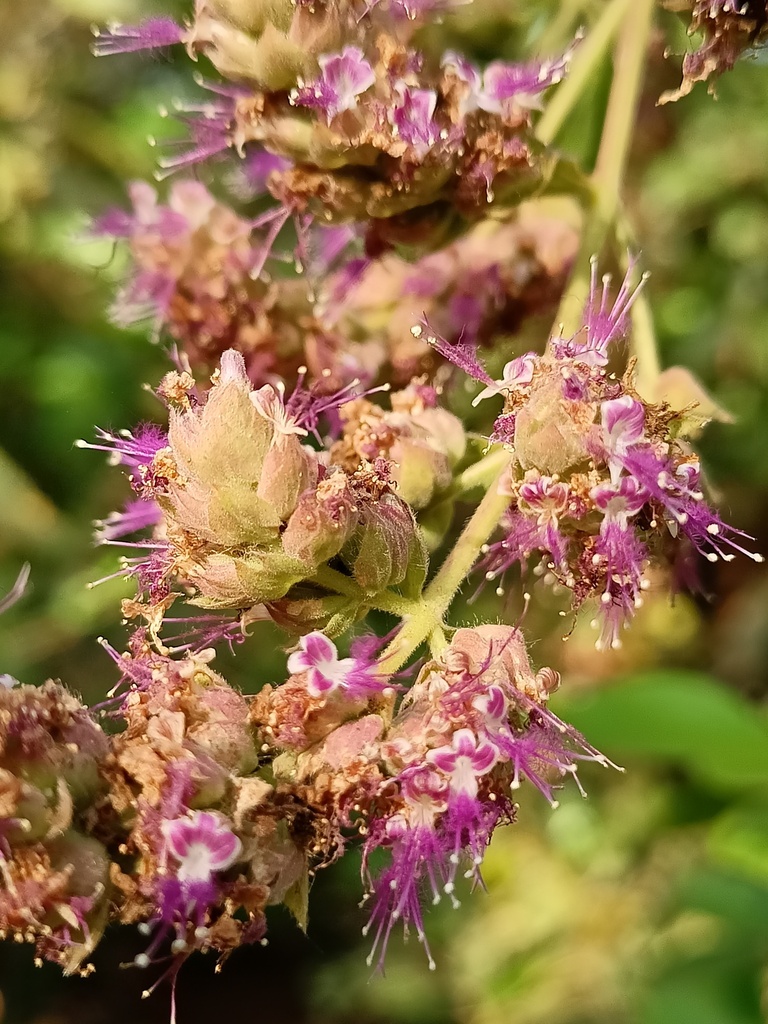
The size of the plant and of its bag can vary a little from the photograph — each one grows at its own pace. We keep them as consistent as we can.
Overview
Patchouli is one of perfumery's great base notes: deep, earthy, with something of wood and wet ground about it — the scent that holds a perfume up from underneath. It's a herb in the mint family, about 80 cm tall, with broad velvety leaves. It has a quirk almost no other aromatic plant shares: its oil improves with age instead of fading, and the leaf has to be dried and left to cure before distilling, because the aroma appears during that rest.
Culture
- Habit
- Perennial
- Height
- 0.80 m
- Pollinators
- Insects
- Cultivation Status
- Cultivated
Humid tropics, with generous rain — 2,200 to 2,600 mm — and temperatures of 23 to 28°C. It wants partial shade and soil rich in organic matter, moist and well drained; hard full sun punishes the leaf. Multiply it from stem cuttings, which root easily, and you can cut leaf at 3 or 4 months. Prune it often: the plant stays compact and produces more leaf.
Edible Uses
The leaf is sometimes used as a flavoring, and its essential oil turns up in chewing gum, baking and confectionery. It isn't an everyday kitchen herb: its trade is scent.
Medicinal
Its oil is rich in patchoulol, and in the East it is traditionally credited with antiseptic action; both the leaf and the oil have been used as digestives and applied to the skin.
Traditional uses for information only. Not a substitute for advice from a health professional.
Agroforestry
A support species of the medium stratum with an early secondary cycle, holding the ground under the partial shade of young trees: exactly the gap that tends to sit empty in a system's first years. It's cut every few months, lives 3 to 5 years, and every pruning leaves aromatic leaf on the soil. Plant 50 cm – 1 m apart.