Ruta chalapensis
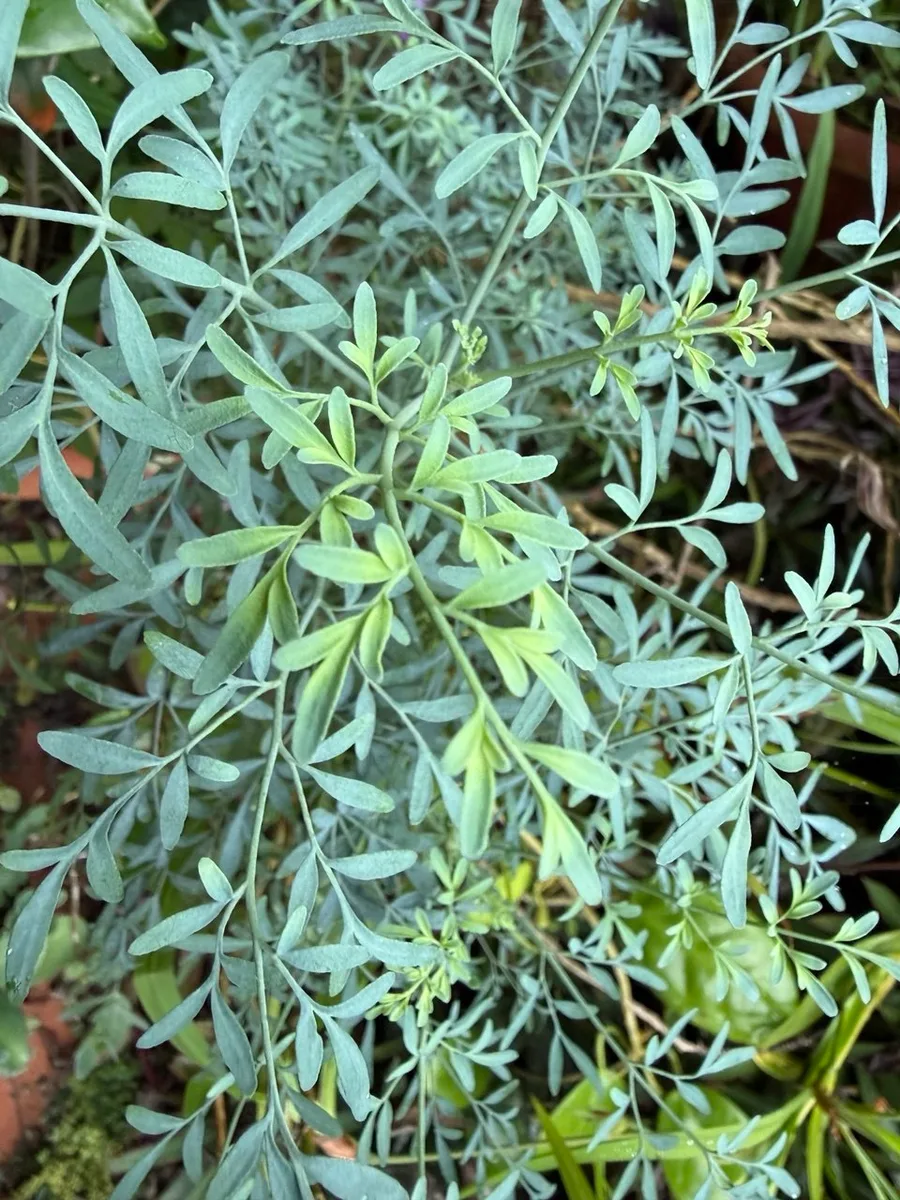
The size of the plant and of its bag can vary a little from the photograph — each one grows at its own pace. We keep them as consistent as we can.
Overview
Few plants have so much history in Latin American homes: rue is planted by the front door to "keep bad energy away", and its strong, unmistakable smell is part of many grandmothers' memories. It's a Mediterranean herb with yellow flowers and bluish leaves, as tough as it is aromatic. In Ethiopia, a sprig in coffee is a tradition.
Culture
Very easy and hardy: full sun or partial shade and any well-drained soil. Once established it handles drought and hardly needs feeding. Plant at 20–30 cm; within 3–4 months it's bushy. Wear gloves when pruning: see the caution under Medicinal.
Edible Uses
It is very bitter, so it's used in tiny amounts: in Italy a sprig goes into grappa, and in Ethiopia a leaf is served in coffee.
Medicinal
In traditional Mexican and Central American medicine it is used for digestive and menstrual problems. Important cautions: it is toxic in high doses, should not be used by pregnant women, and its sap on skin exposed to sun can cause burns and blisters.
Traditional uses for information only. Not a substitute for advice from a health professional.
Agroforestry
A low-stratum herb for sunny edges and corners of beds. It is traditionally planted near other crops for its reputation for repelling pests, and its flowers draw pollinators.