Syzygium malaccense
The size of the plant and of its bag can vary a little from the photograph — each one grows at its own pace. We keep them as consistent as we can.
Overview
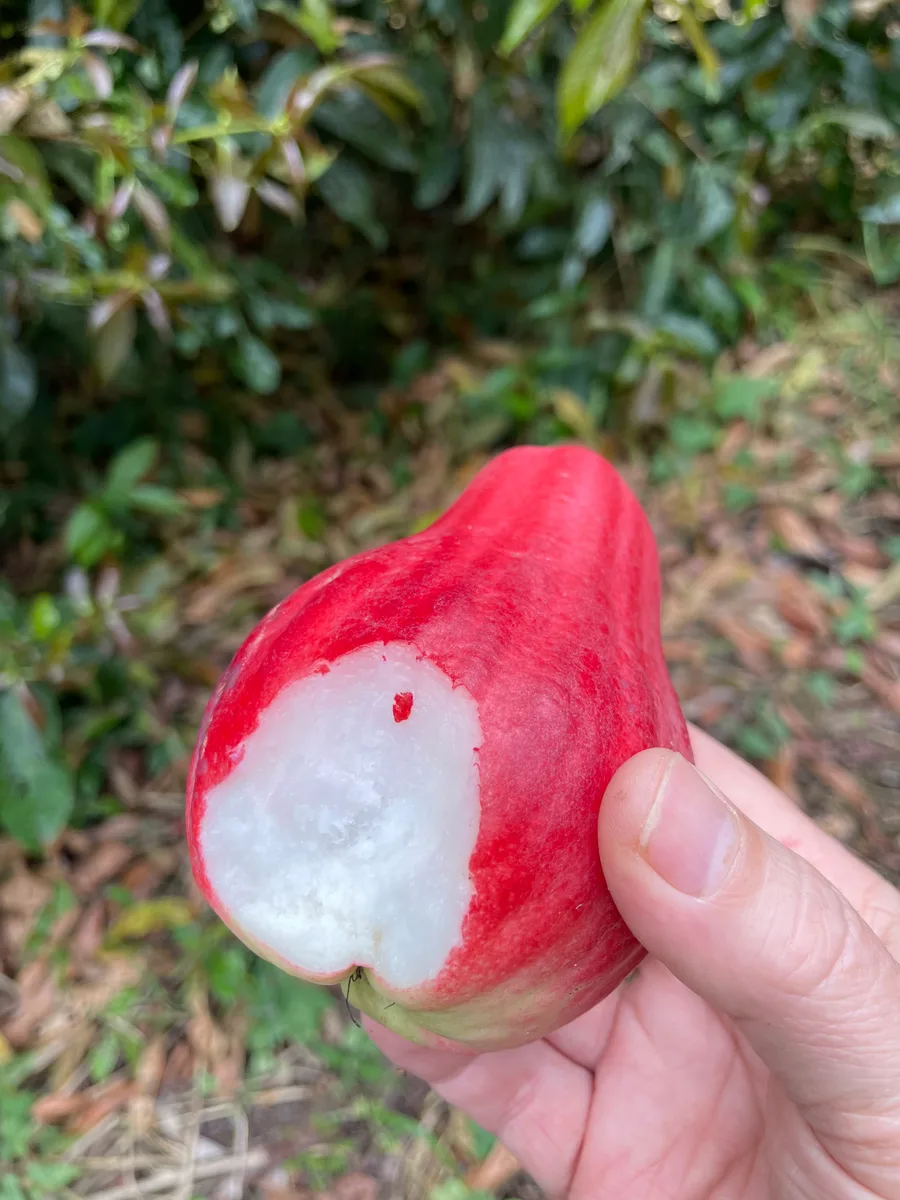
Water apple blooms like few trees do: its fuchsia flowers, tassels of stamens, fall by the thousands and cover the ground in a carpet of color. Then come the fruits, mostly dark red and oblong, with crisp, very juicy white flesh and a mild, refreshing flavor. It's native to Southeast Asia and grows fast. An ornamental tree and a fruit tree at once, perfect for a hot day.
Culture
- Habit
- Evergreen Tree
- Height
- 15.00 m
- Growth Rate
- Fast
- Pollinators
- Bees
- Cultivation Status
- Cultivated, Ornamental, Wild
A tree of the humid lowlands that grows up to 1,200 meters; it tolerates a dry season but bears best with rain all year. It wants full sun and rich, well-drained soil, and dislikes very acid soils. From seed it flowers at 4–5 years and reaches peak production around 10. It can give up to three crops a year, and flowering often starts when rain follows a dry spell. Young trees transplant very easily.
Edible Uses
The fruit is eaten raw and is delicious chilled; it's also stewed with cloves or baked into pies and desserts. The flowers are preserved in syrup or added to salads, and the tender shoots, while still red, are eaten raw with rice.
Medicinal
In traditional medicine a bark infusion is used for mouth sores, stomach ache and coughs, and a leaf decoction as a wash for skin infections. Its leaves and bark have been shown to have antibiotic activity.
Traditional uses for information only. Not a substitute for advice from a health professional.
Agroforestry
A long-lived, fast-growing climax tree of the high stratum. Its flowers feed bees, and its carpet of petals and its shade make it ideal near paths and sitting areas.