Theobroma bicolor
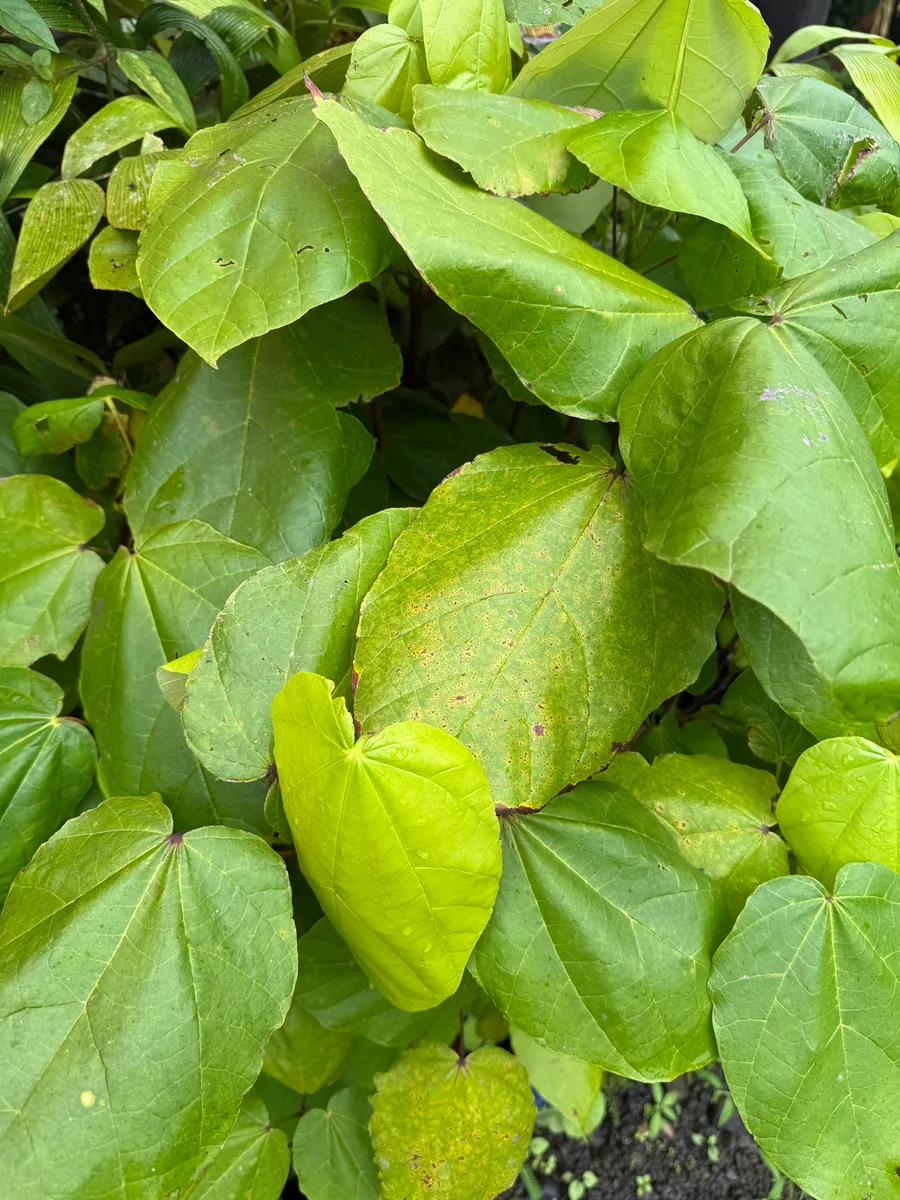
The size of the plant and of its bag can vary a little from the photograph — each one grows at its own pace. We keep them as consistent as we can.
Overview
Cacao's wild cousin, also known as pataxte or mocambo. Its pod has a woody shell with a raised pattern that recalls a jaguar's skin. Its fat-rich seeds are used in Oaxaca, Mexico, to make tejate, a traditional maize and cacao drink. It grows fast with a narrow crown, so it gets on well with many other trees.
Culture
- Habit
- Evergreen Tree
- Height
- 12.00 m
- Growth Rate
- Fast
- Pollinators
- Insects, ?Wind
- Cultivation Status
- Cultivated, Wild
A tree of the humid tropics that grows well in partial or even full shade, like the rainforest understory. It prefers well-drained, slightly acidic soil (pH 5–6). It starts bearing at around 3–4 years. It regrows well after pruning. Spacing: 5–10 m.
Edible Uses
The fruit pulp is pleasantly sweet-sour, though strong-smelling: it's used for drinks and desserts. The seeds are roasted and eaten like almonds, or ground for drinks. They contain little theobromine and plenty of cocoa butter.
Medicinal
No medicinal uses are known for this species itself. Its butter, like cacao's, is traditionally used to soften dry skin and soothe burns.
Traditional uses for information only. Not a substitute for advice from a health professional.
Agroforestry
A climax species of the medium stratum, made for the understory. Its narrow crown lets you interplant it with many species without too much competition for light, and it is a traditional part of Mesoamerican forest gardens.