Theobroma cacao
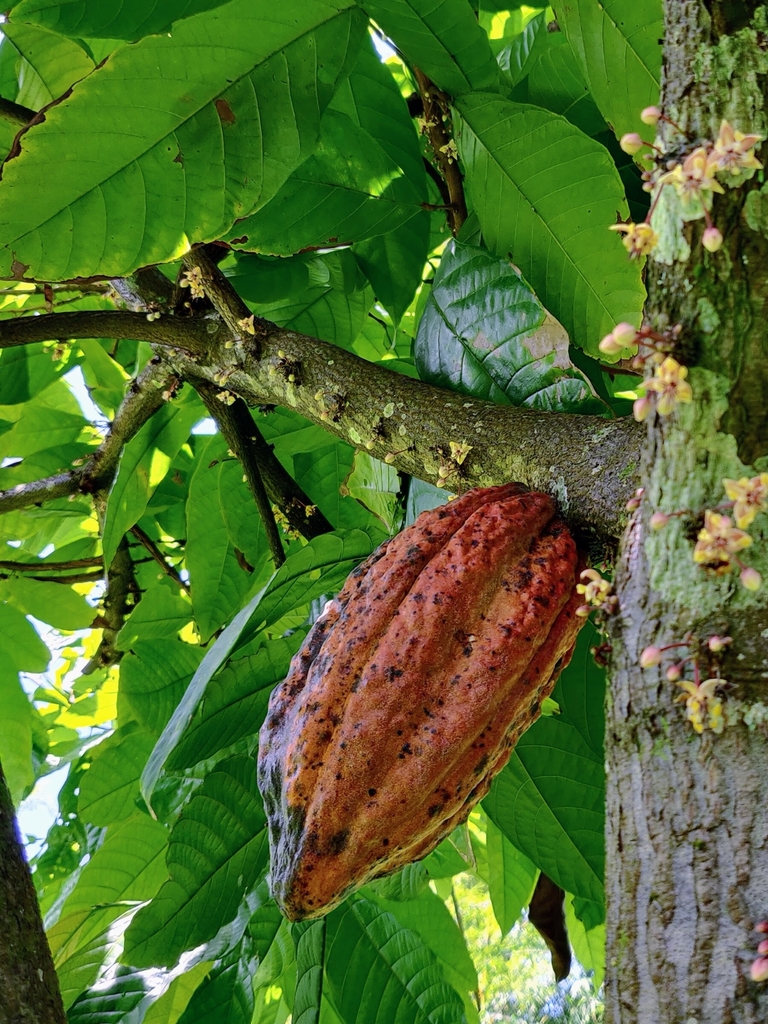
The size of the plant and of its bag can vary a little from the photograph — each one grows at its own pace. We keep them as consistent as we can.
Overview
The chocolate tree. Its flowers and pods sprout straight from the trunk, and its name, Theobroma, means "food of the gods": the peoples of Mesoamerica have grown it for thousands of years, and the Maya and Aztecs used its seeds as currency. Each pod holds 20 to 40 seeds wrapped in sweet pulp. There are three main groups: criollo, the finest; forastero, the most productive; and trinitario, a cross of the two. It lives for decades in the shade of taller trees and crops year after year.
Culture
- Habit
- Evergreen Tree
- Height
- 8.00 m
- Growth Rate
- Medium
- Self-fertile
- No
- Pollinators
- Thrips, Midges, Ants, Aphids
- Cultivation Status
- Cultivated, Wild
Cacao is an understory tree: it does best in dappled shade, though it produces even in dense shade, in fertile, moist, well-drained, slightly acidic soil (pH 5–6.5), sheltered from wind. Our humid lowland climate suits it well, as long as rain is spread through the year (ideally 1,500–2,000 mm). At Bodha Gardens it thrives in our syntropic systems. Plant at 3–5 m and allow 3–5 years for the first good harvests; in good conditions it flowers and fruits all year. Our plants are grown from seed, not a named variety.
Edible Uses
Chocolate comes from the fermented, dried and roasted seed; almost half its weight is fat, the cocoa butter. Roasted and cracked, the seeds are eaten as nibs, crunchy and bitter. But you don't have to go that far: the white pulp around the seeds is sweet and tangy, lovely eaten fresh from the pod, blended into a drink or made into jelly.
Medicinal
The seed contains theobromine, a mild stimulant, and flavanols now being studied for their effect on the heart and blood pressure. In Central America and the Caribbean the seed is traditionally used as a tonic for the heart and kidneys. Cocoa butter is used to soften dry or burned skin.
Traditional uses for information only. Not a substitute for advice from a health professional.
Agroforestry
In a syntropic system cacao is a climax species of the low stratum: it lives for decades under taller trees that shade it. While those trees grow, banana or plantain gives it temporary shade. The damp leaf litter of the system helps the harvest too: its tiny flowers are pollinated by midges that breed in decaying organic matter. Fallen leaves and empty pod husks go back to the soil as fertilizer.