Trichanthera gigantea
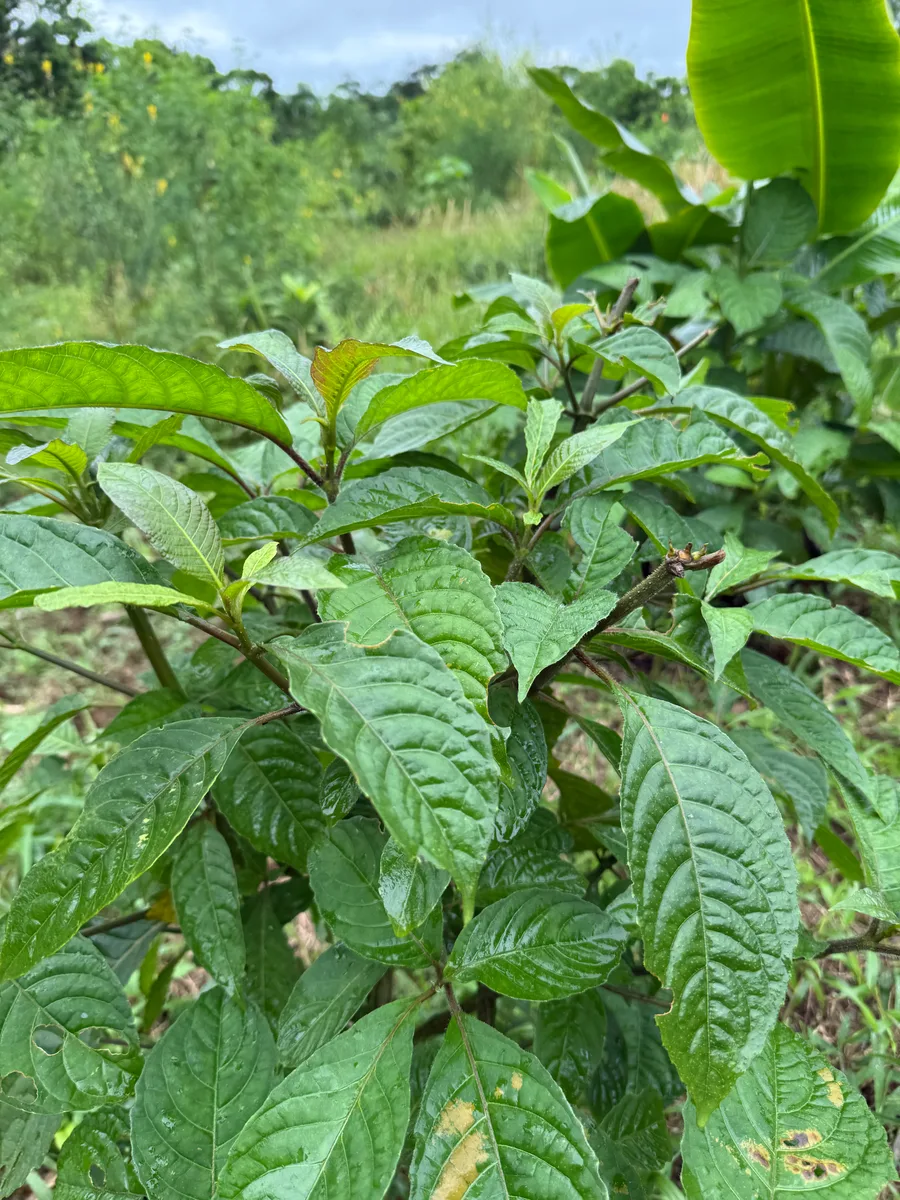
The size of the plant and of its bag can vary a little from the photograph — each one grows at its own pace. We keep them as consistent as we can.
Overview
The name says it: nacedero is planted at springs and along stream banks, and in Colombia they also call it madre de agua, mother of water. It's a shrub native to our region, Costa Rica included, that grows in shade where few fodder plants will, and its leaf carries 18 to 22% protein — among the best you can cut for pigs and rabbits. It regrows after every cut and multiplies from a stuck cutting. Few plants work this hard for so little.
Culture
- Habit
- Semi-deciduous Tree
- Height
- 5.00 m
- Growth Rate
- Fast
- Self-fertile
- No
- Pollinators
- Bats, Birds, Ants, Bees
- Cultivation Status
- Cultivated, Wild
It likes humid warmth, between 27 and 33°C, with generous rain, and does well on acid, poor soils where others struggle. It grows in full sun and tolerates a good deal of shade, which is unusual in a fodder plant. Propagate by cutting: a 20 cm piece roots better than nine times out of ten, and thick cuttings over a meter long are pushed straight into the ground to form a living fence. Take the first cut at 8 or 9 months, then every 3 months, leaving the stem a meter above the ground.
Edible Uses
The tender shoots have been eaten cooked in maize porridge, but this is not a garden vegetable: its value is in the leaf for animals and the biomass for the soil.
Medicinal
In the folk tradition of Colombia and Venezuela it is used as a blood tonic and to encourage a mother's milk. Similar uses are given to it in veterinary practice with livestock.
Traditional uses for information only. Not a substitute for advice from a health professional.
Agroforestry
A support species of the medium stratum with a secondary life cycle, and one of the most complete plants in the catalog: protein for the animals, biomass for the soil, shade for coffee, and roots that hold a stream bank together. On good ground and planted close it can give some 60 tonnes of fresh fodder per hectare per year. Plant 1 m apart for a fodder bank, or in a continuous line for a living fence.